
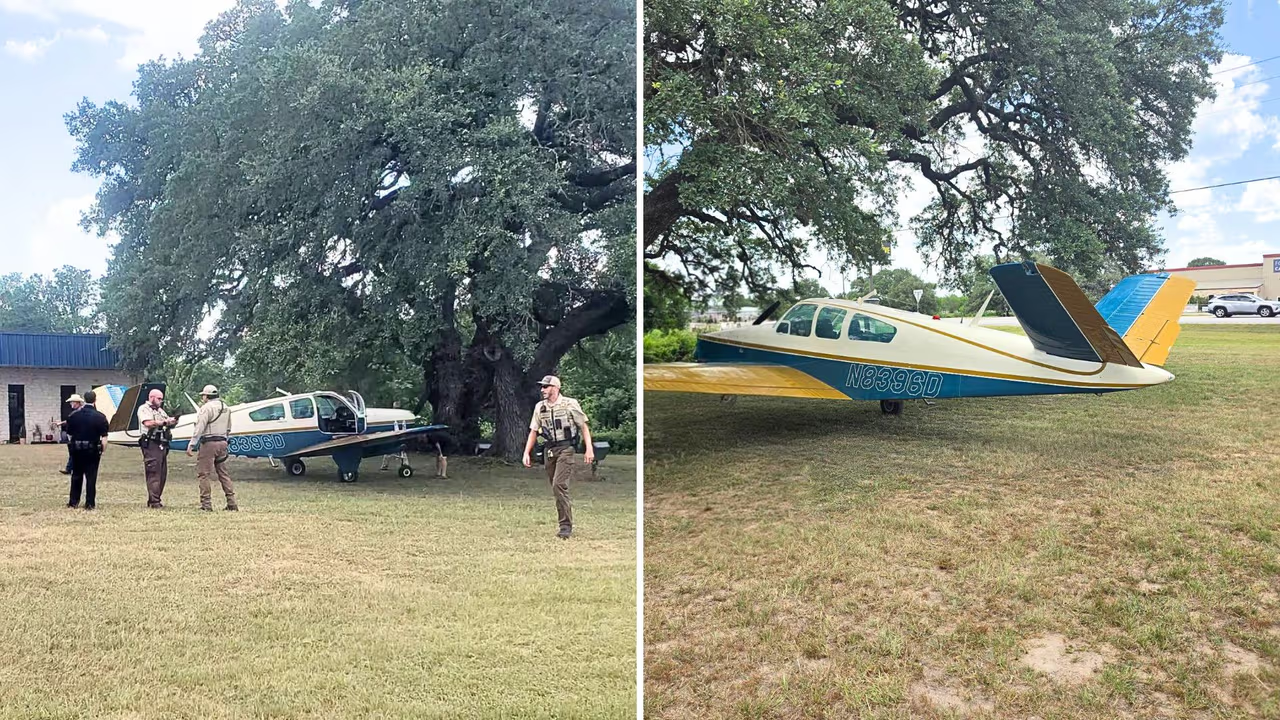
A single-engine aircraft conducted an emergency landing on a public roadway in Fayette County, Texas, on Tuesday, prompting an immediate response from local emergency services. The pilot, who was the sole occupant of the plane, managed to bring the aircraft down on the pavement without striking vehicles or causing injuries to motorists on the ground.
The incident occurred as the pilot reported mechanical difficulties while in flight, necessitating an immediate descent to the nearest suitable surface. According to preliminary reports from local law enforcement and emergency management agencies, the landing was executed on a highway within the county, allowing the pilot to avoid more hazardous terrain. The Federal Aviation Administration (FAA) and the National Transportation Safety Board (NTSB) typically initiate investigations into such events to determine the precise cause of the mechanical failure.
Emergency Response and Safety Measures
Local authorities arrived at the scene shortly after the landing to secure the area and ensure the safety of both the pilot and the traveling public. Emergency responders from Fayette County assisted in managing traffic flow, as the presence of an aircraft on a roadway created a significant obstruction. The pilot was evaluated by medical personnel on-site, though no serious injuries were reported, according to statements provided by officials overseeing the scene. The Federal Aviation Administration maintains strict guidelines for pilots facing in-flight emergencies, emphasizing that the primary objective is to land the aircraft in the safest possible manner, even if that requires utilizing non-airport infrastructure.
Investigation into the Landing
While the immediate crisis was resolved without casualties, the National Transportation Safety Board (NTSB) generally investigates incidents involving general aviation aircraft to identify contributing factors, such as engine maintenance history, fuel system issues, or unexpected mechanical malfunctions. Aircraft forced to land on highways are subject to detailed inspections to determine if the equipment met all airworthiness directives at the time of the flight. Investigators often look at the flight path data and pilot logs to reconstruct the moments leading up to the decision to declare an emergency. The timeline for such investigations can vary, often taking several months before a final report is issued to the public record.
General Aviation Safety in Texas
Fayette County, located in the central region of Texas, serves as a common corridor for general aviation traffic moving between larger metropolitan hubs like Austin and Houston. Pilots navigating this airspace are required to adhere to Title 14 of the Code of Federal Regulations, which governs pilot certification and aircraft operations. When an emergency occurs, the ability to identify a stretch of road free from power lines, traffic, and debris is a critical skill tested during flight training. While such landings are rare, they are categorized as high-priority safety incidents by regional authorities who work to clear the wreckage as quickly as possible to restore normal traffic patterns.

What Happens Next
The aircraft is expected to be recovered from the highway once federal investigators have completed their initial assessment of the site. Following the removal, local law enforcement will work to finalize their incident reports, which will be submitted to state and federal agencies for review. Interested parties can monitor the NTSB aviation accident database for future updates regarding this specific tail number and the findings of the investigation. As of this report, there have been no notices of scheduled hearings or formal legal actions related to the landing. Readers are encouraged to share their thoughts or experiences with regional aviation safety in the comments section below.