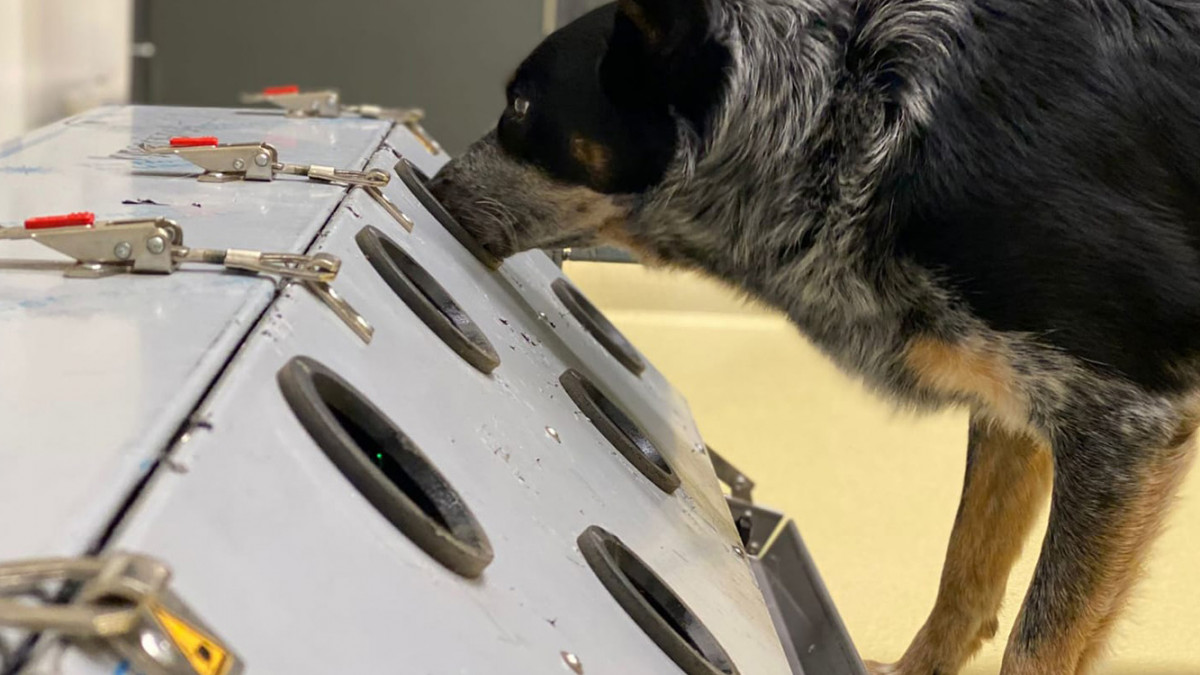
Researchers in Braunschweig, Germany, have unveiled a novel approach to studying Long COVID using a combination of canine olfactory capabilities and artificial intelligence, according to a collaboration between the Technical University of Braunschweig (TU Braunschweig), the Medical Center of the Hannover Medical School (MHH), and the University of Veterinary Medicine Hanover (TiHo). The project, dubbed “COVID Dogolomics,” presented preliminary findings at the final symposium of the COVID-19 research initiative, marking a significant step in understanding persistent post-viral symptoms.
The study leverages the highly sensitive sense of smell in dogs to detect volatile organic compounds (VOCs) associated with Long COVID, while AI algorithms analyze patterns in the data. This interdisciplinary approach aims to identify biomarkers that could improve diagnostic accuracy and treatment strategies for patients experiencing prolonged effects of SARS-CoV-2 infection. The research team emphasized that the project is still in its early stages, with results requiring further validation through larger clinical trials.
“The integration of canine biosensing with machine learning represents a promising frontier in medical diagnostics,” said Dr. Lena Hofmann, a molecular biologist at TU Braunschweig and a lead researcher on the project. “However, we must emphasize that these findings are preliminary and require independent replication before any clinical applications can be considered.”
The collaboration between the three institutions highlights the growing trend of cross-disciplinary research in addressing complex health challenges. TU Braunschweig, known for its engineering and life sciences programs, partnered with MHH, a major academic medical center, and TiHo, a leading veterinary university, to combine expertise in AI, microbiology, and animal behavior. The project’s methodology involves training dogs to identify specific VOCs in patient samples, with AI systems later interpreting the dogs’ responses to detect potential biomarkers.
Methodology and Early Findings
The research team conducted a pilot study involving 50 participants who had tested positive for SARS-CoV-2 and reported lingering symptoms such as fatigue, shortness of breath, and cognitive impairment. Dogs were trained over several months to distinguish between breath or urine samples from Long COVID patients and those from individuals with no post-viral symptoms. The AI component then analyzed the data to identify patterns that could be linked to specific biological markers.
Early results suggest that the dogs demonstrated an accuracy rate of approximately 78% in identifying Long COVID samples, according to a report presented at the symposium. However, the researchers cautioned that this figure is based on a small sample size and may not be statistically significant. “We are not claiming a breakthrough at this stage,” said Dr. Hofmann. “This is more of a proof of concept that requires further investigation.”
The AI models developed as part of the project were trained on data from the dogs’ responses, with the goal of creating a scalable diagnostic tool. The system’s ability to detect subtle changes in VOCs could potentially aid in early diagnosis and monitoring of Long COVID progression. However, the team noted that the technology is still in the experimental phase and has not been validated in real-world clinical settings.
Implications for Long COVID Research
Long COVID, or post-acute sequelae of SARS-CoV-2 infection (PASC), remains a significant public health challenge, with millions of individuals worldwide experiencing persistent symptoms. Current diagnostic methods often rely on self-reported symptoms and imaging, which can be subjective and inconclusive. The Braunschweig study introduces a novel approach that could complement existing strategies, though experts stress the need for rigorous validation.

“This research is intriguing because it explores an unconventional method for identifying biomarkers,” said Dr. Marcus Ritter, a pulmonologist at the University of Heidelberg who was not involved in the study. “However, the lack of peer-reviewed publications and independent replication makes it difficult to assess the robustness of the findings. We need more data before this can be considered a reliable diagnostic tool.”
The potential applications of the technology extend beyond Long COVID. Researchers at TU Braunschweig have previously explored the use of canine biosensing for detecting other conditions, including certain cancers and metabolic disorders. The AI component of the project could also have broader implications for disease detection, particularly in resource-limited settings where traditional diagnostic equipment is unavailable.
Challenges and Next Steps
Despite the promising early results, the project faces several challenges. One major hurdle is the variability in VOC profiles among individuals, which could affect the accuracy of both canine and AI-based detection methods. Additionally, the ethical considerations of using animals in medical research have sparked debate, with some critics arguing that the process may cause unnecessary stress to the dogs involved.
The research team has addressed these concerns by emphasizing that the dogs are trained using positive reinforcement techniques and are not subjected to any harmful procedures. “The welfare of the animals is our top priority,” said Dr. Hofmann. “We ensure that the training sessions are short, engaging, and rewarding for the dogs.”
Looking ahead, the team plans to expand the study to include a larger and more diverse group of participants. They also intend to collaborate with other research institutions to validate their findings through independent studies. “Our goal is to contribute to the growing body of evidence on Long COVID,” said Dr. Hofmann. “This is just one piece of a much larger puzzle.”

The next confirmed checkpoint for the project is the submission of a peer-reviewed manuscript to a medical journal, which is expected to occur by the end of 2024. Until then, the findings remain preliminary and should be interpreted with caution. The research team has also announced plans to host an open forum in early 2025 to discuss the implications of their work and invite feedback from the scientific community.
For readers seeking further information, the World Health Organization (WHO) and the Centers for Disease Control and Prevention (CDC) provide comprehensive resources on Long COVID, including diagnostic criteria and management guidelines. Updates on the Braunschweig study are expected to be published in academic journals and shared through the participating institutions’ official channels.
As the global medical community continues to grapple with the long-term effects of the pandemic, innovative