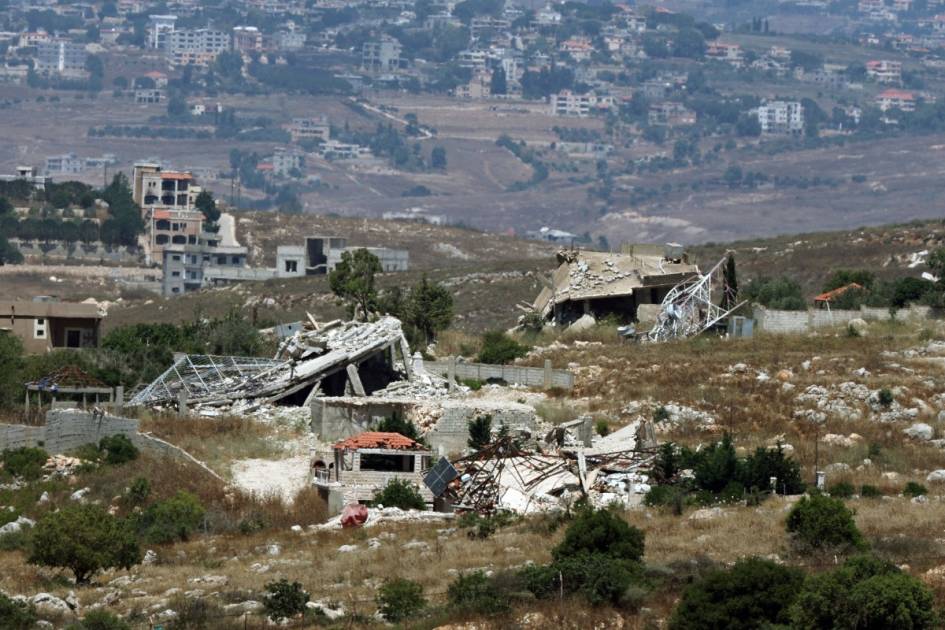
The Israeli military killed a militant and reported one soldier injured during clashes in southern Lebanon, according to military statements and regional reports. These incidents occur as both Israel and Hezbollah navigate a fragile ceasefire agreement, with the Israel Defense Forces (IDF) stating it targeted Hezbollah infrastructure to prevent future attacks.
The clashes represent a continuation of volatility along the Blue Line, the border demarcation between Lebanon and Israel. While a ceasefire was implemented to end months of high-intensity conflict, reports of incursions, airstrikes, and guerrilla activity persist. The IDF confirmed the death of the militant following a targeted operation, while Lebanese reports highlighted the injury of an Israeli soldier during an exchange of fire.
International monitors, including the United Nations Interim Force in Lebanon (UNIFIL), continue to track movements in the region. The current security environment is defined by competing claims of ceasefire violations, with the Lebanese government calling for a total cessation of Israeli overflights and incursions, and Israel maintaining that it will act against any Hezbollah buildup south of the Litani River.
What happened during the recent clashes in southern Lebanon?
The Israeli military conducted operations in southern Lebanon that resulted in the death of a militant. According to the IDF, the action was a response to detected threats and part of a broader effort to dismantle Hezbollah infrastructure that remained in place following the ceasefire. The military stated that the operation was necessary to ensure the safety of border communities and troops stationed near the Blue Line.

During these engagements, an Israeli soldier sustained injuries in a direct clash with Hezbollah fighters. The IDF did not immediately release the name of the soldier or the specific severity of the wound, but confirmed the casualty occurred during an exchange of gunfire. This incident underscores the ongoing risk to ground forces operating in the contested southern terrain.
Simultaneously, the IDF announced it had targeted several sites identified as Hezbollah infrastructure. These targets typically include weapons caches, observation posts, or communication hubs. By targeting these assets, the Israeli military aims to degrade the group’s ability to launch rockets or conduct cross-border raids. These strikes are often conducted via drones or precision artillery, though some involve ground-based incursions.
How are these incidents affecting the ceasefire agreement?
The current hostilities occur under the framework of a ceasefire agreement that took effect on November 27, 2024. The deal was designed to push Hezbollah forces north of the Litani River and allow the Lebanese Armed Forces (LAF) to deploy to the south to ensure the area remains free of unauthorized armed groups. However, the implementation has been marked by frequent friction.
The Lebanese government and Hezbollah have accused Israel of violating the agreement through repeated airstrikes and drone flights over Lebanese territory. According to reports from the United Nations Interim Force in Lebanon (UNIFIL), the monitoring of these violations is a primary focus of the international community to prevent a return to full-scale war.
Israel, conversely, asserts that its actions are “preventative.” The Israeli government maintains that the ceasefire allows for limited military action if it discovers Hezbollah is violating the terms by rebuilding infrastructure or deploying personnel south of the agreed-upon lines. This discrepancy in interpretation—what constitutes a “violation” versus a “preventative measure”—creates a volatile security vacuum.
What is the current status of Hezbollah infrastructure in the region?
Hezbollah has long maintained a sophisticated network of tunnels, bunkers, and launch sites in southern Lebanon. The IDF’s recent claims of attacking “infrastructure” refer to these hardened positions. The goal of these strikes is to ensure that Hezbollah cannot maintain a permanent military presence in the immediate border zone, which Israel views as a direct threat to its northern towns.
According to military analysts and official IDF briefings, the group has attempted to maintain “sleeper” cells and hidden caches to sustain a presence even after the formal withdrawal of large units. The killing of the militant and the targeting of infrastructure are intended to signal that Israel will not tolerate the re-establishment of these networks.
The Lebanese Armed Forces (LAF) are tasked with the primary responsibility of securing the south. The effectiveness of the LAF in displacing Hezbollah is a central point of contention. While the LAF has increased its presence, the ability of a state military to fully displace a deeply embedded paramilitary organization remains a significant challenge for the Lebanese state.
Who is monitoring the security situation along the Blue Line?
The security of the border is monitored by a combination of international and domestic entities. UNIFIL remains the primary international body on the ground, tasked with confirming the withdrawal of armed personnel and monitoring the Blue Line. UNIFIL reports regularly to the UN Security Council regarding the adherence of both parties to the ceasefire terms.
Additionally, a coordination mechanism involving the United States and France has been established to mediate between the Israeli and Lebanese governments. These mediators work to resolve disputes over specific incidents—such as the recent clash that injured an Israeli soldier—before they escalate into wider conflicts. The Reuters news agency has reported that these diplomatic channels are critical in managing the “tit-for-tat” nature of the current border skirmishes.
The Lebanese government relies on reports from the LAF and civilian observers to document Israeli violations. These reports are often submitted to the UN to seek international condemnation or intervention. Meanwhile, the IDF utilizes high-resolution surveillance and drone intelligence to track Hezbollah movements, which then informs their decision to launch strikes on suspected infrastructure.
Why does this volatility persist after a ceasefire?
The persistence of violence is rooted in a lack of mutual trust and conflicting definitions of security. For Israel, “security” means the total absence of Hezbollah capabilities within a specific distance of the border. For Hezbollah, “security” involves the cessation of all Israeli military activity, including intelligence-gathering flights and targeted killings within Lebanese territory.

This clash of priorities means that any action taken by one side is viewed as a provocation by the other. When the IDF kills a militant, it views the act as upholding the ceasefire by removing a threat. When Hezbollah responds or when Lebanese officials condemn the strike, they view the act as an infringement on national sovereignty and a breach of the peace agreement.
The geographic nature of southern Lebanon also complicates the peace. The rugged terrain provides ample cover for small units of fighters, making it difficult for UNIFIL or the LAF to verify that the region is entirely clear of militants. This uncertainty encourages the IDF to conduct “clearing operations,” which in turn lead to the types of clashes seen in the recent reports.
The next confirmed checkpoint for the stability of the region will be the upcoming quarterly review of the ceasefire implementation by the international monitoring committee, where reports from UNIFIL and the coordinating US and French teams will be formally assessed.
Do you believe the current international monitoring is sufficient to maintain the ceasefire? Share your thoughts in the comments or share this report to keep others informed.