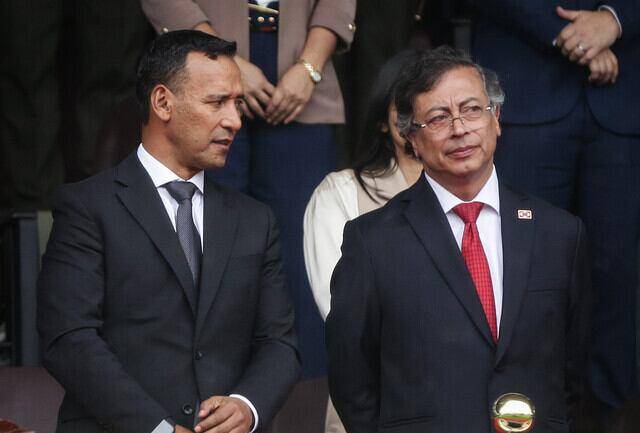
The administration of Colombian President Gustavo Petro has overseen the removal of 153 high-ranking police officers over a three-month period, a move that has drawn scrutiny regarding institutional stability and internal security protocols. This latest series of departures within the National Police (Policía Nacional de Colombia) follows a broader pattern of personnel shifts since the current administration took office, reflecting ongoing tensions between the executive branch and the nation’s security leadership.
According to official reports and documentation from the Ministry of Defense, these administrative changes are characterized as part of an institutional restructuring process. The removals involve officers of varying ranks, including senior commanders whose departures have sparked debate among political analysts regarding the continuity of security strategies. Data regarding these personnel changes is tracked by the National Police of Colombia, which maintains internal records of all administrative retirements and reassignments.
The scope of the personnel shifts
The removal of 153 officers in a single quarter represents a significant turnover rate within the security forces. Under Colombian law, the President maintains the authority to appoint and remove high-ranking officials within the public force, a power exercised through the Ministry of Defense. These specific administrative actions have been concentrated in key departments, including intelligence and operational command units, as detailed in recent Ministry of Defense publications.

While the administration maintains that these moves are necessary for modernizing the police force and ensuring alignment with the government’s “Total Peace” policy, critics argue that the scale of the removals risks creating a leadership vacuum. The process of replacing these officers involves complex bureaucratic requirements established by the Administrative Department of Public Service, which oversees the professional requirements for senior public officials in Colombia.
Institutional context and security policy
The current administrative turnover occurs against a backdrop of evolving security challenges in Colombia, including organized crime and regional instability. The relationship between President Petro and the nation’s military and police leadership has remained a subject of intense public discourse since his inauguration in 2022. The inauguration of Gustavo Petro signaled a shift in national priorities, placing a greater emphasis on social reforms alongside traditional security measures.
The removals are not the first of their kind; similar shifts occurred during the initial months of the administration. These actions have been reported by various international observers, including the Human Rights Watch reports on the state of security and police reform in the country. The recurring nature of these dismissals suggests a deliberate effort by the executive branch to consolidate control over the security apparatus, a move that has been met with both support from political allies and concern from opposition lawmakers.
Legal framework and oversight
The process of removing high-ranking officers is governed by the Disciplinary Regime for the National Police, which outlines the conditions under which an officer may be retired or reassigned. The government must adhere to these legal standards to avoid litigation and ensure that the transitions do not disrupt operational readiness. The Office of the Inspector General (Procuraduría General de la Nación) holds the mandate to oversee these processes and ensure that the rights of the officers involved are protected during the transition.

For observers tracking these developments, the next significant checkpoint will be the release of the government’s mid-year security report, which typically includes detailed statistics on personnel changes and operational performance. This report is expected to be presented to the Colombian Senate during the upcoming legislative session.
As the administration continues its structural changes, the impact on crime statistics and public safety remains a focal point for the international community. Further analysis of these personnel shifts will be contingent on the release of official data from the Ministry of Defense and the findings of legislative oversight committees. Readers are encouraged to monitor official government portals for the most recent decrees and announcements regarding leadership appointments within the security sector.