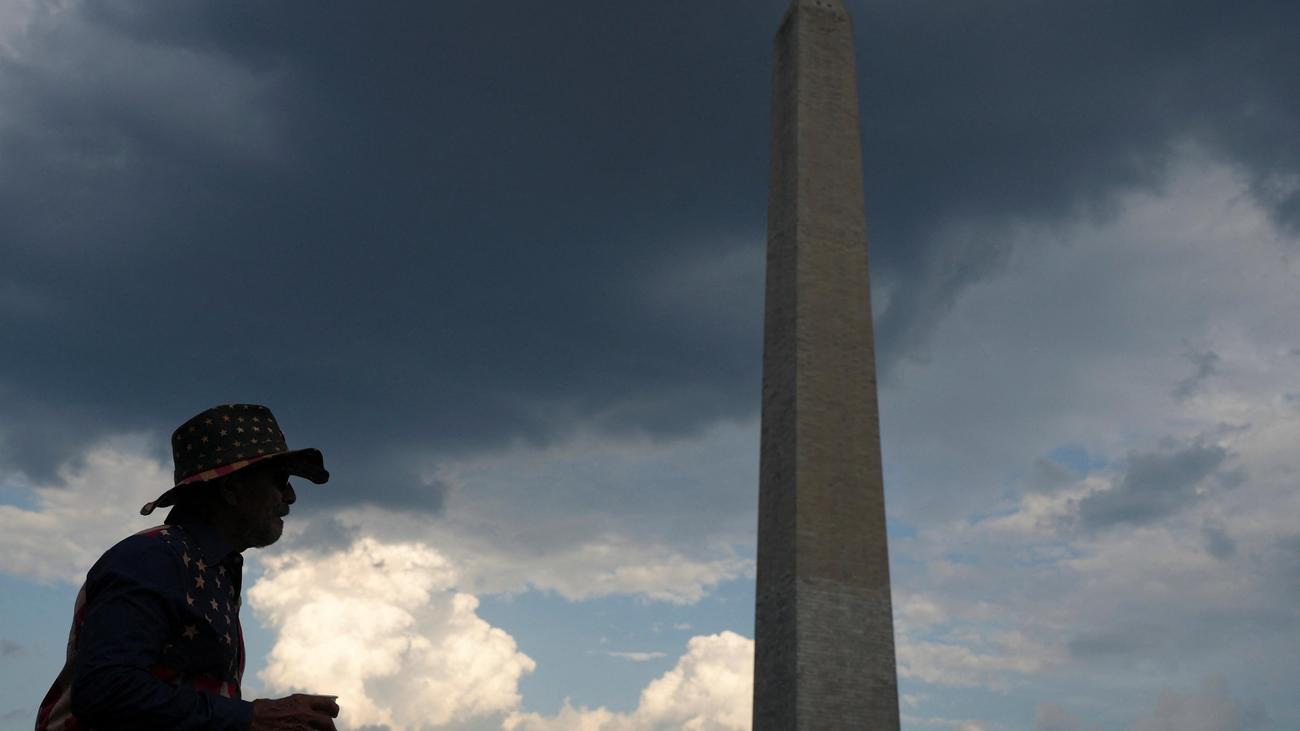
Official preparations for the 250th anniversary of the United States in Washington, D.C., faced significant operational disruptions this week as severe weather warnings forced a temporary halt to activities on the National Mall. The milestone, marking the semiquincentennial of the signing of the Declaration of Independence, serves as a focal point for national discourse regarding the trajectory of American governance and historical memory.
According to the National Park Service, which oversees the maintenance and public use of the National Mall, extreme weather protocols are standard procedure for large-scale outdoor events in the District of Columbia. The sudden shift in atmospheric conditions necessitated the evacuation of public viewing areas, highlighting the logistical complexities of managing high-profile commemorations in the nation’s capital.
Historical Context of the Semiquincentennial
The 250th anniversary, often referred to as the “America250” initiative, is mandated by the U.S. Semiquincentennial Commission, a bipartisan body established by Congress through the United States Semiquincentennial Commission Act of 2016. The commission is tasked with planning and coordinating programs to observe the anniversary of the founding of the United States, which officially occurred on July 4, 1776.
While the federal government coordinates these efforts, the celebrations involve a decentralized network of state-level commissions and private historical organizations. The objective, as stated in the official America250 framework, is to provide a platform for reflection on the nation’s democratic evolution, social challenges, and cultural diversity. However, the planning process has frequently intersected with contemporary political tensions, as various factions seek to define the narrative of the American experiment.
Political Climate and Public Sentiment
The atmosphere surrounding the 250th anniversary has been marked by broader political polarization. Former President Donald Trump and other prominent figures have often utilized the rhetoric of “American heritage” to frame their respective political platforms, frequently drawing sharp criticism from opponents who argue that such narratives exclude marginalized historical perspectives.
The National Mall, as the traditional site for public protest and civic assembly, remains a lightning rod for these ideological clashes. As reported by the Department of the Interior, permitting for demonstrations and public gatherings on federal land is governed by strict regulations intended to balance First Amendment rights with public safety and property preservation. During the recent weather-related disruptions, the intersection of public safety measures and the high political stakes of the anniversary underscored the fragility of public events in an era of heightened sensitivity.
Logistics and Safety Protocols
The National Park Service and the U.S. Park Police are responsible for the physical security and management of crowds on the National Mall. According to official safety advisories, the Mall is equipped with various weather monitoring systems, and the decision to suspend activities is typically made when lightning or high-wind threats reach established danger thresholds. These protocols are critical given the high density of historical monuments and temporary infrastructure required for national commemorations.

For visitors and organizers, the event serves as a reminder of the reliance on federal infrastructure to facilitate civic life. The National Park Service maintains a public portal for updates on facility operations, which remains the primary source for information regarding closures and the status of commemorative displays as the nation approaches the official 2026 date.
Future Outlook and Official Updates
The next major checkpoint for the America250 initiative involves the ongoing rollout of regional historical projects and the development of permanent exhibits at various national heritage sites. The Semiquincentennial Commission is scheduled to provide periodic reports to Congress on the progress of these initiatives, which can be tracked through the Congressional Record.
As the anniversary approaches, observers expect further scrutiny of how the federal government balances diverse historical narratives with the goal of fostering national unity. Public participation is encouraged through local historical societies and state-level planning committees, which are coordinating their own events independent of the central Washington, D.C. ceremonies. Readers are encouraged to monitor official government announcements for any changes to scheduled commemorations.