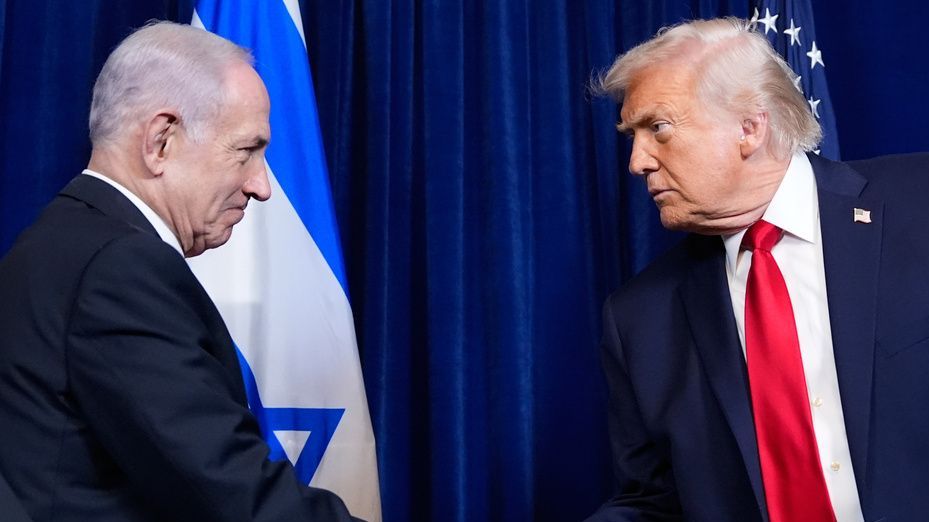
Israeli Prime Minister Benjamin Netanyahu has characterized his alignment with former U.S. President Donald Trump as highly consistent, stating during a public interview that the two leaders agree on approximately 99% of policy issues. This assessment, delivered amid shifting geopolitical dynamics in the Middle East and the lead-up to the 2024 U.S. presidential election, highlights the long-standing political rapport between the two figures.
The relationship between Netanyahu and Trump, which defined much of the U.S.-Israel diplomatic agenda between 2017 and 2021, remains a focal point for international observers. As reported by the Associated Press, the Prime Minister’s comments underscore a strategic desire to maintain strong ties with the Republican base, despite potential fluctuations in American domestic politics. The “99% alignment” figure reflects a shared approach to key regional challenges, including the status of Iran’s nuclear program and the framework of the Abraham Accords.
A Foundation of Strategic Cooperation
The political alliance between the two leaders was marked by several landmark policy shifts during the Trump administration. Most notably, the United States formally recognized Jerusalem as the capital of Israel and moved its embassy from Tel Aviv in May 2018, as documented by the U.S. Department of State. This move, which departed from decades of U.S. foreign policy, was widely praised by the Israeli government as a historic correction.

Beyond symbolic gestures, the administration facilitated the Abraham Accords in 2020. According to official records from the U.S. State Department, these agreements normalized diplomatic relations between Israel and several Arab nations, including the United Arab Emirates and Bahrain. The accords represented a significant pivot in regional diplomacy, focusing on shared economic and security interests rather than the traditional focus on the Israeli-Palestinian conflict.
Policy Convergence and Future Outlook
The claim of near-total agreement focuses heavily on the “maximum pressure” campaign against Iran. Both Netanyahu and Trump have consistently advocated for stringent economic sanctions to curb Tehran’s regional influence and nuclear ambitions. While the Biden administration has sought alternative diplomatic pathways, the Israeli leadership has frequently signaled a preference for the confrontational posture maintained during the Trump tenure.

Analysts note that while the personal and political chemistry between the two remains robust, the practical implementation of future policies would depend on the outcome of the November 2024 U.S. election. As the BBC has reported, the Israeli government continues to monitor U.S. domestic polling closely, as any change in the White House could necessitate a recalibration of Israel’s long-term defense and economic strategies.
Contextualizing the Political Rhetoric
The 99% figure serves as a rhetorical device to emphasize unity to both the Israeli public and American voters. However, experts in international relations suggest that the actual day-to-day governance often involves more nuanced negotiations. For instance, while Trump championed the Abraham Accords, the specific security guarantees and military sales associated with those deals were subject to intense deliberation within the U.S. national security apparatus.
Observers point out that the relationship is not without historical friction. After the 2020 U.S. election, public tensions emerged when Netanyahu congratulated Joe Biden on his victory, a move that reportedly frustrated Trump. Despite this, the current rhetoric suggests that both parties have opted to emphasize their points of consensus as they approach a potential transition in the American executive branch.
Monitoring Official Developments
The next major checkpoint for this diplomatic relationship will be the certification of the U.S. presidential election results in January 2025. Official updates regarding U.S. foreign policy toward Israel will be published through the White House Briefing Room and the U.S. Department of State Press Office. Investors and regional stakeholders are advised to monitor these official channels for any adjustments to existing bilateral agreements or military aid packages.

As the regional situation continues to evolve, the discourse between these two figures remains a critical indicator of potential shifts in U.S. policy in the Middle East. Readers are encouraged to follow the official legislative filings and executive statements to track how these political alignments translate into concrete policy actions in the coming months.