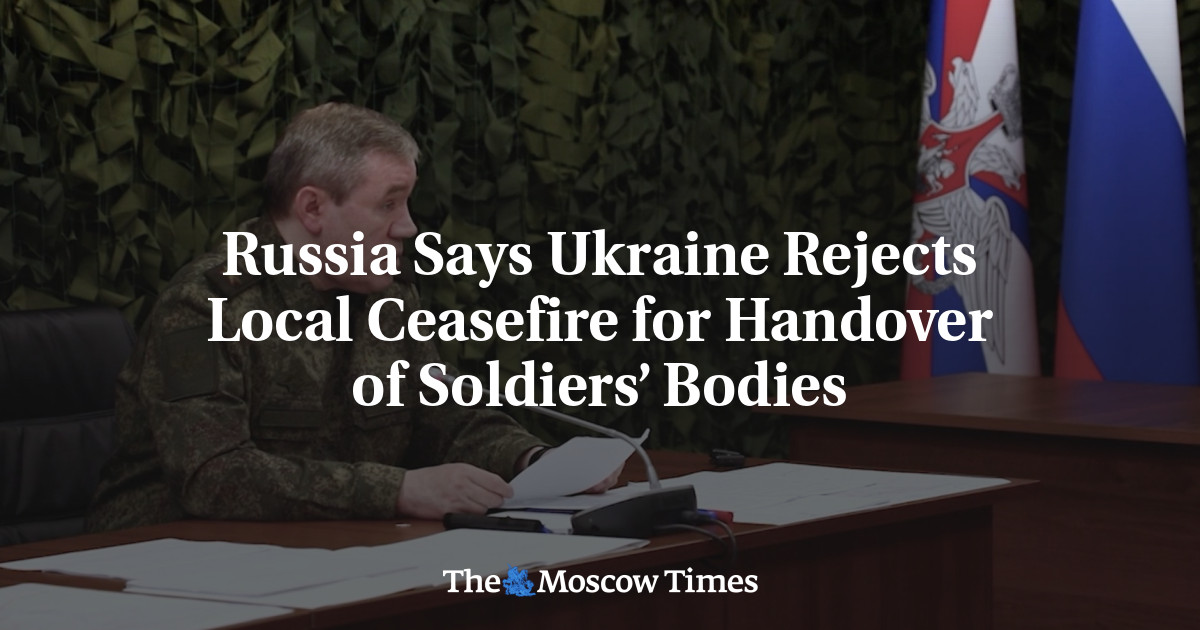
Russia has accused Ukraine of rejecting a local ceasefire agreement intended to facilitate the handover of fallen soldiers’ bodies, according to reports from the Russian Ministry of Defense. The claim suggests that Ukrainian forces declined a temporary pause in hostilities to recover remains from the battlefield, an action Russia asserts is necessary for humanitarian reasons.
The Russian Ministry of Defense stated that the proposal for a limited ceasefire was aimed at allowing both sides to retrieve deceased personnel. However, Russian officials claim the Ukrainian side refused the arrangement. Ukraine’s Defense Ministry and General Staff did not immediately respond to requests for comment regarding these specific allegations.
This dispute over the recovery of remains occurs amid a broader, volatile conflict where the exchange of prisoners of war (POWs) and the return of bodies are often managed through separate, high-level negotiations, frequently involving third-party mediators like the United Arab Emirates or Turkey.
Why are local ceasefires used for body recoveries?
Local ceasefires are temporary, geographically limited pauses in fighting. They are typically negotiated between field commanders to allow for the evacuation of wounded soldiers or the retrieval of the dead from “no man’s land”—the dangerous territory between opposing trenches. Without such agreements, recovery teams face lethal fire, making it nearly impossible to retrieve bodies without risking further casualties.
The retrieval of remains is a critical humanitarian issue for both nations. According to the International Committee of the Red Cross (ICRC), the return of the dead is a fundamental requirement under international humanitarian law to provide closure to families and maintain the dignity of the deceased.
How does this fit into broader prisoner and body exchanges?
While local ceasefires handle immediate battlefield recovery, larger-scale returns are handled as diplomatic swaps. These operations are often linked to the release of POWs. For example, in previous exchanges, Russia and Ukraine have traded hundreds of soldiers and the remains of fallen combatants in single, coordinated events.
The failure to agree on a local ceasefire, as alleged by Russia, indicates a breakdown in tactical communication between frontline units. Such breakdowns often happen when one side believes a ceasefire will be used by the opponent to reposition troops or fortify defenses rather than for humanitarian recovery.
What are the implications of refusing recovery agreements?
Refusing a ceasefire for the handover of bodies can lead to several outcomes:

- Increased Risks: Recovery teams may attempt “wild” retrievals under fire, leading to more casualties.
- Political Friction: Both governments use the failure of such agreements to frame the opposing side as inhumane in the court of public opinion.
- Forensic Delays: The longer remains stay in the field, the more difficult it becomes for forensic teams to identify soldiers and determine the cause of death.
The Russian claim that Ukraine rejected the offer adds to a long list of mutual accusations regarding the treatment of the dead and the refusal to cooperate on humanitarian grounds. Ukraine has previously accused Russia of preventing the recovery of bodies and using them as leverage in negotiations.
For those seeking official updates on prisoner swaps or humanitarian corridors, the United Nations and the ICRC provide periodic reports on the status of humanitarian efforts in the conflict zone.
The next confirmed checkpoint for humanitarian discussions involves ongoing diplomatic efforts mediated by international partners to secure a larger-scale exchange of prisoners and remains. Further updates are expected as these diplomatic channels remain active.
Do you have information on local recovery efforts or a perspective on the humanitarian challenges of this conflict? Share your thoughts in the comments below.