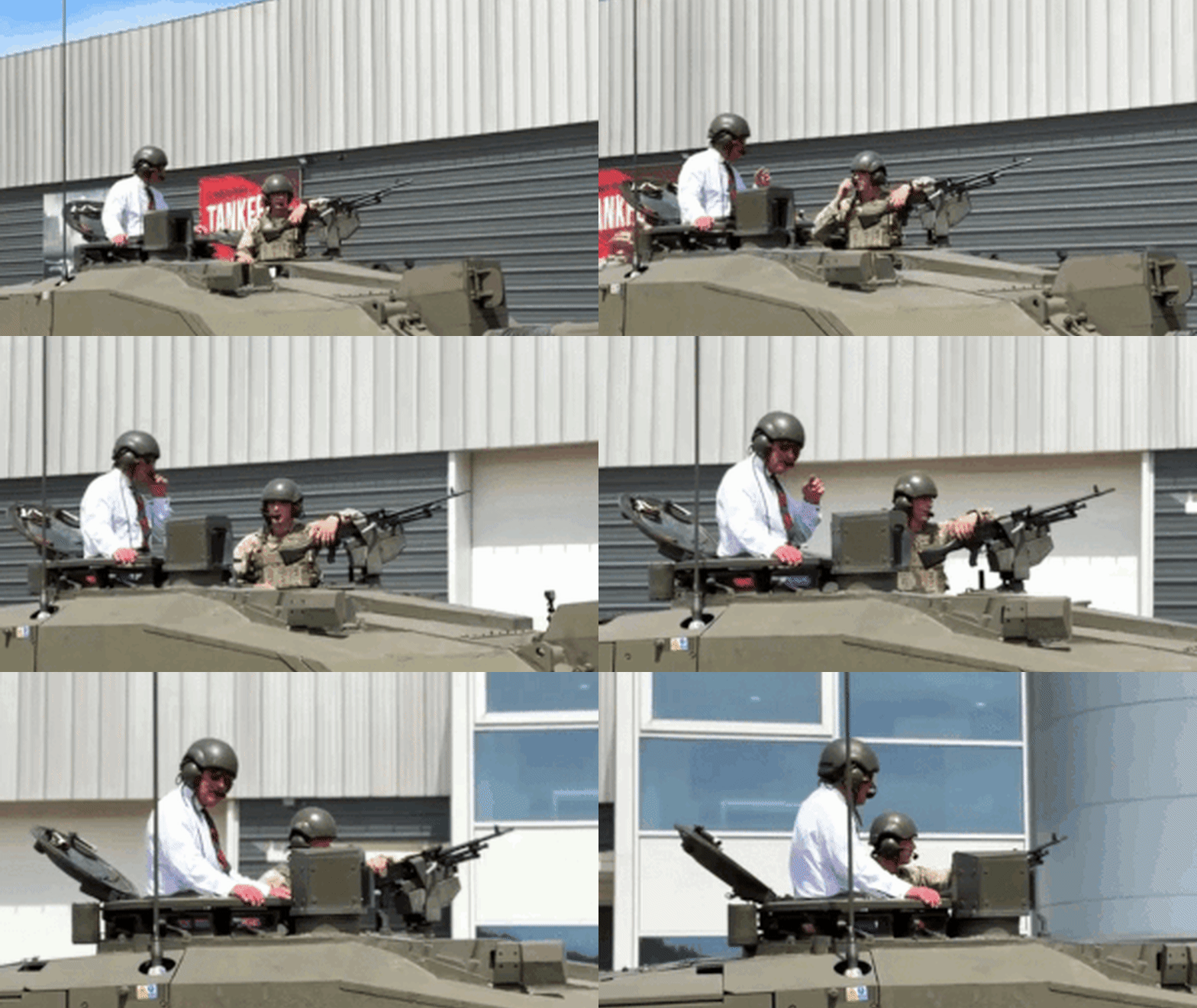
King Charles III operated a Challenger 2 battle tank during a military exercise, while reports emerged that Prince Harry was denied a stay at Buckingham Palace after failing to accept an invitation in time. The monarch’s demonstration of military hardware occurred as palace officials reportedly informed the Duke of Sussex that his delayed response to a lodging offer rendered the accommodation unavailable.
The King’s engagement with the British Army’s armored capabilities serves as a contrast to the ongoing logistical and personal frictions within the royal family. According to royal sources, Prince Harry had been offered a room at the palace for a recent visit, but the window for confirmation closed before the prince provided a definitive answer.
The incident highlights the strict protocols governing the royal households and the continuing distance between the monarchy’s administrative wing and the Duke of Sussex. While the King maintains his role as the head of the Armed Forces, the domestic arrangements for his youngest son remain a point of public contention.
Why was Prince Harry denied lodgings at Buckingham Palace?
Prince Harry was unable to stay at Buckingham Palace because he agreed to the offer too late, according to reports on the matter. Palace officials had extended an invitation for the prince to reside at the royal residence during his stay in the United Kingdom, but the offer was contingent on a specific confirmation deadline.

Sources close to the palace indicate that the “mix-up” stemmed from a lack of timely communication from the prince’s camp. Once the deadline passed, the rooms were reallocated or the arrangements were cancelled, leaving the prince to seek alternative accommodations. This administrative clash underscores the rigid nature of palace scheduling and the lack of flexibility often afforded to members of the family who have stepped back from official duties.
The situation is viewed by royal observers as an “embarrassing” lapse in coordination. It reflects a broader pattern of strained relations where formal protocols are strictly enforced, leaving little room for the informal arrangements that might have existed before the Duke and Duchess of Sussex relocated to the United States in 2020.
How did King Charles III engage with the British Army’s armored units?
King Charles III took direct control of a Challenger 2 battle tank during a visit to military personnel. The Challenger 2 is the primary main battle tank of the British Army, designed for high-intensity conflict and featuring advanced armor and firepower.

The King’s decision to “take charge” of the vehicle was part of a broader effort to maintain visibility and support for the UK’s defense forces. Observers noted that the monarch appeared comfortable with the machinery, emphasizing his long-standing connection to military tradition and his role as the Commander-in-Chief.
This public display of military engagement occurred simultaneously with the reports of the lodging dispute. The juxtaposition of the King’s authoritative role in military exercises against the administrative friction involving Prince Harry suggests a dichotomy between the official functions of the Crown and the private complexities of the Windsor family.
What does this mean for the relationship between the King and Prince Harry?
The lodging dispute is seen as a symptom of the precarious relationship between King Charles III and his son. While the King has expressed a desire for family unity, the enforcement of strict palace rules suggests that boundaries remain firmly in place.
The fact that Prince Harry was not granted an exception for a late response indicates that the “rules of the house” apply even to the King’s children. This suggests a shift toward a more streamlined, professionalized royal household under Charles III, where efficiency and protocol take precedence over familial convenience.
Furthermore, the King’s focus on military duties and the state’s operational readiness serves as a reminder of the priorities of the modern monarchy. The focus remains on the institutional stability of the Crown, even as individual family members struggle to navigate their roles within that structure.

The Duke of Sussex has historically sought a more flexible relationship with the palace, but these recent events suggest that the administration is unlikely to bend its operational standards to accommodate his schedule.
For those tracking the current status of royal residences and official visits, updates are typically provided via the Official Website of the Royal Family.
The next confirmed checkpoint for the royal family involves the scheduled official engagements for the upcoming quarter, where the presence or absence of the Duke of Sussex will be monitored by the press and the public.
Share your thoughts on the balance between royal protocol and family relations in the comments below.