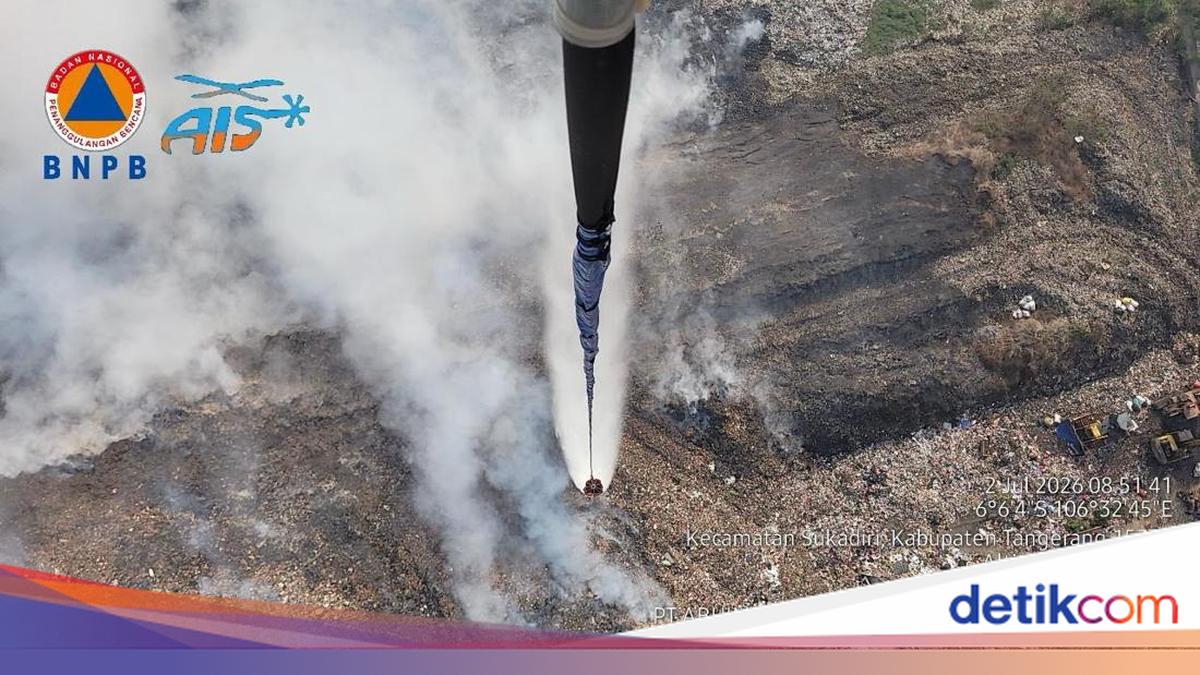
A persistent fire at the Jatiwaringin landfill (TPA Jatiwaringin) continues to burn after a week of firefighting efforts, with the Ministry of Environment reporting that only 3.6 percent of the affected area remains active. The blaze has forced 28 local residents into temporary shelters due to smoke, according to reports from Kompas.com and detikNews.
Firefighters and environmental officials are struggling to fully extinguish the site because of the deep layers of organic waste, which create pockets of methane gas. This gas fuels internal combustion, allowing the fire to smolder beneath the surface even after the visible flames are suppressed. Local authorities have shifted their strategy to focus on cooling the core of the waste piles to prevent reignition.
The incident has highlighted the vulnerability of waste management sites during periods of extreme heat. According to Radar Banjarmasin, regional heads have been cautioned to increase vigilance at landfills to prevent similar disasters, particularly as the El Niño weather pattern contributes to drier conditions and higher risks of spontaneous combustion in waste deposits.
Why is the Jatiwaringin landfill fire so difficult to extinguish?
The difficulty in controlling the blaze stems from the chemical composition of the landfill. According to Kompas.id, the fire is not a surface-level event but a deep-seated combustion process. Landfills accumulate massive amounts of organic matter that decompose anaerobically, producing methane—a highly flammable gas.

When methane traps heat within the waste layers, it can ignite spontaneously. Once a fire starts in these deep layers, water from fire hoses often fails to reach the seat of the fire, instead creating a crust of wet debris that seals the heat and gas inside. This “oven effect” allows the fire to continue burning undetected beneath the surface for days or weeks.
Officials from the Ministry of Environment have noted that the remaining 3.6 percent of the burning area represents the most stubborn “hot spots.” These areas require specialized cooling techniques and the physical removal of waste layers to allow oxygen and water to penetrate the core of the fire.
How are local residents being affected by the smoke?
The environmental impact has extended beyond the landfill boundaries, affecting the health and housing of nearby communities. Kompas.com reports that 28 residents have remained in evacuation centers because the smoke from the TPA Jatiwaringin fire has not fully dissipated.

The smoke produced by landfill fires is often more toxic than typical forest fires because it contains a mix of burning plastics, chemicals, and organic waste. This results in the release of volatile organic compounds (VOCs) and particulate matter that can cause respiratory distress, especially in children and the elderly.
Evacuees have reported that the smell and visibility issues make returning to their homes impossible, despite the government’s claim that the majority of the fire is under control. The persistence of the smoke is linked to the smoldering nature of the deep-layer fires, which release steady streams of pollutants even without active flames.
What is the current status of the containment efforts?
The Ministry of Environment has provided a quantitative update on the progress of the operation. According to Tribrata News, the area of active fire has been reduced significantly, with only 3.6 percent of the previously burning zone still active. This indicates that while the primary blaze is suppressed, the site is not yet fully stabilized.
Containment efforts now involve “mopping up” operations, where teams use heavy machinery to flip and turn the waste, exposing hot pockets to the air and water. This process is slow and labor-intensive, as moving the waste can sometimes trigger new flare-ups if the material is still volatile.
The transition from active firefighting to a monitoring phase is critical. Officials are monitoring the temperature of the soil and waste to ensure that the fire does not migrate to other sections of the landfill, which would restart the cycle of evacuation and emergency response.
The role of El Niño and waste management risks
The Jatiwaringin incident is being viewed by officials as a warning for other regions. Radar Banjarmasin reports that regional leaders are being urged to anticipate landfill fires by improving their waste management protocols, specifically in response to the El Niño phenomenon.

El Niño typically brings prolonged dry seasons and higher temperatures to Southeast Asia. In a landfill setting, low humidity causes the outer layers of waste to dry out, making them more susceptible to ignition from external sources (such as discarded cigarettes or sparks) or internal heat buildup. Once the surface is dry, it provides a pathway for oxygen to reach the methane-rich deeper layers, accelerating the fire.
To mitigate these risks, experts suggest the following measures for landfill operators:
- Installing methane extraction systems to reduce gas buildup.
- Implementing stricter “no-smoking” and fire-prevention zones around the perimeter.
- Using daily cover (soil layers) to seal waste and prevent oxygen from fueling internal fires.
- Establishing early warning systems using thermal sensors to detect hot spots before they ignite.
The failure to manage methane levels is a systemic issue in many older landfills, where the infrastructure for gas capture is either absent or insufficient for the volume of waste being processed.
Government agencies are expected to provide further updates on the total acreage cleared and the timeline for the return of displaced residents as the final 3.6 percent of the fire is extinguished. Residents are advised to follow official health advisories regarding air quality in the Jatiwaringin area.
We invite readers to share their experiences with local waste management challenges in the comments section below.