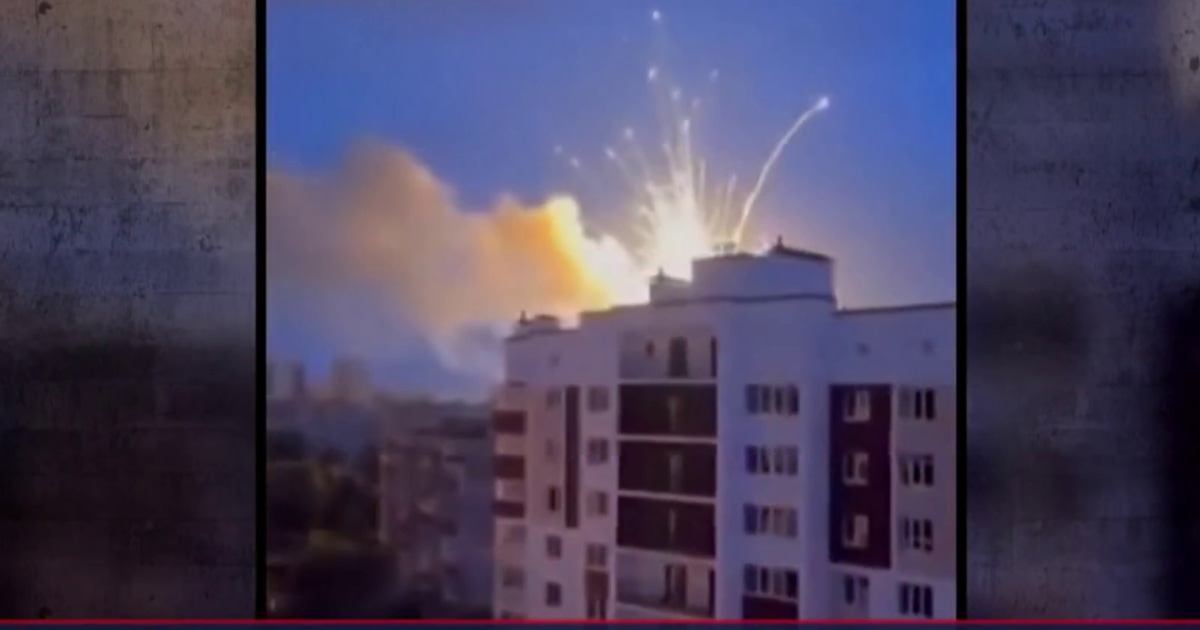
At least 22 people were killed in a series of Russian strikes across Ukraine, including a devastating hit on a residential building in Kharkiv, as the Kremlin intensified its campaign ahead of a NATO summit. Ukrainian President Volodymyr Zelenskyy has responded by urgently requesting additional Patriot air defense systems from Western allies to protect civilian infrastructure and urban centers from ongoing missile and drone barrages.
The casualties occurred during a coordinated wave of attacks targeting multiple regions. According to reports from the Reuters news agency and Ukrainian officials, the highest death toll was recorded in Kharkiv, where a Russian strike hit a multi-story apartment complex, leaving several residents dead and dozens more injured.
These escalations coincide with preparations for the North Atlantic Treaty Organization (NATO) summit, where member states are expected to discuss long-term security guarantees for Kyiv and the acceleration of military aid. The timing of the strikes is viewed by Ukrainian officials as a deliberate attempt by Moscow to exert pressure on the alliance and demonstrate the vulnerability of Ukraine’s current air defenses.
Why is Ukraine requesting more Patriot air defense systems?
President Volodymyr Zelenskyy is seeking more Patriot systems because current interceptor stockpiles are insufficient to cover the vast geography of Ukrainian cities against simultaneous Russian strikes. The Patriot missile system, manufactured by RTX (formerly Raytheon), is one of the few systems capable of intercepting the hypersonic missiles and advanced aircraft used by the Russian Aerospace Forces.

According to the Associated Press, the Ukrainian military has integrated several Patriot batteries since 2023, but the intensity of Russian “combined” attacks—which use a mix of Shahed drones, cruise missiles, and ballistic missiles—depletes ammunition faster than it can be replenished. Zelenskyy has stated that the lack of comprehensive air cover leads to avoidable civilian casualties in residential areas.
The request for more systems is a strategic priority for Kyiv as it seeks to establish a “dome” of protection over critical energy infrastructure and densely populated cities. Without these systems, Ukraine relies on older Soviet-era S-300 systems or smaller-scale Western systems like NASAMS, which, while effective, do not have the same long-range intercept capabilities as the Patriot.
Who is affected by the recent Russian strikes?
The primary victims of the recent strikes are Ukrainian civilians in urban centers. In Kharkiv, the second-largest city in Ukraine, residents in high-rise apartments have faced repeated strikes. Local emergency services reported that the most recent attack targeted a residential sector, resulting in a high number of fatalities and widespread structural damage to homes.

Beyond the immediate casualties, the strikes impact the broader Ukrainian population through the degradation of the power grid. According to reports from the BBC, Russia has consistently targeted electrical substations and heating plants. This strategy aims to disrupt the daily lives of millions of citizens, particularly as the country manages the logistics of wartime heating and water supply.
Military personnel and first responders are also heavily affected. State Emergency Service of Ukraine (SESU) teams are frequently targeted by “double-tap” strikes—where a second missile hits the same location shortly after the first to kill the rescue workers arriving on the scene.
What is the connection between these attacks and the NATO summit?
The escalation in strikes is widely interpreted as a signal to NATO leaders. By increasing the lethality of its attacks just before a summit, Russia seeks to frame the conflict as a stalemate or to warn the West that further military support for Ukraine will result in increased devastation on the ground.
NATO members are currently debating the “sustainability” of military aid. The Russian strikes serve as a concrete example for Kyiv to argue that “incremental” aid—providing weapons only after they are proven necessary—is insufficient. Ukrainian leadership argues that the preemptive provision of air defense is the only way to stop the death toll from rising during diplomatic deliberations.
Furthermore, the attacks put pressure on the alliance to define the boundaries of how Western-supplied weapons can be used. Ukraine has pushed for the ability to strike military targets inside Russian territory to stop the launch of the very missiles that are now killing civilians in Kharkiv and other cities.
How does the current casualty rate compare to previous waves?
The death toll of 22 people in a single wave of attacks represents a significant spike in civilian casualties compared to the localized drone strikes seen in previous weeks. While Russia has maintained a steady cadence of missile fire throughout the war, the shift toward targeting residential apartment blocks in Kharkiv suggests a renewed focus on psychological warfare and urban terror.

In previous phases of the conflict, Russia focused more heavily on military command centers and industrial hubs. The current pattern, as documented by human rights monitors and international news outlets, shows a broader distribution of strikes across civilian infrastructure, increasing the risk of mass-casualty events in residential zones.
This shift in targeting coincides with Russia’s own offensive efforts in the east, where they are attempting to seize more territory in the Donbas region. The air strikes function as a “softening” tactic, intended to break the morale of the civilian population and divert Ukrainian military resources away from the front lines to defend the rear.
The next confirmed checkpoint for international diplomatic action is the official commencement of the NATO summit, where member states will issue a joint communiqué regarding the security architecture of Europe and the specific volume of air defense systems allocated to Ukraine.
We invite readers to share this report and join the discussion on international security in the comments below.