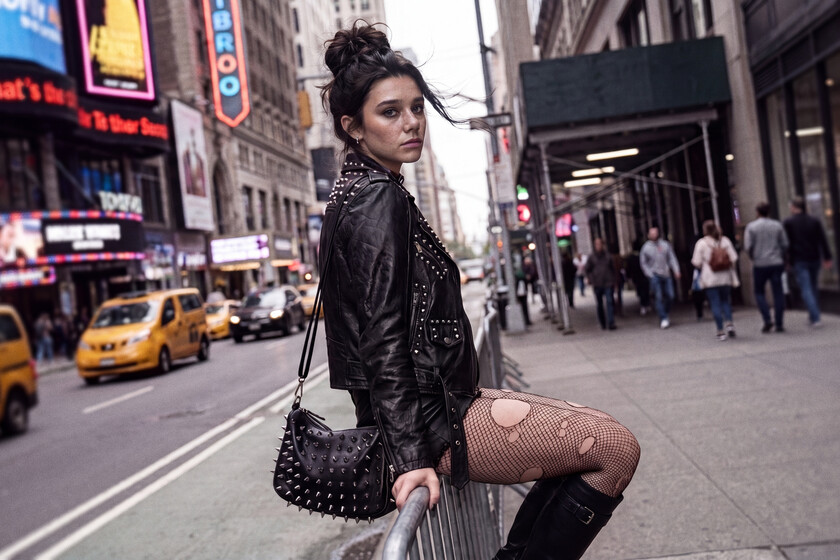
The film industry is introducing its first fully AI-generated actress in the upcoming movie Misaligned, marking a shift in how digital characters are integrated into cinematic narratives. Unlike traditional CGI characters that rely on a human performance capture, this digital entity is designed to operate as a standalone performer, utilizing generative artificial intelligence to drive its appearance and movements.
The project arrives amid a period of intense labor disputes and legal scrutiny regarding the use of artificial intelligence in Hollywood. While the production of Misaligned aims to showcase the technical capabilities of AI, the move coincides with broader industry concerns over the replacement of human actors and the protection of digital likenesses.
Industry analysts and labor unions have flagged the rise of synthetic performers as a primary threat to traditional acting roles. The SAG-AFTRA strikes of 2023, which saw thousands of performers walk off sets, focused heavily on the “digital replica” problem, demanding that studios obtain informed consent and provide fair compensation before using an actor’s likeness to train AI models.
How is the AI actress in Misaligned created?
The digital actress in Misaligned is not a “deepfake” of an existing celebrity, but a synthetic creation developed through generative AI. According to technical reports on AI cinematography, this process involves training models on vast datasets of human motion and facial expressions to create a believable, non-human entity that can interact with live actors in a scene.
This differs from the “digital doubles” used in franchises like Star Wars or the Marvel Cinematic Universe, where a real actor, such as Mark Hamill or Samuel L. Jackson, provides the base movements and facial captures. In the case of the AI performer in Misaligned, the software generates the performance based on prompts and algorithmic parameters, effectively removing the need for a physical human counterpart during the primary acting phase.
The integration of such technology requires a pipeline of “neural rendering,” where the AI-generated image is layered into real-world environments. This allows the synthetic actress to maintain consistent lighting and shadows, reducing the “uncanny valley” effect that often plagues early CGI attempts.
What does this mean for human actors?
The debut of a synthetic lead raises critical questions about the future of employment for background actors and supporting cast members. While high-profile stars like Scarlett Johansson and Ryan Reynolds maintain a level of “star power” that provides a safety net, the industry’s “middle class” of performers is more vulnerable to automation.

The core of the tension lies in the ability of AI to produce “perfect” performances that can be edited in real-time without the need for expensive reshoots. If a studio can generate a character that looks, speaks, and moves convincingly, the cost of production drops significantly, but the demand for human labor decreases.
Legal precedents are currently being set to address these concerns. In the United States, the debate centers on “Right of Publicity” laws, which vary by state. California, the hub of the entertainment industry, has some of the strongest protections, but the rapid evolution of AI is outpacing current statutes, leading to calls for federal legislation to protect performers from unauthorized digital cloning.
The ethical debate surrounding synthetic cinema
Critics of AI integration argue that acting is fundamentally an empathetic process that requires human experience to convey genuine emotion. They suggest that while an AI can mimic the appearance of sadness or joy, it cannot originate the emotional truth that a human actor brings to a script.
Conversely, proponents of the technology argue that AI actresses are a new tool in the filmmaker’s kit, similar to how the introduction of CGI changed the industry in the 1990s. They suggest that synthetic performers can be used for roles that are physically impossible for humans or to create surrealist cinema that pushes the boundaries of storytelling.
The impact extends beyond the screen. The use of AI in Misaligned serves as a case study for how studios might eventually move toward “virtual casting,” where roles are filled by digital assets that can be tweaked for different international markets—changing the character’s language, ethnicity, or appearance to better suit specific global audiences without filming new scenes.
What happens next for AI in film?
The release of Misaligned will likely serve as a benchmark for audience reception. If viewers accept a synthetic lead as a compelling character, studios may accelerate the adoption of AI performers in secondary roles. If the performance feels hollow or distracting, the industry may pivot back toward human-led performance capture.

The next critical checkpoint for the industry will be the implementation of the new SAG-AFTRA contracts, which include specific guardrails on AI. These agreements require studios to be transparent about when AI is used and ensure that human actors are compensated if their digital likeness is utilized. The long-term viability of the “AI actress” will depend on whether the industry can balance technological efficiency with the legal and ethical rights of the human workforce.
For those following the evolution of digital cinema, official updates on the release date and distribution of Misaligned are expected through the production company’s press channels.
Do you believe AI can truly “act,” or is the human element irreplaceable? Share your thoughts in the comments below and share this article with your network.