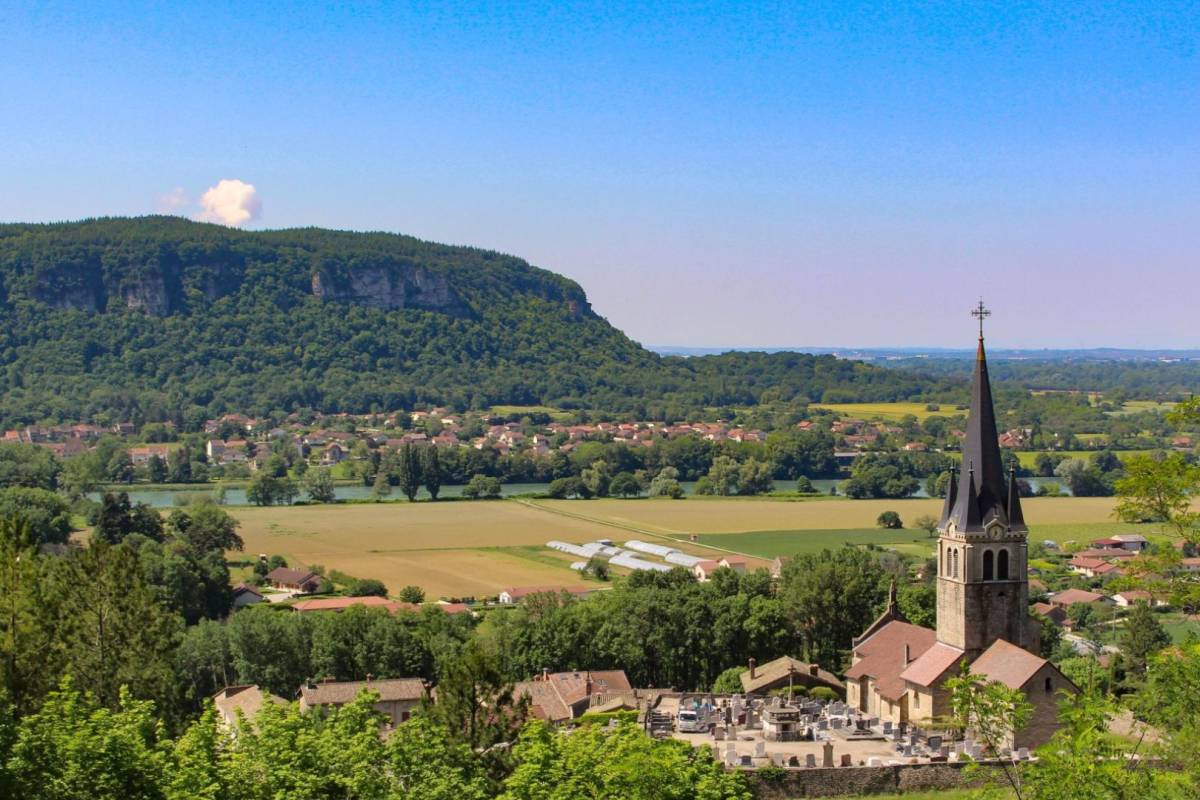
Saint-Sorlin-en-Bugey is a village located in the Ain department of eastern France, situated approximately 40 kilometers from Lyon within the Bugey region. Positioned between the Rhône river and the mountains, the commune serves as a gateway to the Bugey mountains, characterized by its steep terrain and proximity to the Rhône valley.
The village is part of the Auvergne-Rhône-Alpes region, where it functions as a residential and agricultural hub. According to official administrative data from the National Institute of Statistics and Economic Studies (INSEE), the commune is integrated into the arrondissement of Belley, marking it as a key point of interest for those traveling from the urban center of Lyon into the rural highlands of the Jura mountains.
Local geography defines the village’s layout, with the settlement clinging to the mountainside to maximize the available arable land in the valley. This positioning provides a strategic vantage point over the Rhône, a river that has historically driven the economy and transport of the Ain department.
Where is Saint-Sorlin-en-Bugey located?
Saint-Sorlin-en-Bugey is located in the Ain department in eastern France. It sits roughly 40 kilometers from the city of Lyon, making it accessible for day trips or regional commutes. The village is specifically nested in the Bugey region, a natural area defined by the foothills of the Jura mountains and the flow of the Rhône river.

The commune’s geography is a mix of riverbank access and mountain slopes. This dual landscape allows the village to maintain a connection to the water-based commerce of the Rhône while preserving the traditional mountain architecture and agriculture typical of the Bugey area. Access to the village is primarily via regional roads that connect the Rhône valley to the higher elevations of the Ain department.
What defines the Bugey region’s landscape?
The Bugey region is characterized by a dramatic transition from the Rhône river plains to the rugged peaks of the Jura. This area is known for its limestone cliffs, deep valleys, and a climate that supports both viticulture and mountain farming. Saint-Sorlin-en-Bugey exemplifies this transition, as the village is built “à flanc de montagne” (on the mountainside), providing a natural buffer between the river and the peaks.

Agriculture in this part of the Ain department often focuses on livestock and specialized crops that can thrive on inclined terrain. The proximity to the Rhône river provides a moderating influence on the local temperature, which is a critical factor for the region’s diverse flora and fauna. The Bugey mountains are frequently used for hiking and outdoor sports, drawing visitors from Lyon and other nearby metropolitan areas.
How does the village connect to Lyon and the Rhône?
Connectivity between Saint-Sorlin-en-Bugey and Lyon is maintained through a network of departmental roads. The 40-kilometer distance allows the village to remain a quiet, rural enclave while benefiting from the economic pull of France’s third-largest city. This proximity has turned the Bugey region into a preferred residential area for those who work in Lyon but seek a mountain environment.

The Rhône river serves as the primary geographical anchor for the village. Historically, the river was the main artery for transporting goods across the region. Today, the riverbank areas are used for leisure and ecological preservation, while the roads following the river’s course provide the fastest route for travelers moving between the mountains and the city.
For the most current travel advisories or local administrative updates, residents and visitors are encouraged to consult the official portal of the Ain department or the municipal services of the Bugey region.
Share this report on the geography of the Ain department and leave your comments below regarding your experiences in the Bugey region.