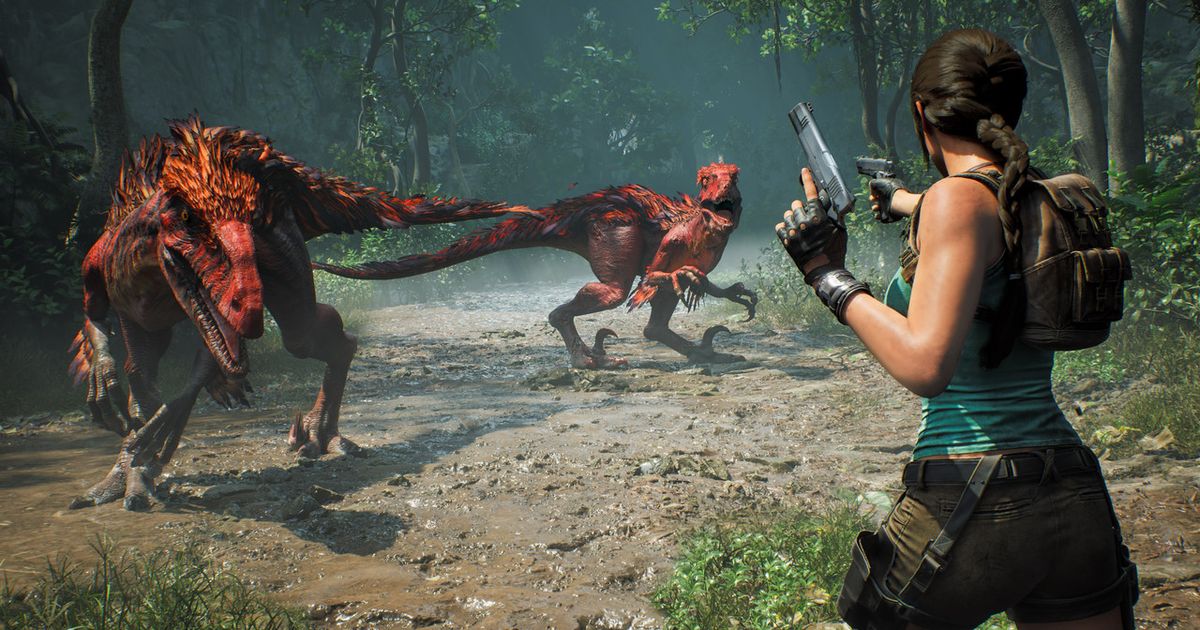
The fan-made project Tomb Raider: The Legacy of Atlantis has released new footage showcasing a modernized take on the iconic T-Rex encounter from the original 1996 title. Developed as an unofficial tribute using the Unreal Engine 5, the project aims to recreate the atmosphere and gameplay of the classic Core Design entry while updating its visual fidelity for contemporary hardware. This project is one of several community-driven initiatives currently operating within the Tomb Raider fan development space.
The footage specifically highlights the encounter in the “Lost Valley” level, a sequence widely remembered by players for its sudden transition from exploration to a high-stakes survival battle. According to the development updates provided by the project team, the remake utilizes advanced lighting and particle effects to emphasize the scale of the prehistoric creature compared to the character model of Lara Croft. The project remains a non-commercial endeavor, created by enthusiasts, and is not affiliated with Crystal Dynamics or Embracer Group, the current rights holders of the Tomb Raider intellectual property.
Development Context and Unreal Engine Integration
Tomb Raider: The Legacy of Atlantis is built on the Unreal Engine 5 framework, which allows for sophisticated geometry and environmental rendering that was not possible during the original development cycle of the 1996 game. By leveraging features such as Lumen for dynamic global illumination, the developers have attempted to capture the sense of isolation and scale inherent in the original level design. The use of modern engine tools has allowed the team to refine character animations, particularly during combat maneuvers, providing a more fluid movement set for Lara Croft while maintaining the deliberate, grid-based challenge of the original title’s platforming mechanics.
Fan-led remakes often face a complex legal landscape regarding intellectual property rights. While the developers of The Legacy of Atlantis have positioned this as a passion project, similar fan-made projects have historically been subject to cease-and-desist orders or copyright enforcement actions by major publishers. As of the most recent updates, the project remains available for public viewing, but there is no confirmed release date for a playable build, nor has there been an official statement from Crystal Dynamics acknowledging this specific project.
The Legacy of the Original Tomb Raider Encounter
The T-Rex fight in the original Tomb Raider remains a significant milestone in gaming history, representing one of the first instances where a 3D boss battle required both spatial awareness and rapid movement in a fully realized environment. The encounter occurs shortly after the player collects the first gear cog in the Lost Valley, triggering a cinematic transition that caught many players off guard in 1996. The impact of this moment was largely due to the technical limitations of the time, which forced designers to use sound cues and sudden camera shifts to build tension.

In the new footage, the modernized T-Rex utilizes high-resolution textures and updated AI pathfinding. This allows the creature to navigate the uneven terrain of the valley with more realistic weight and momentum, shifting the tone of the encounter from a rigid arcade-style boss fight toward a cinematic survival experience. Observers note that the integration of modern physics engines allows the environment to react to the creature’s movements, such as debris displacement and camera shake, which deepens the immersion compared to the static environments of the 1996 release.
Community-Driven Preservation and Fan Projects
The interest in Tomb Raider: The Legacy of Atlantis reflects a broader trend of “remake culture” within the gaming community, where fans seek to preserve the legacy of classic titles by applying modern graphical standards. This trend is distinct from official remasters, such as the Tomb Raider I-III Remastered collection released by Aspyr and Crystal Dynamics in February 2024, which focused on upscaling original assets while maintaining the foundational code of the original games. Unlike the official remaster, which prioritized accessibility and historical accuracy, fan projects like The Legacy of Atlantis often focus on creative interpretation and technological demonstration.

For players interested in the current state of the franchise, the official Tomb Raider I-III Remastered collection provides the most accessible way to experience the original T-Rex encounter on modern platforms including PC, PlayStation, Xbox, and Nintendo Switch. The official collection includes both the original tank controls and updated modern control schemes, allowing players to choose their preferred method of navigation. As the industry continues to evolve, the distinction between these official preservation efforts and independent fan-led demonstrations remains a key point of discussion among enthusiasts regarding the future of game archiving.
The developers of Tomb Raider: The Legacy of Atlantis have indicated that they intend to continue updating their progress via social media and dedicated community forums. No further announcements regarding a public demo or full project release have been verified by the team. Readers can follow the project’s official channels for future technical updates or engage with the community discussions surrounding the evolution of the Tomb Raider series.
What are your thoughts on fan-led remakes versus official remasters? Share your perspective in the comments below.