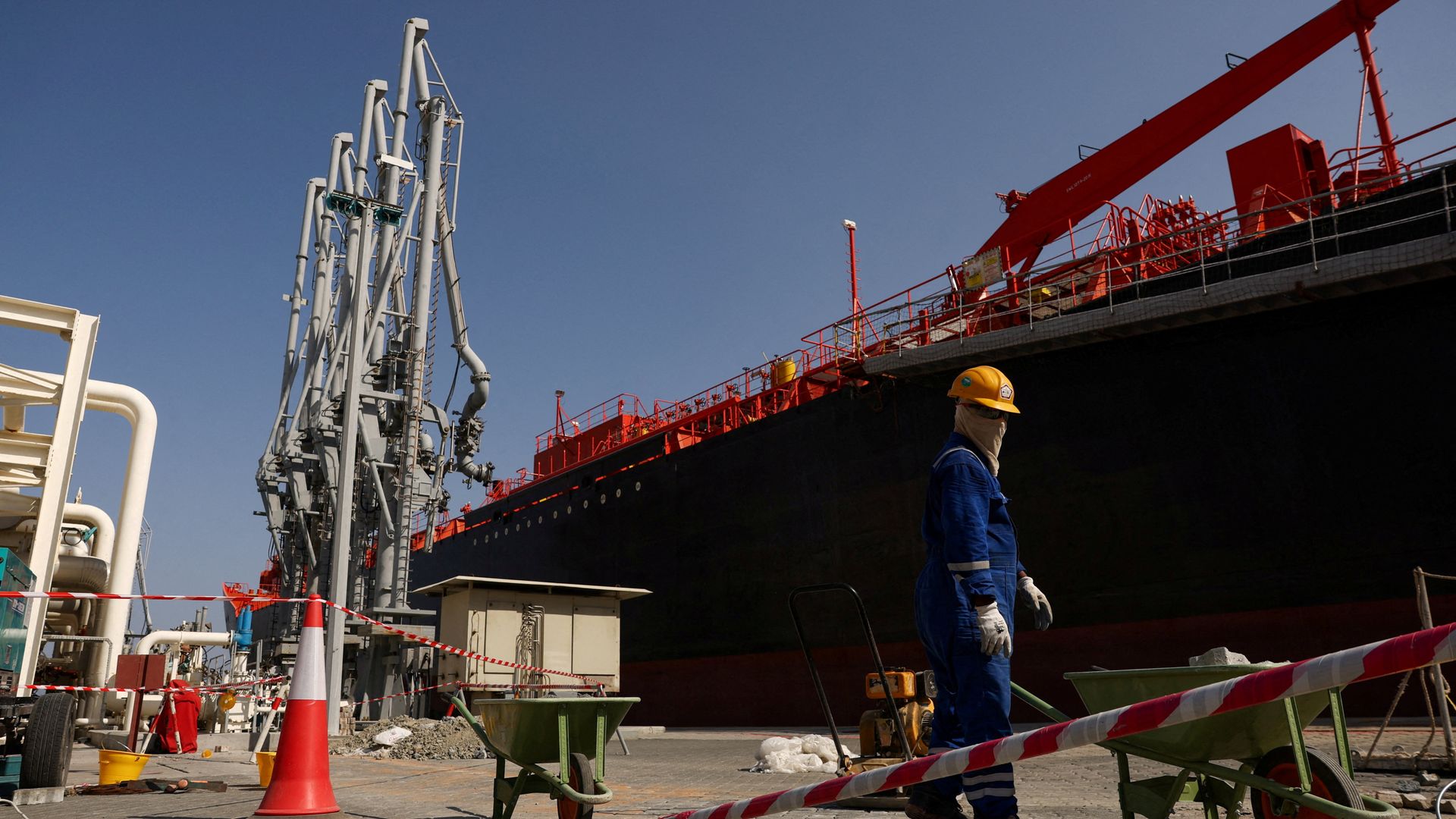
Global energy prices are experiencing increased volatility as tensions between the United States and Iran escalate over regional security and sanctions. According to market data from Reuters, Brent crude prices have fluctuated as traders price in a geopolitical risk premium, fearing potential disruptions to oil shipments in the Strait of Hormuz, which handles approximately 20% of the world’s total oil consumption.
The current instability follows a series of diplomatic failures and military frictions that have eroded the relative stability of the last few years. Market analysts note that the lack of a formal diplomatic channel between Washington and Tehran has left global markets sensitive to any sign of kinetic conflict, leading to sharp reactions in both energy futures and global equity indices.
Investors are closely monitoring the U.S. Department of State and the International Energy Agency (IEA) for signals regarding supply chain security. The intersection of Iranian regional influence and U.S. security guarantees for its allies has created a volatile environment where a single miscalculation could trigger a wider energy crisis.
Energy Market Volatility and the Geopolitical Risk Premium
The rise in energy costs is primarily driven by what economists call a “geopolitical risk premium.” This occurs when the price of a commodity rises not because of a current shortage, but because of the perceived risk of a future supply disruption. According to the International Energy Agency (IEA), the stability of global oil markets depends heavily on the unobstructed flow of crude from the Persian Gulf.

When tensions between the U.S. and Iran spike, traders anticipate that Iran may use its strategic position to restrict oil flows. This anticipation drives up the price of Brent crude and West Texas Intermediate (WTI), which in turn increases the cost of gasoline, heating oil, and jet fuel globally. These price swings create a ripple effect across the global economy, increasing transportation costs and fueling inflation in developed and emerging markets alike.
The volatility is compounded by the current production quotas set by OPEC+. While the organization aims to stabilize prices, the threat of a sudden surge in prices due to conflict often clashes with the group’s efforts to manage supply. This creates a tug-of-war in the markets, where fundamental supply-and-demand data are often overshadowed by breaking news from the Middle East.
The Strait of Hormuz: A Critical Global Choke Point
The primary focal point of energy insecurity is the Strait of Hormuz, a narrow waterway connecting the Persian Gulf with the Gulf of Oman and the Arabian Sea. According to the U.S. Department of Energy, this strait is the world’s most important oil transit chokepoint. Roughly 20 to 21 million barrels of oil per day pass through the strait, representing about one-fifth of the global oil supply.

Iran’s ability to threaten this waterway is a central component of its strategic leverage. In previous periods of high tension, Iran has conducted naval exercises and detained foreign tankers, signaling its capability to block the strait. A total closure of the Strait of Hormuz would leave the world with few immediate alternatives, as pipelines bypassing the strait have limited capacity compared to the volume of tanker traffic.
The U.S. Navy’s Fifth Fleet, headquartered in Bahrain, maintains a presence in the region to ensure the “freedom of navigation.” However, the cost of maintaining this security is high, and the risk of a direct encounter between U.S. and Iranian naval forces remains a primary driver of market anxiety. Any reported skirmish in these waters typically results in an immediate spike in oil futures.
Impact on Global Equity Markets and Investor Sentiment
The correlation between Middle East instability and stock market performance is historically strong. When energy prices rise sharply and unexpectedly, it acts as a “tax” on both consumers and corporations. According to data from Bloomberg, sectors such as aviation, logistics, and automotive manufacturing are the most vulnerable to sudden increases in fuel costs, which erode profit margins and lead to lower stock valuations.
Furthermore, the “flight to safety” mechanism often triggers a sell-off in equities. Investors move capital away from riskier assets, such as stocks in emerging markets or growth-oriented tech companies, and shift toward “safe havens” like gold, the U.S. dollar, and U.S. Treasury bonds. This shift can cause sharp drops in major indices, including the S&P 500 and the FTSE 100, especially if the conflict is perceived as likely to prolong into a regional war.
The impact is particularly acute for countries that are net energy importers. In Europe and Asia, where reliance on Middle Eastern oil remains significant, the combination of rising energy costs and falling stock prices can lead to a contraction in economic growth. Central banks, already struggling to manage inflation, find themselves in a difficult position: raising interest rates to fight energy-driven inflation can further depress stock markets and slow economic activity.
The Collapse of Diplomatic Frameworks and the JCPOA
The current volatility is rooted in the collapse of the Joint Comprehensive Plan of Action (JCPOA), the 2015 nuclear deal. The agreement was designed to limit Iran’s nuclear capabilities in exchange for sanctions relief. However, the U.S. withdrawal from the deal in 2018 under the Trump administration and the subsequent “maximum pressure” campaign fundamentally altered the relationship between the two nations.
Since the withdrawal, the U.S. has reimposed heavy sanctions on Iranian oil exports, forcing Tehran to find alternative markets or engage in “shadow fleet” shipping to bypass restrictions. This has created a fragmented oil market where a significant portion of Iranian crude is traded outside official channels, making it harder for the IEA and other monitors to track global supply accurately.
Efforts to revive the JCPOA under the Biden administration have largely stalled. The lack of a functional diplomatic framework means that there is no “off-ramp” for tensions. Without a treaty or a formal agreement to govern behavior, both the U.S. and Iran rely on deterrence and signaling, which often manifests as military posturing that spook markets.
Who is Affected and What Happens Next
The consequences of US-Iran friction extend far beyond the borders of the two nations. Low-income households in energy-dependent nations are the first to feel the impact of rising pump prices. Similarly, global shipping companies face increased insurance premiums for vessels operating in the Persian Gulf, a cost that is eventually passed down to the consumer.

Industry analysts suggest that the market is currently in a state of “heightened sensitivity.” This means that even minor news—such as a change in sanctions enforcement or a diplomatic spat at the United Nations—can cause disproportionate movements in oil prices. The global economy is essentially waiting for a catalyst that either leads to a diplomatic breakthrough or a significant escalation.
The role of China also complicates the situation. As one of the largest importers of Iranian oil, Beijing has a vested interest in maintaining stability in the region, yet it continues to balance its relationship with both the U.S. and Iran. This geopolitical triangle adds another layer of unpredictability to how a potential crisis would be resolved.
The next confirmed checkpoint for monitoring this situation will be the upcoming scheduled briefings from the U.S. State Department and the next monthly report from the Organization of the Petroleum Exporting Countries (OPEC), which will provide updated data on production levels and market outlooks.
We invite our readers to share their perspectives on how rising energy costs are affecting their local economies in the comments section below.