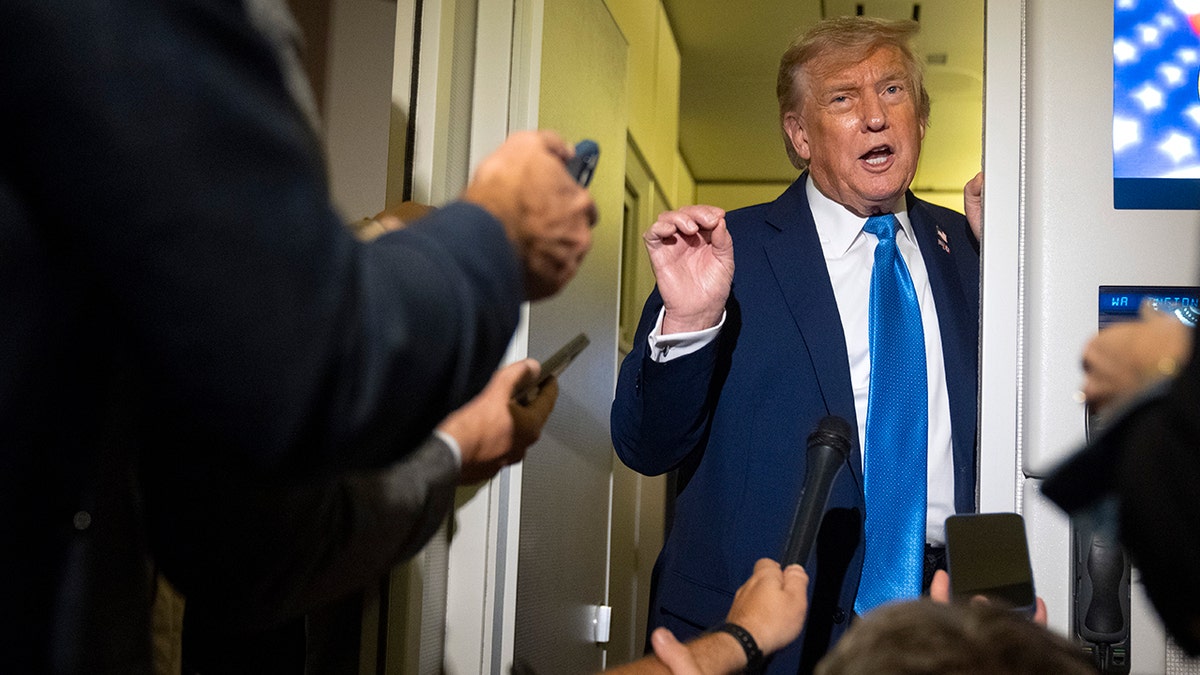
Former President Donald Trump recently suggested in a conversation with a reporter that he faces an active risk of assassination attempts linked to Iran, characterizing his security situation as precarious. During the discussion, Trump remarked on the potential danger to his transport, specifically referencing Air Force One, and suggested that any successful strike against him would also result in the death of the journalist present. “If I go, you go,” Trump stated during the exchange, according to reporting on the interaction.
Security Concerns and Recent Allegations
The comments come amid a series of claims made by the former president regarding threats to his life. Trump has frequently asserted that he is a target of the Iranian government, citing his administration's past policies toward Tehran as the primary motivation for such hostility. These assertions follow reports from federal authorities regarding foreign plots against U.S. political figures.

The Secret Service has maintained a heightened security posture around Donald Trump, particularly following the shooting incident at a campaign rally in Butler, Pennsylvania, on July 13, 2024. Official reports confirmed that one attendee was killed and two others were critically injured, while Trump sustained a wound to his ear. Following the event, the agency underwent significant leadership changes, including the resignation of Secret Service Director Kimberly Cheatle, as reported by Reuters. The agency continues to evaluate the security protocols for the former president as he remains a central figure in the 2024 election cycle.
Context of U.S.-Iran Relations
The focus on Iran stems from the Trump administration’s “maximum pressure” campaign, which included the withdrawal from the Joint Comprehensive Plan of Action (JCPOA) in 2018 and the imposition of extensive economic sanctions. Analysts note that these policies fundamentally altered the diplomatic landscape between Washington and Tehran. While the former president frequently highlights his confrontational stance toward Iran as a success, critics and foreign policy observers have suggested that such policies have limited the ability of the U.S. to engage in direct de-escalation, according to reports from CNN.
The rhetoric surrounding these threats often intensifies during major diplomatic milestones or campaign events. During a recent NATO summit, Trump spoke about his approach to foreign conflicts, claiming progress in his efforts to influence global outcomes. These public statements often contrast with the assessments provided by national security officials, who monitor state-sponsored threats through classified intelligence channels. Official updates regarding specific threats are typically issued by the Office of the Director of National Intelligence (ODNI) or the Federal Bureau of Investigation (FBI) when they reach a threshold requiring public notification.
Evaluating the Risk and Official Response
Security experts emphasize that the threat environment for high-profile political figures is assessed based on actionable intelligence rather than individual anecdotes. The Secret Service is mandated by federal law to provide protection to former presidents, a responsibility that includes rigorous threat assessments and the coordination of local, state, and federal law enforcement agencies. The agency’s official protection guidelines outline the protocols for managing risks during domestic and international travel.

As the election season progresses, the intersection of national security, foreign policy, and personal safety remains a significant point of discussion. The former president’s remarks about the risks of traveling on Air Force One reflect a broader narrative he has cultivated regarding his vulnerability to foreign actors. Observers looking for verified updates on security advisories or official briefings regarding threats to candidates can consult the official press room of the FBI for any public warnings or developments in ongoing investigations.
The next major checkpoint for federal oversight of security protocols involves ongoing congressional hearings, where officials are expected to provide further testimony regarding the protection of political candidates. Readers are encouraged to share their perspectives on the impact of foreign policy on domestic security in the comments section below.