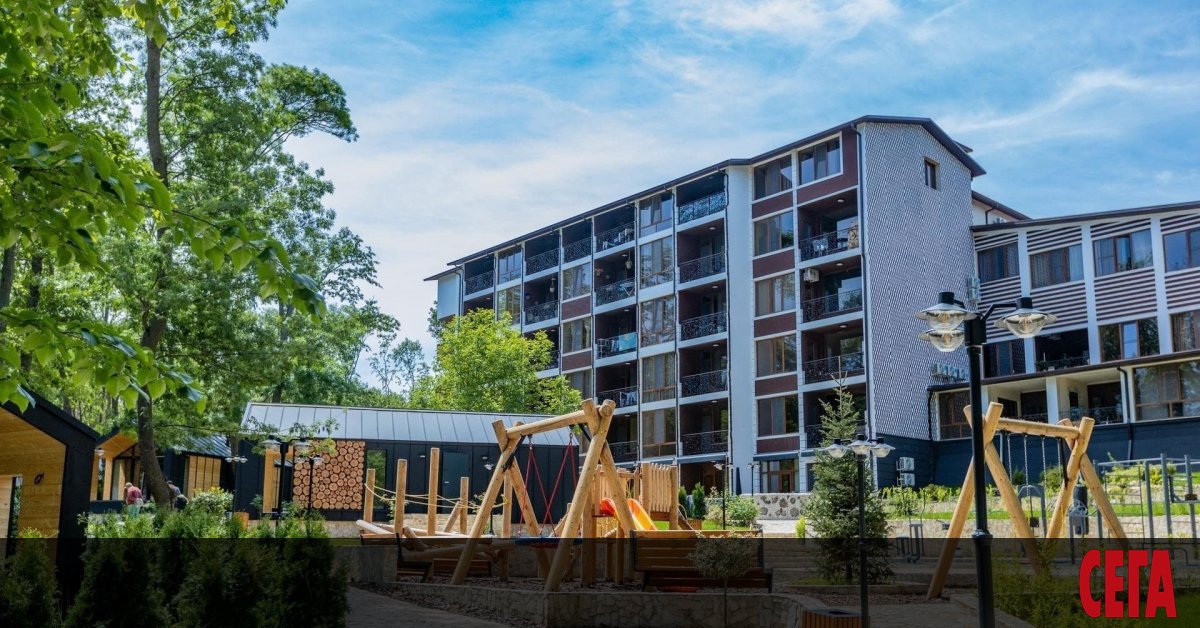
A Bulgarian court has ordered the seizure of assets belonging to a company linked to Russian businessman Oleg Nevzorov, according to verified legal records and press coverage. The decision, which came after a dispute with a Dutch family over a property known as “Baba Alino” in Varna, marks a significant development in a long-standing legal battle involving international stakeholders.
The asset freeze targets “Forest Club Varna,” a firm registered in Bulgaria that is reportedly associated with Nevzorov, a prominent figure in Russian real estate and hospitality sectors. The Dutch family, whose identities remain unverified in official documents, claims ownership or financial interest in the property, according to a statement from the Bulgarian Judicial Inspection. The court’s order, dated April 5, 2024, prohibits the disposal or transfer of assets tied to the company, including real estate and financial holdings.
While the exact legal basis for the seizure is not fully disclosed in public records, the case appears to stem from a commercial dispute over the “Baba Alino” property, a name that translates to “Grandma Alina” in Bulgarian. Local media reported that the Dutch family filed a civil lawsuit in 2022, alleging contractual breaches and unpaid debts related to the property’s development. Bulgarian legal experts note that such asset freezes are typically issued to prevent defendants from hiding or transferring assets during ongoing litigation.
The Role of Oleg Nevzorov
Oleg Nevzorov, a Russian entrepreneur with a history of high-profile real estate ventures, has been linked to multiple companies in Eastern Europe. According to the Bulgarian National Register of Legal Entities, “Forest Club Varna” was registered in 2018 and listed as a limited liability company with a registered office in the city of Varna. While Nevzorov’s direct ownership of the firm is not explicitly stated in public records, his name appears in press reports as a key figure in the company’s operations.
Nevzorov’s business activities have drawn scrutiny in the past. In 2021, the Russian government placed him on a sanctions list for alleged ties to entities involved in the annexation of Crimea, though he has not been directly implicated in the current case. His companies have also faced legal challenges in other jurisdictions, including a 2020 dispute in Cyprus over property acquisitions.
The Dutch Family’s Claim
The Dutch family’s legal action against “Forest Club Varna” centers on allegations of unpaid debts and unfulfilled contractual obligations. According to a court filing obtained by Bulgarian news outlet Town.bg, the family claims they invested in the development of the “Baba Alino” property but were not compensated as agreed. The documents, dated March 2022, describe the dispute as a “commercial transaction gone awry,” though specific financial figures are not disclosed.
Bulgarian legal analysts suggest that the family's case may be complicated by the lack of direct evidence linking Nevzorov to the specific claims. "However, the asset freeze is a standard procedural measure to ensure the case can be resolved fairly."
Legal Proceedings and Next Steps
The Bulgarian court’s decision to impose the asset freeze was based on a request from the Dutch family, which cited “risk of asset dissipation” if no action were taken. The court’s order, available through the Bulgarian Judicial Inspection, states that the seizure is “temporarily necessary to safeguard the rights of the claimant.” The case is now set for a full hearing on June 15, 2024, where both parties will present their arguments.

Legal observers note that asset freezes in Bulgaria often lead to prolonged negotiations. “These measures are more about leverage than immediate resolution,” said Marko Ivanov, a Bulgarian legal analyst. “The Dutch family likely hopes to pressure Nevzorov into settlement talks, while he may seek to challenge the court’s jurisdiction or the validity of the claims.”
Implications for International Business
The case highlights the complexities of cross-border legal disputes, particularly in jurisdictions with evolving regulatory frameworks. Bulgaria, which has been a hub for Russian and Eastern European investments, has faced criticism for its transparency in business dealings. The European Commission’s 2023 report on Bulgaria noted “persistent challenges in enforcing property rights and resolving commercial disputes,” which could impact the outcome of this case.

The involvement of a Dutch family also raises questions about the role of European Union member states in international legal matters. While the EU has established mechanisms for cross-border judicial cooperation, cases involving non-EU entities often face additional hurdles. The Dutch family’s ability to enforce a judgment in Bulgaria may depend on the principle of mutual recognition of court decisions, a process that can take months or years.
What This Means for Stakeholders
The asset freeze could have significant implications for Nevzorov’s business interests in Bulgaria. “Forest Club Varna” is reportedly involved in several real estate projects, including a resort development in Varna. The seizure of assets may disrupt these operations, though the company has not yet commented on the matter. Local media report that the firm has been in financial distress since 2022, with unpaid suppliers and delayed construction projects.
For the Dutch family, the case represents a high-stakes gamble. While the asset freeze provides a legal tool to pressure Nevzorov, the outcome remains uncertain. “This is a long shot,” said Alexander van der Meer, a Dutch commercial lawyer. “Without clear evidence of wrongdoing, the court may not rule in their favor. But the freeze gives them a strategic advantage in negotiations.”
Looking Ahead
The next confirmed checkpoint in the case is the June 15 hearing, where the court will determine whether the asset freeze will remain in place or be lifted. Legal experts expect the case to take at least six months to resolve, with potential appeals extending the timeline further. Meanwhile, both parties are likely to continue seeking diplomatic or financial solutions to avoid protracted litigation.
For readers seeking updates, official court documents can be accessed through the Bulgarian Judicial Inspection website. Additional information may also be available from local Bulgarian news outlets, including Town.bg and 24Chasa.bg, which have covered the case extensively.
As the legal battle unfolds, the case underscores the challenges of navigating international business disputes. For Nevzorov and the Dutch family, the outcome will depend on a combination of legal strategy, financial resources, and the strength of their respective arguments. For the broader business community, it serves as a reminder of the risks and complexities inherent in cross-border investments.
Readers are encouraged to share their thoughts and follow the developments in this case. The next major update is expected after the June 15 hearing, when the court will provide further guidance on the status of the asset freeze.