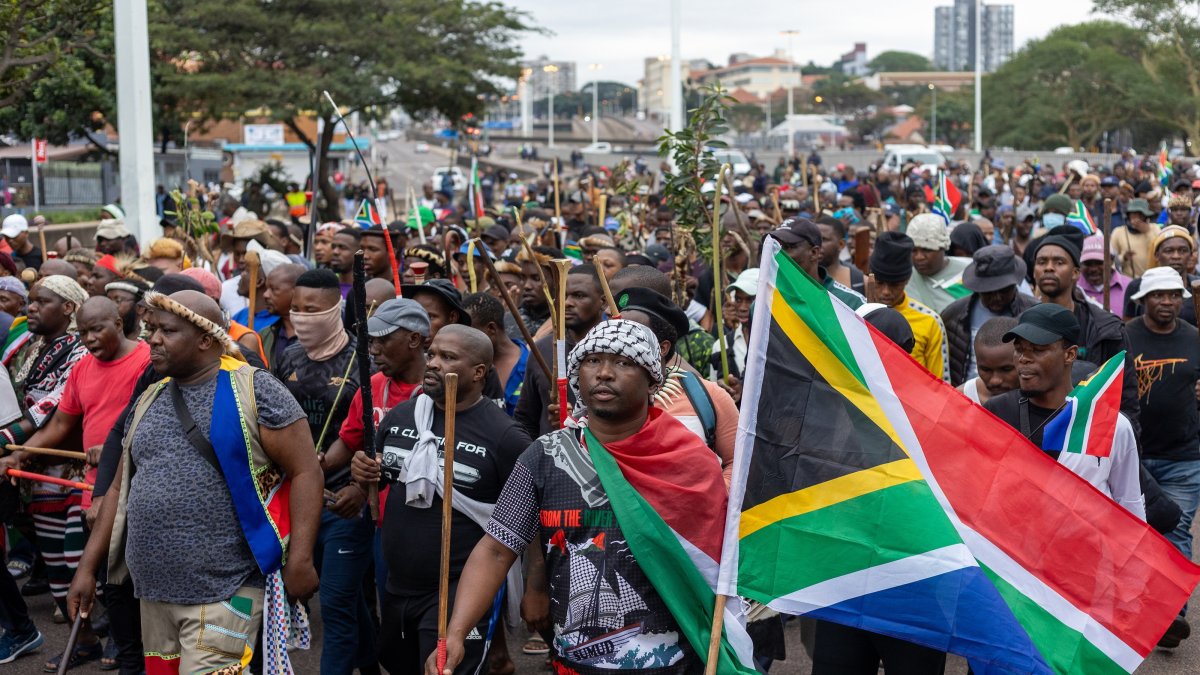
South Africa is currently navigating a complex period of domestic policy reform as it attempts to balance constitutional obligations to migrants with rising public pressure regarding national security and economic stability. The government’s recent legislative efforts, including the White Paper on Citizenship, Immigration, and Refugee Protection, underscore a shift toward more restrictive border controls and a re-evaluation of the country’s historical role in regional integration, according to the Department of Home Affairs.
For decades, South Africa served as a primary destination for migrants and refugees from across the African continent, driven by its relatively stable economy and democratic framework established in 1994. However, the intersection of high unemployment—which reached 32.9% in the first quarter of 2024—and service delivery challenges has heightened tensions in urban centers, leading to what international observers describe as localized outbreaks of xenophobic violence, as noted by the Office of the United Nations High Commissioner for Human Rights.
Legislative Shifts and the White Paper Policy
The South African government, led by the Department of Home Affairs, has signaled an intent to move away from the policies defined in the 1998 Refugees Act. The White Paper published in 2023 proposes significant changes, including the potential withdrawal from or renegotiation of the 1951 Refugee Convention and the 1967 Protocol. Officials argue that these international frameworks, designed in a different geopolitical era, no longer adequately address the current realities of mass migration and the strain on public resources.
Critics of the policy, including human rights organizations and legal scholars, argue that these moves represent a betrayal of the Pan-African ideals that defined the post-apartheid era. The Amnesty International regional office has expressed concern that such legislative changes could lead to the mass detention of asylum seekers and violate the principle of non-refoulement, which prevents the return of individuals to countries where they face persecution.
The Economic Context of Migration Governance
The discourse surrounding migration in South Africa is inextricably linked to the country’s economic trajectory. With a significant portion of the population living in poverty, competition for low-skilled jobs has become a flashpoint for social unrest. While economists at the World Bank have noted that migration can contribute to economic growth through labor force expansion and innovation, the perceived impact on local wages has fueled public support for more stringent immigration enforcement.

The government’s “Operation Dudula” movement and other grassroots initiatives have capitalized on these frustrations, often targeting foreign-owned businesses and undocumented workers. This has created a bifurcated reality: while the formal economy relies on a mix of regional labor, the informal sector has become a battleground for nationalist rhetoric. Government authorities have maintained that the enforcement of existing immigration laws is not an act of xenophobia, but a necessary measure to ensure the rule of law and the security of the state, as stated in recent communications from the Department of Home Affairs.
Regional Relations and Future Policy Trajectory
South Africa’s shift in policy has not gone unnoticed by its neighbors within the Southern African Development Community (SADC). As Pretoria tightens its borders, the burden of migration is increasingly redistributed among other nations in the region, some of which possess fewer resources to manage the influx. This has led to delicate diplomatic negotiations, as South Africa seeks to maintain its status as a regional leader while simultaneously addressing the domestic political imperatives of its electorate.
The ongoing legal challenges to the government’s proposed migration policies are expected to reach the Constitutional Court in the coming months. These proceedings will likely set a precedent for how the state balances international human rights obligations with the sovereign right to determine immigration policy. For now, the administration remains committed to its stated goal of creating a “managed” migration system, though the implementation of these measures continues to be met with intense scrutiny from both domestic and international stakeholders.
The next major checkpoint in this policy evolution will be the conclusion of the public comment period and the subsequent parliamentary review of the proposed amendments to the Refugees Act. Interested parties and stakeholders are encouraged to monitor the Parliament of South Africa website for schedules regarding committee hearings and legislative updates. We welcome your perspectives on this issue in the comments section below.