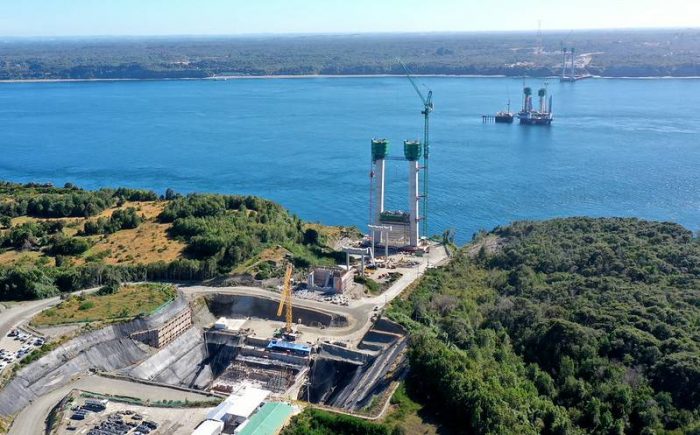
The Chacao Bridge, currently under construction in southern Chile, is set to become the longest suspension bridge in Latin America. Spanning 2,754 meters, the project will connect the island of Chiloé with the mainland at the Chacao Channel, aiming to replace ferry services that currently serve as the primary link for residents and tourists. According to the Chilean Ministry of Public Works (MOP), the project is part of a broader infrastructure strategy to improve connectivity in the Los Lagos Region.
The construction of this engineering project, officially known as the Chacao Bridge (Puente Chacao), is overseen by the Consorcio Puente Chacao, a multinational group led by Hyundai Engineering & Construction. While initial timelines for the bridge have faced adjustments due to technical complexities and environmental considerations, government officials have signaled that the infrastructure is a priority for regional development. The connection is intended to reduce transit times significantly compared to the current 30-minute ferry crossing, which is subject to weather conditions and high traffic volume during peak tourist seasons.
Engineering and Construction Scope
The bridge is designed as a multi-span suspension structure, featuring three main towers that will support the deck over the Chacao Channel. The central tower is expected to reach a height of approximately 199 meters, making it one of the most prominent features of the landscape in the Los Lagos region. According to technical documentation provided by the Chilean Ministry of Public Works (MOP), the bridge is designed to withstand the seismic activity characteristic of the Chilean coast, a requirement that has influenced the structural engineering and material selection.

The project has faced various challenges, including the logistical difficulty of operating in the Chacao Channel, known for its strong currents and deep waters. The consortium responsible for the construction has implemented specialized maritime platforms to facilitate the foundation work for the towers. The project is being executed under a design-build contract, which requires the contractors to manage both the technical specifications and the physical construction of the link.
Regional Impact and Connectivity
For the inhabitants of the Chiloé Archipelago, the bridge represents a shift in daily logistics. Currently, the movement of goods, emergency services, and commuters relies on the ferry system operated by private companies, which can experience delays during adverse weather. By providing a permanent, 24-hour land link, the bridge is expected to integrate the island’s economy more closely with the mainland, potentially lowering transport costs for local agricultural and aquaculture products.
The Ministry of Public Works has emphasized that the project is intended to boost tourism by providing a predictable and efficient route for visitors. However, the project has also been subject to public debate regarding its environmental impact and the preservation of the cultural identity of Chiloé. Local community groups and environmental organizations have periodically raised concerns regarding the potential disruption to marine life in the channel, which is a known habitat for various species of dolphins and whales. The government has stated that the project complies with the necessary environmental impact assessments (EIA) required under Chilean law.
Project Timeline and Status
As of late 2024, the project remains in the active construction phase. While earlier projections suggested earlier completion dates, the complexity of the maritime works has necessitated updates to the delivery schedule. The government continues to manage the contract with the consortium to ensure the project reaches its final stages. Official updates on the progress of the foundation work and the assembly of the bridge towers are periodically published by the Ministry of Public Works via their regional offices in Puerto Montt.
For those interested in the official status of the project, the Ministry of Public Works maintains a portal for infrastructure concessions where updates on major projects are posted. The bridge is expected to provide a definitive solution to the isolation of the archipelago, though the final operational date remains subject to the successful completion of the remaining structural phases and safety testing protocols as stipulated by the Chilean regulatory framework for public infrastructure.
Future updates regarding the bridge’s completion date are expected to be announced by the Ministry of Public Works as the structural elements move toward final assembly. Residents and stakeholders are encouraged to monitor the ministry’s official releases for the most accurate information regarding the project’s progress.