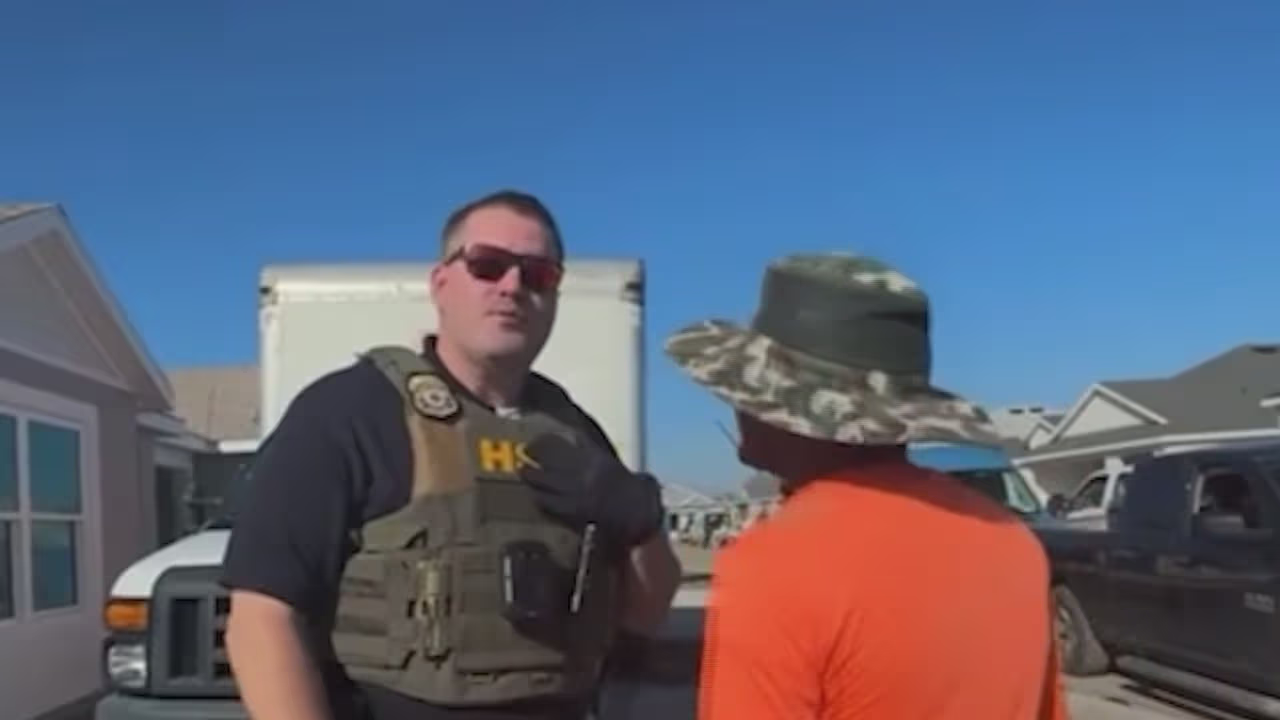
Immigration and Customs Enforcement (ICE) operations in North Carolina have drawn renewed scrutiny from advocacy groups following reports of a strategic shift in how agents are conducting enforcement actions. Community organizations, including Siembra NC, have documented a series of recent arrests across Charlotte, Greensboro, and various counties, characterizing these activities as a departure from previous patterns of engagement. These developments have intensified discussions among immigrant communities regarding their legal rights and the current enforcement priorities of federal authorities.
The U.S. Immigration and Customs Enforcement agency maintains that its enforcement activities are conducted in accordance with federal law and established agency policy. According to the ICE Enforcement and Removal Operations (ERO) mission statement, the agency prioritizes the arrest and removal of individuals who pose a threat to national security, public safety, or border security. While the agency routinely conducts targeted operations, advocacy groups in North Carolina have reported an increase in community-based encounters that deviate from past reliance on local jail cooperation.
Shifting Enforcement Patterns in North Carolina
The reported change in tactics involves a move away from relying solely on 287(g) agreements—which allow local law enforcement to assist in federal immigration enforcement—toward more independent, field-based operations. In North Carolina, the political and legal landscape regarding immigration enforcement has been fluid for several years. State law, specifically House Bill 370 (which was vetoed by Governor Roy Cooper in 2019), sought to mandate cooperation between county sheriffs and ICE. While the bill did not become law, the debate surrounding it highlights the ongoing tension between federal mandates and local jurisdiction autonomy.

Advocates note that when ICE operates independently of local jails, the nature of their interaction with the public changes. These operations often occur in residential areas or near workplaces, leading to heightened anxiety among families. The Department of Homeland Security (DHS) guidelines issued in 2021 emphasize that enforcement should be focused on individuals who fall under specific priority categories. However, community groups argue that the reality on the ground often results in the apprehension of individuals who do not meet these stated enforcement priorities.
Rights and Legal Protections for Immigrant Communities
For individuals residing in North Carolina, understanding the scope of federal authority is a critical component of community safety. Legal experts and civil rights organizations consistently advise that individuals retain certain constitutional rights regardless of their immigration status. The American Civil Liberties Union (ACLU) provides resources outlining that individuals are not required to consent to a search of their person or property without a warrant signed by a judge. Furthermore, the right to remain silent is a cornerstone of the Fifth Amendment, which applies to all persons within the United States.

In the event of an encounter with ICE agents, legal advocates emphasize the following:
- Request to see a warrant: Agents must present a warrant that is signed by a judge or an authorized immigration official.
- Exercise the right to silence: Individuals are not obligated to answer questions regarding their immigration status or country of origin.
- Refrain from signing documents: It is strongly advised not to sign any documents—such as voluntary departure forms—without first consulting with a qualified immigration attorney.
The Role of Local Advocacy and Community Response
The reporting by local organizations serves as a primary mechanism for documenting enforcement trends that might otherwise go unnoticed. By maintaining hotlines and community networks, these groups provide real-time updates to families affected by sudden detentions. This grassroots monitoring is often the only source of information for families during the initial hours following an arrest, as the official ICE Online Detainee Locator System can sometimes experience delays in updating an individual’s status or location.
The impact of these enforcement shifts extends beyond the individuals detained. It affects the stability of local workforces and the educational environment for children in immigrant households. As the legal environment evolves, community leaders are increasingly focusing on “Know Your Rights” workshops and legal defense funds to ensure that families have access to representation in immigration court. Understanding the difference between administrative warrants and judicial warrants remains a vital piece of information for those navigating the current enforcement climate.

As of this reporting, there are no scheduled federal court hearings directly related to the specific tactical changes reported by community groups in North Carolina. However, advocates continue to monitor for future enforcement actions and potential legal challenges to federal procedures. For those seeking verified information or legal assistance, the Department of Justice maintains a list of pro bono legal service providers by state. We invite readers to share their experiences or questions in the comments section below to foster a more informed dialogue regarding these ongoing developments.