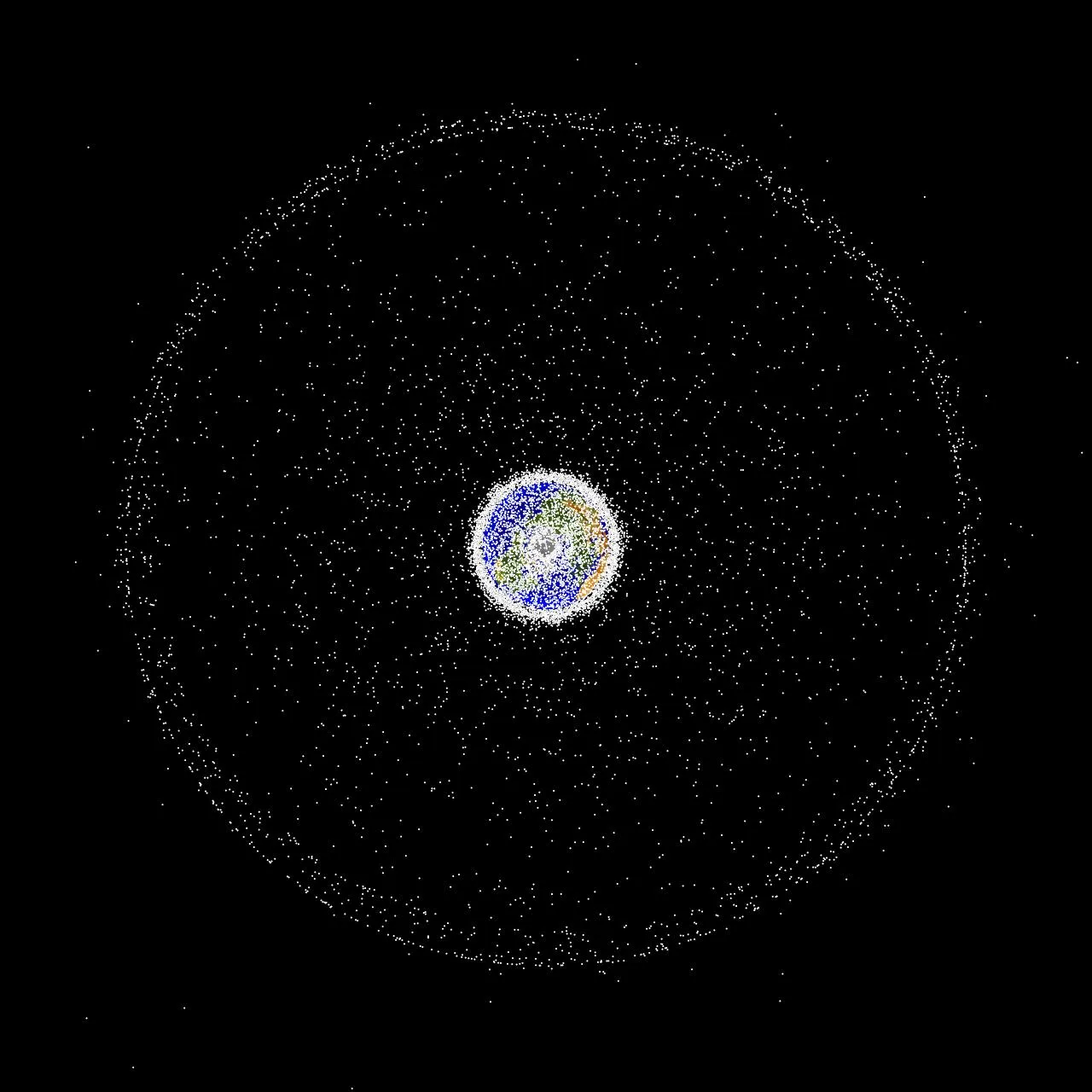
The increasing density of orbital debris poses a significant challenge to the sustainability of space exploration, prompting international space agencies to develop advanced detection and mitigation technologies. While large objects are tracked by global space surveillance networks, the smallest, most elusive fragments—often smaller than one centimeter—remain largely invisible to current radar systems, yet possess sufficient kinetic energy to cause catastrophic damage to satellites and crewed spacecraft upon impact.
According to the European Space Agency (ESA), there are an estimated 130 million objects between one millimeter and one centimeter currently orbiting the Earth. These objects travel at orbital velocities averaging 7 to 8 kilometers per second. At these speeds, even a paint fleck can inflict damage equivalent to a hand grenade impact, necessitating a shift in how engineers design shielding and how ground stations monitor the near-Earth environment.
The Challenge of Millimeter-Scale Detection
Traditional ground-based radar and optical telescopes are highly effective at cataloging objects larger than 10 centimeters. However, the National Aeronautics and Space Administration (NASA) notes that the statistical risk to operational missions is driven primarily by the high population of smaller fragments that cannot be individually tracked. These objects are often the remnants of historical collisions, such as the 2009 Iridium 33 and Cosmos 2251 impact, or the result of anti-satellite testing.

Because these fragments are too small to reflect sufficient radar cross-sections for standard tracking, mission planners must rely on statistical models rather than collision avoidance maneuvers. This creates a “blind spot” in space situational awareness. Researchers are now exploring the use of high-power laser ranging and improved space-based sensors to characterize the population of these sub-centimeter particles. By better mapping the distribution of these clouds, agencies hope to refine the probability assessments used to protect high-value assets like the International Space Station (ISS).
Active Debris Removal and Mitigation Strategies
Efforts to mitigate the growth of the debris population are currently focused on two fronts: preventing new debris and actively removing existing large-scale hazards. The United Nations Office for Outer Space Affairs (UNOOSA) has established guidelines for the long-term sustainability of outer space activities, which emphasize the importance of “post-mission disposal,” requiring operators to de-orbit satellites within 25 years of mission completion.

Beyond disposal, active debris removal (ADR) missions are moving from theoretical research to prototype testing. The European Space Agency has commissioned the ClearSpace-1 mission, scheduled to be the first in-orbit demonstration of a capture system designed to retrieve a specific piece of defunct hardware. By targeting larger objects that have the potential to fragment into thousands of smaller pieces, these missions aim to stabilize the growth of the debris environment.
Technological Innovations in Collision Avoidance
As the number of satellites in Low Earth Orbit (LEO) increases due to the deployment of mega-constellations, the need for automated collision avoidance has become urgent. Many modern satellite operators are integrating AI-driven analytics into their operations to process thousands of conjunction data messages (CDMs) daily. These systems assess the risk of collision and automate the decision to perform maneuvers, reducing the reliance on manual human intervention.

Despite these technological strides, the 18th Space Defense Squadron, which maintains the primary public database of orbital objects, continues to warn that the sheer volume of traffic in LEO makes the management of space debris a complex geopolitical and technical challenge. The future of orbital safety depends on international cooperation in sharing tracking data and adhering to rigorous debris mitigation standards across both governmental and commercial sectors.
The next major checkpoint for international space policy will be the upcoming United Nations Committee on the Peaceful Uses of Outer Space (COPUOS) session, where member states are expected to discuss updated frameworks for space traffic management. We welcome your thoughts on how international regulations should evolve to keep pace with the rapid expansion of the satellite industry in the comments section below.