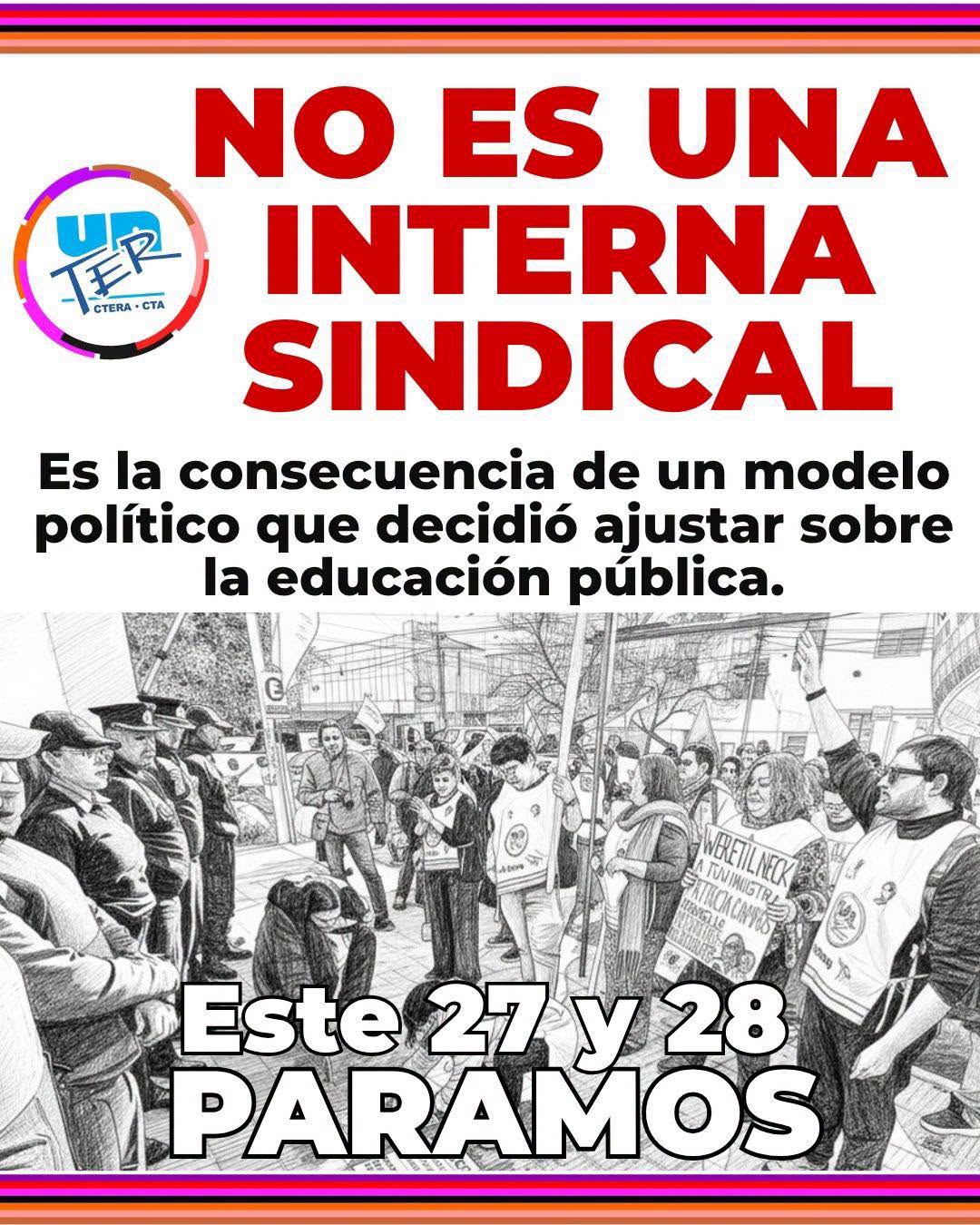
The ongoing labor conflict involving the Unión de Trabajadores de la Educación de Río Negro (UnTER) has intensified, as union leaders characterize the current standoff not as a mere internal dispute, but as a direct consequence of provincial fiscal policies. Educators across the Argentine province, including those in rural areas along the “Línea Sur,” have signaled that recent government-mandated budget adjustments are fundamentally altering the landscape of public education and teaching conditions.
As the primary representative body for teachers in the region, UnTER has maintained that the provincial government’s austerity measures have led to a degradation of the social right to education. According to official statements from the union, these policies have disproportionately affected rural schools, where infrastructure and staffing challenges are already acute. The government, conversely, has emphasized the necessity of fiscal discipline to maintain provincial solvency, marking a clear divergence in priorities between the administration and the teaching staff.
Fiscal Policy and the Public Education Mandate
The core of the disagreement lies in whether the provincial budget, as managed by the government of Río Negro, adequately supports the constitutional mandate of universal public education. Under current provincial administrative protocols, the Ministry of Education and Human Rights is responsible for the allocation of resources to the provincial school system, which serves a diverse geographical area ranging from urban centers to remote rural districts. Data from the Río Negro Ministry of Education indicates that resource distribution is calculated based on enrollment and operational needs, yet union representatives argue that these calculations fail to account for the rising cost of living and the inflationary pressures impacting school maintenance.
Teachers affiliated with UnTER have frequently cited the “Línea Sur” rural schools as the most visible victims of these budget constraints. These institutions serve as vital social hubs in sparsely populated regions, often providing not only academic instruction but also essential social services. The union argues that when the government prioritizes fiscal adjustment, the resulting reduction in maintenance, supplies, and staffing support specifically undermines the viability of these remote sites, effectively limiting access to education for vulnerable student populations.
Labor Relations and the Scope of the Conflict
While the provincial administration has occasionally characterized union actions as internal political posturing, UnTER leaders reject this framing. The union contends that their demands are rooted in the collective bargaining agreements protected under Argentine labor laws, specifically Law 25.877 which governs labor and employment regimes. By framing the conflict as a policy outcome rather than a negotiation hiccup, the union is attempting to elevate the conversation from salary disputes to a broader debate regarding the state’s obligation to maintain a robust public sector.
The tension has manifested in various forms of protest, including localized strikes and public demonstrations. These actions are designed to exert pressure on the provincial legislature and executive branch to reconsider the allocation of funds in the upcoming budget cycles. According to reports from the Agencia de Noticias Federal, these disputes frequently hinge on the government’s failure to meet the union’s salary expectations, which are adjusted periodically to keep pace with national inflation rates. The disconnect between government-offered salary increments and the union’s demand for indexation remains a persistent hurdle in reaching a long-term resolution.
Infrastructure Challenges in Remote Districts
Beyond salaries, the physical state of schools remains a critical point of contention. The “Línea Sur” region, characterized by its harsh climate and logistical isolation, requires consistent investment in heating, transport, and facility upkeep. When school districts face budget cuts, these operational expenses are often the first to be deferred. According to documentation from the UnTER official portal, the union has consistently documented instances where schools have been forced to suspend classes due to heating failures or the lack of safe transportation for students and staff.
This reality creates a cyclical problem: as facilities degrade, the quality of the educational environment declines, leading to further labor unrest and increased scrutiny of government management. The provincial government has argued that it is working within the limits of its federal transfers and provincial tax revenue, asserting that it cannot commit to spending beyond its current fiscal capacity without risking the province’s overall economic stability. This tension between fiscal prudence and social service provision is a recurring theme in provincial governance across Argentina.
The Path Forward for the Educational Community
As of the most recent updates, there is no immediate indication that the conflict will reach a total resolution. The next significant checkpoint for this dispute will be the upcoming legislative session where the provincial budget for the next fiscal year is scheduled for debate. It is expected that UnTER will mobilize its members to lobby for specific amendments that guarantee the protection of funding for rural schools and the adjustment of teacher salaries to mitigate the impact of inflation.

For parents, students, and educators, the situation remains fluid. Official updates regarding school closures, salary negotiations, and potential strike actions are published periodically by the provincial Ministry of Education and the UnTER leadership. Stakeholders are encouraged to monitor these official channels to stay informed of developments that may impact school attendance and the continuity of the academic calendar. The ongoing debate highlights the difficult balance between maintaining a balanced budget and fulfilling the state’s commitment to providing quality, equitable education to all citizens regardless of their geographic location.