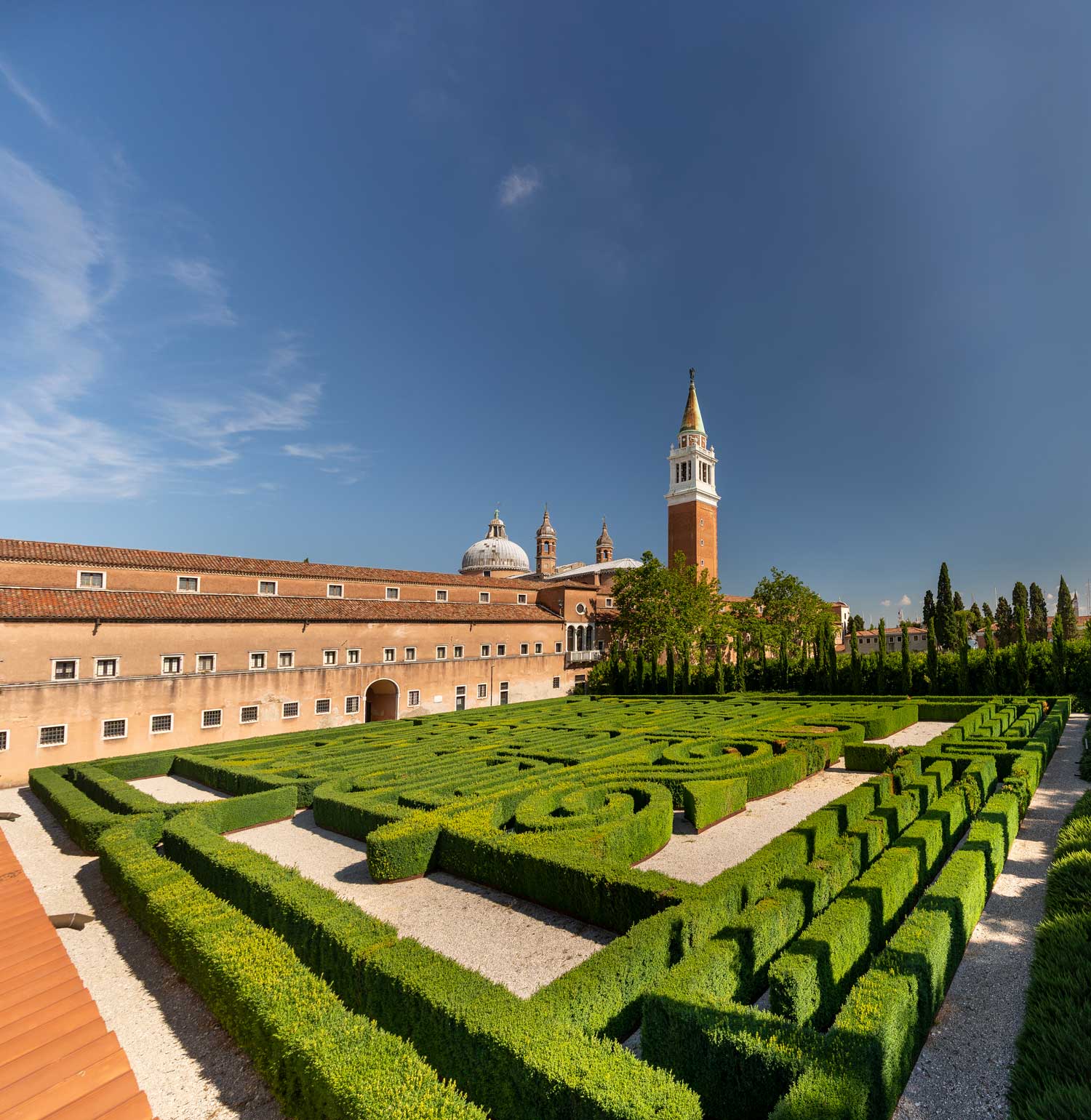
The Giorgio Cini Foundation has officially reopened the Borges Labyrinth on the Island of San Giorgio Maggiore in Venice, following a comprehensive restoration project supported by PwC Italia. This architectural installation, which pays homage to the Argentine writer Jorge Luis Borges, serves as a living literary monument that invites visitors to navigate a complex path of boxwood hedges, mirroring the metaphysical themes of infinite choices and existential reflection prominent in the author’s work.
According to the Giorgio Cini Foundation, the restoration effort was designed to preserve the integrity of the original design while ensuring the long-term sustainability of the garden’s botanical elements. The labyrinth, which spans approximately 2,300 square meters, features more than 3,000 boxwood plants arranged to form a pattern inspired by the short story “The Garden of Forking Paths.” The project was completed with the support of PwC Italia, reflecting a broader commitment to the preservation of cultural heritage sites in Venice.
Design and Literary Inspiration
The labyrinth was originally designed by British architect Randoll Coate and realized by the Giorgio Cini Foundation in 2011 to mark the 25th anniversary of the death of Jorge Luis Borges. The layout is not merely a geometric exercise but a symbolic representation of the author’s life and artistic philosophy. From an aerial perspective, the hedges spell out the name “Borges,” accompanied by symbols associated with his writing, such as a cane, a mirror, and an hourglass.
The restoration process involved careful maintenance of the vegetation and the pathways to ensure the site remains accessible to the public while maintaining the intended atmosphere of contemplative silence. The labyrinth is situated within the park of the Giorgio Cini Foundation, an institution dedicated to the promotion of cultural and artistic research. Visitors are encouraged to walk through the paths, which are designed to disorient and eventually lead to a central point, a physical manifestation of the uncertainty and complexity inherent in Borges’s literary world.
Cultural Heritage and Sustainability in Venice
The involvement of corporate entities in the restoration of Venetian landmarks has become an essential component of the city’s preservation strategy. By funding the maintenance of the Borges Labyrinth, PwC Italia has contributed to the ongoing efforts of the Cini Foundation to keep the Island of San Giorgio Maggiore a hub for international scholars and tourists alike. This partnership highlights the intersection of private sector support and the stewardship of historical and artistic spaces in a city facing significant environmental and logistical challenges.
The restoration project also addressed the botanical health of the boxwood hedges, which require constant care to withstand the specific climatic conditions of the Venetian lagoon. According to the official visitor information provided by the foundation, the site is open for guided tours, allowing the public to engage with the architecture through scheduled access. This structured approach helps prevent overcrowding and protects the delicate structure of the installation from excessive wear.
Visiting the Labyrinth and Future Access
For those planning a visit, the Giorgio Cini Foundation provides updated ticketing and scheduling information through their digital portal. The labyrinth is part of a broader itinerary on the Island of San Giorgio Maggiore, which includes the Palladian Cloisters and the monumental library. Because the site is located on an island accessible primarily by water bus (vaporetto), visitors are advised to check the current ACTV transit schedules when planning their arrival.
The foundation continues to manage the site as a space for both research and tourism. Future updates regarding seasonal hours, special events, or additional conservation phases will be published directly on the official Giorgio Cini Foundation website. As of the latest update, the labyrinth remains a central feature of the foundation’s public programming, offering a unique intersection of literature and landscape architecture in one of Italy’s most significant cultural centers.
We invite readers to share their experiences visiting the Borges Labyrinth or their thoughts on the role of private partnerships in preserving historical sites in the comments section below.
Worth a look