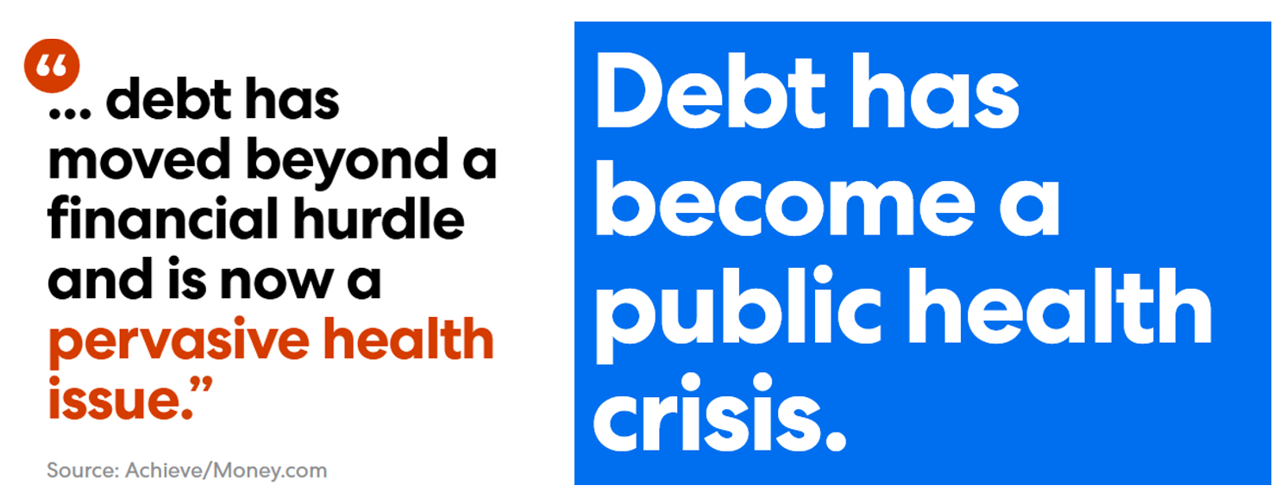
Financial stress and mounting debt have evolved into a significant public health crisis in the United States, with a growing number of Americans reporting severe physical and mental health consequences linked to their fiscal instability.
When financial pressure becomes a constant, it ceases to be merely a matter of household accounting; it becomes a physiological burden.
The Physiological and Behavioral Toll of Financial Strain
The impact of debt on the human body is not merely metaphorical. The Achieve and Money.com study found that individuals experiencing high levels of financial stress frequently report fatigue, low energy, and stress-eating. Perhaps most concerning is the finding that 1 in 5 respondents admitted to increased alcohol or substance use as a coping mechanism for their financial situation.
The psychological toll is equally profound. Forty-three percent of those surveyed reported feeling hopeless about their financial future.
Survival Strategies and the Erosion of Fiscal Security
When debt becomes unmanageable, households often adopt survival strategies that create a cycle of further instability. The data reveals that 47% of financially stressed individuals have reduced spending on basic needs—such as food, housing, or healthcare—to keep up with debt payments. Another 37% reported skipping monthly bills entirely, while 34% increased their reliance on credit cards, effectively digging a deeper hole to cover existing obligations.
These reactive measures often involve the depletion of long-term security. Nearly 1 in 4 people have tapped into emergency funds and short-term savings, while 3 in 10 have withdrawn from retirement accounts prematurely.
The Intersection of Health Coverage and Financial Stability
The link between financial health and physical health is further strained by the current landscape of insurance coverage. According to an analysis by the Kaiser Family Foundation, significant numbers of Americans have faced, or are at risk of facing, the loss of Affordable Care Act (ACA) Marketplace premium support. In 2026, these policy changes contributed to approximately 17.5 million people losing health insurance coverage, a development that directly exacerbates the financial burden on households already struggling with medical debt.
When the cost of basic living—including transportation to work, nutrition, and medical care—competes with the necessity of paying off hospital bills, the result is a public health crisis that is uniquely American.
Navigating the Path Forward
Despite the severity of the situation, many individuals remain uncertain about where to seek help. The study found that at least one-fifth of those under extreme fiscal stress are considering bankruptcy as a potential remedy.
The conversation regarding how economic policy impacts the health of the U.S. population is ongoing. I invite our readers to share their thoughts and experiences in the comments section below as we continue to track this critical intersection of economy and health.
Keep reading
- UMass Amherst IALS Receives $2.1M MLSC Grants for Advanced Life Sciences Equipment
- Jochen Busse: New Beginnings in Cologne After Major Surgery
- Why Your iPhone's Battery Health Number Drops Even With Careful Use (daybreakwire.com)
- Income and Wealth in Czechia: Who Can Afford Financial Independence? (archyde.com)