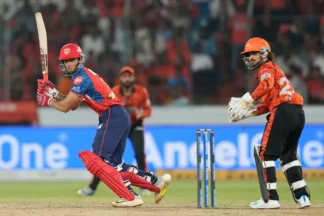
Former India batter Sanjay Manjrekar has urged national selectors to prioritize talent assessment beyond the influence of the Indian Premier League (IPL), suggesting that the league’s specific conditions may be masking the true technical requirements for international cricket. This call for a strategic shift follows a period of challenging results for Indian squads in overseas T20 environments.
The critique centers on the perception that the IPL, while a high-quality domestic competition, features unique playing conditions—such as compact boundaries and batting-friendly pitches—that do not always replicate the demands of global cricket tours. Manjrekar’s comments highlight a growing debate regarding how selection panels evaluate players who have primarily excelled within the domestic T20 framework.
“The easy thing would be is to hold players responsible for this overseas T20 setback. The right thing would be is to hold those responsible who have made IPL such, that it puts a heavy make up on Indian batters,” Manjrekar stated in a post on X, formerly Twitter, on July 12, 2026. “Challenge is for the selectors to imagine Indian batters without the heavy IPL make up on & pick only those for India. A lot of T20 cricket will be overseas now. The home fun run is over.”
The easy thing would be is to hold players responsible for this overseas T20 setback. The right thing would be is to hold those responsible who have made IPL such, that it puts a heavy make up on Indian batters.— Sanjay Manjrekar (@sanjaymanjrekar) July 12, 2026
The Impact of IPL Playing Conditions on Player Development
The discussion regarding the “IPL makeup” refers to the specific environment of the tournament, where totals exceeding 200 runs have become increasingly common. According to analysis of current T20 trends, the combination of small boundaries, high-quality outfields, and pitches designed to facilitate high-scoring encounters provides batters with significant value for their shots, often rewarding aggressive hitting over traditional defensive technique.

The concern is that players accustomed to the high-scoring, batting-friendly nature of the IPL may struggle to adapt their game when faced with more diverse international challenges.
Concerns Over the Impact Player Rule
Beyond pitch conditions, the introduction of the “Impact Player” rule in the IPL has drawn scrutiny from former players and analysts. The rule, which allows teams to substitute an additional batter or bowler during the match, is viewed by some as a factor that limits the development of versatile players, specifically all-rounders.
Everything will be alright when Hardik Pandya returns. But it’s been 10 years, and we still haven’t found a replacement for either Hardik Pandya or Jasprit Bumrah,” Patel said on JioStar. He argued that the reliance on specialized roles created by the Impact Player rule may be preventing the emergence of players who possess the dual-skill sets required for the international stage.
Upcoming Schedule and Selection Challenges
The focus on selection policy comes at a critical time as the Indian team prepares for a demanding international calendar. Following the conclusion of recent series, the team is scheduled to participate in an ODI series against England starting July 14, 2026. This will be followed by a tour to Zimbabwe, which presents another opportunity for the squad to adjust to different conditions.

Looking further ahead, the team faces a significant tour against New Zealand, which includes five T20Is, five ODIs, and two Test matches. These upcoming fixtures will serve as a testing ground for the selectors’ ability to balance the inclusion of established stars with the need to identify players who can succeed in varied, non-domestic conditions. As the team moves away from the “home fun run,” the ability to adapt to diverse international environments remains a primary objective for the management and the selection committee.