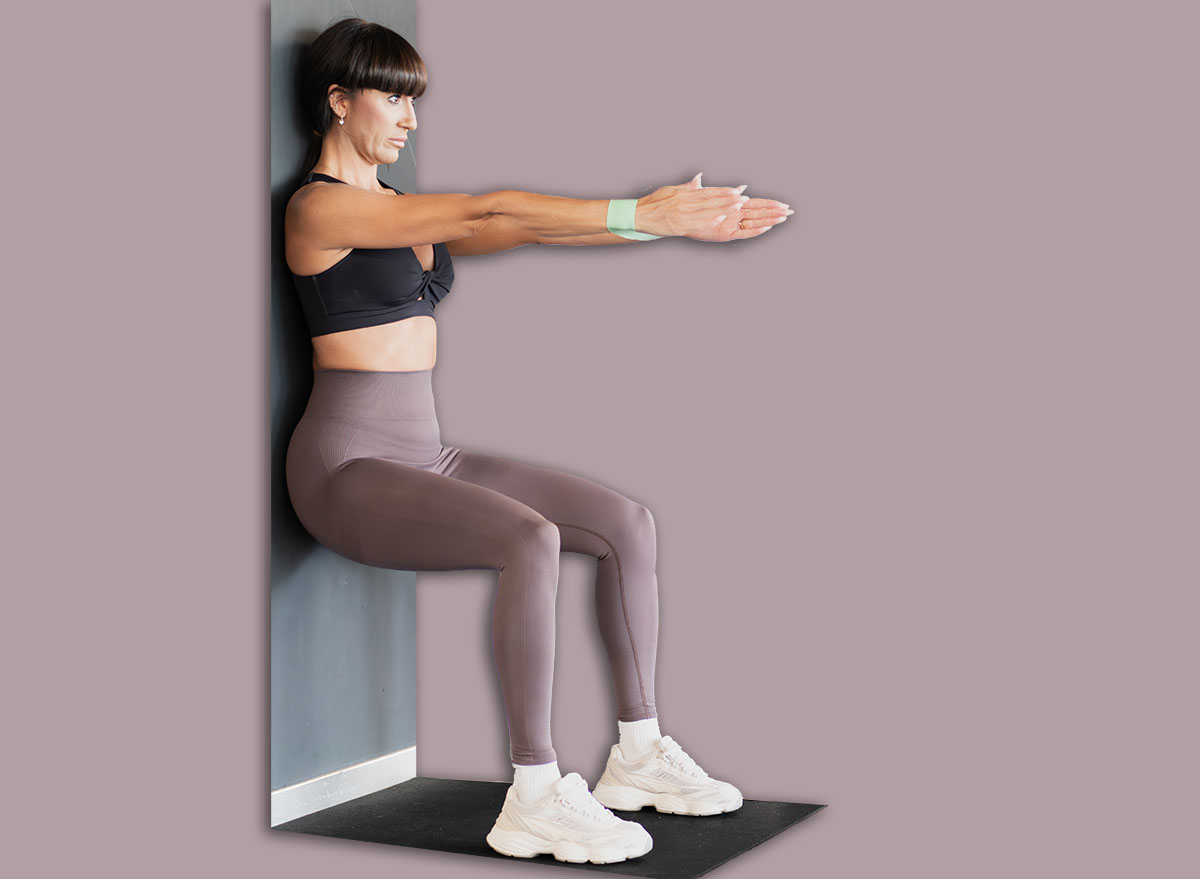
For adults over 60, maintaining lower-body strength is a primary factor in preserving functional independence, balance, and mobility. A wall sit—an isometric exercise where the individual maintains a static “seated” position against a wall—serves as a practical, momentum-free test of sustained force production in the quadriceps and gluteal muscles.
As we age, the ability to generate and maintain force in the lower extremities directly impacts the ease of performing essential daily tasks, such as transitioning from a seated position to standing, climbing stairs, and maintaining postural stability. Unlike dynamic movements that may rely on momentum to compensate for underlying muscle weakness, isometric holds like the wall sit force the muscles to work continuously against gravity without the benefit of joint movement.
The Role of Isometric Endurance in Functional Aging
The physiological value of the wall sit lies in its ability to build local muscular endurance. By keeping the hip and knee joints at fixed angles, the exercise isolates the legs, requiring the glutes and quadriceps to remain under constant tension. This type of training is particularly relevant for older adults because it mimics the stabilizing effort required during simple, weight-bearing activities.
When an individual performs a sit-to-stand movement, the mechanics are remarkably similar to the posture maintained during a wall sit. By improving endurance in this specific position, one can potentially reduce the reliance on upper-body support, such as pushing off with the hands, when rising from a chair. Research into functional movement patterns suggests that building this stamina helps delay the onset of muscle fatigue during repetitive tasks, such as walking or ascending stairs, thereby enhancing overall physical stamina.
Establishing a Consistent Training Routine
For those looking to integrate wall sits into a fitness regimen, consistency and proper form are more important than pushing to total exhaustion. A sustainable approach for most beginners involves performing the exercise two to three times per week, allowing for at least one full day of rest between sessions to facilitate muscle recovery.
A standard starting point for beginners is to complete two to four sets, with each hold lasting between 10 and 30 seconds. As confidence and comfort with the movement increase, practitioners can aim to add five to 10 seconds to their hold time each week. It is advisable to avoid pushing to the point of failure, especially in the early stages of training; stopping a set or two before complete exhaustion helps ensure that form remains controlled and safe.
Safety Considerations and Modifications
While the wall sit is generally accessible, individuals with pre-existing orthopedic conditions—such as osteoarthritis, chronic knee pain, or lower-back discomfort—should exercise caution. Modifications can significantly reduce joint stress while still providing the benefits of lower-body strengthening. If a full 90-degree bend in the knees is uncomfortable, the depth of the “sit” can be reduced, allowing the individual to hold the position at a higher, less strenuous angle.
Additionally, for those who struggle with balance or stability, performing the exercise near a sturdy surface, such as a countertop or rail, provides an added layer of safety. Shortening the duration of the holds is another effective way to adapt the exercise to one’s current fitness level. Regardless of the specific duration, the primary goal remains the development of controlled muscle engagement. By focusing on maintaining a flat back against the wall and keeping the core engaged, practitioners can maximize the functional benefits of the exercise while minimizing the risk of injury.
As with any new exercise program, it is recommended that individuals with health concerns consult with a physician or a qualified physical therapist before beginning. We encourage readers to share their experiences with this exercise or any questions regarding lower-body maintenance in the comments section below.
Related reading