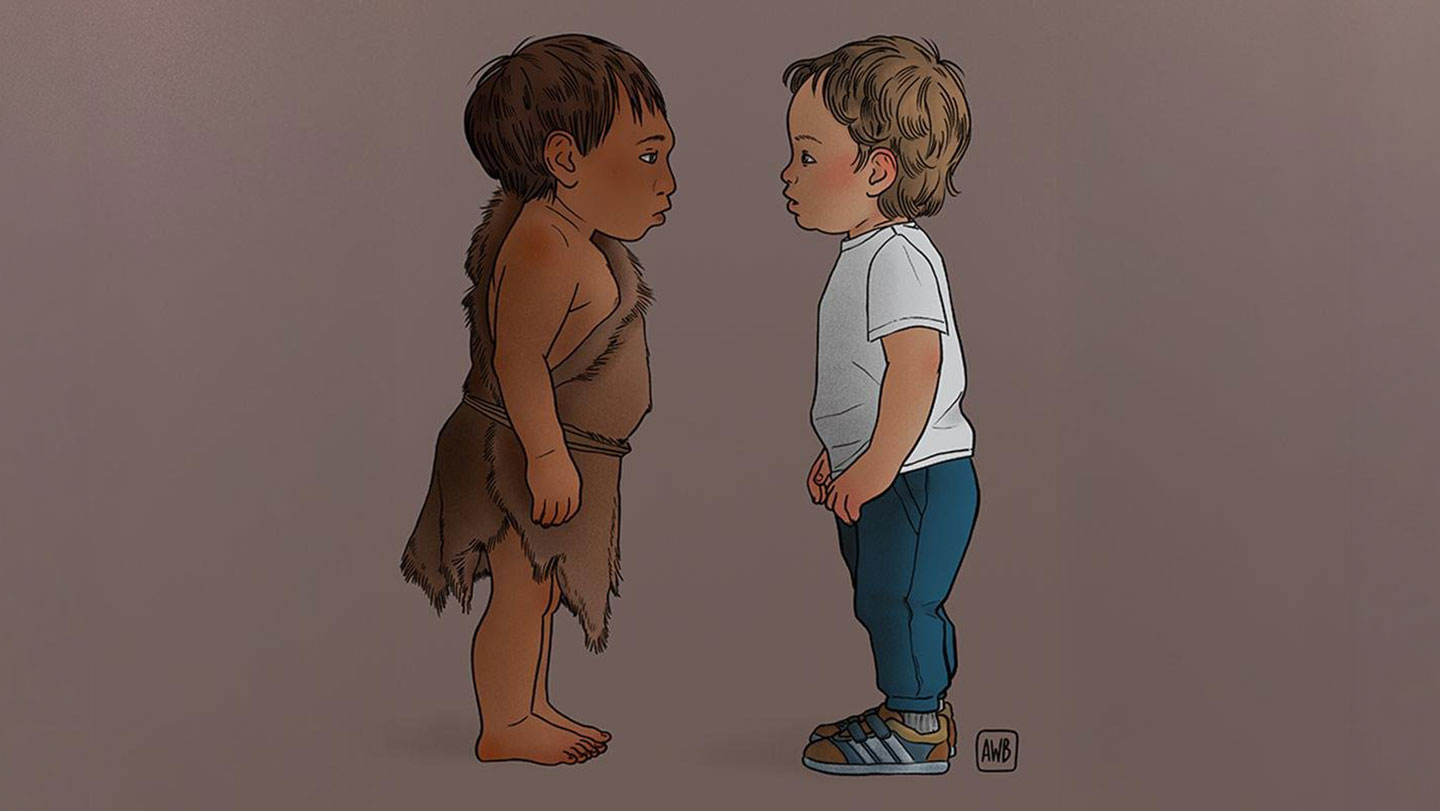
Neandertal newborns were similar in size to modern human infants but experienced a significantly faster rate of physical and dental development during early childhood, according to research published in Science and Journal of Human Evolution. This accelerated growth trajectory suggests that Neandertals reached developmental milestones more quickly than Homo sapiens, despite starting from a similar baseline at birth.
The findings stem from the analysis of dental remains and skeletal growth markers, which allow researchers to track the “biological clock” of extinct hominins. By comparing the eruption of teeth and the fusion of bone in Neandertal children against known data for modern humans, scientists have identified a distinct divergence in how these two species matured.
This research challenges previous assumptions that Neandertals were simply “faster” versions of humans across all life stages. Instead, it indicates a specific developmental acceleration during the transition from infancy to early childhood, which may have been an evolutionary response to the harsh, unpredictable environments of Pleistocene Europe.
Dental Eruption Patterns and Growth Acceleration
Dental analysis serves as a primary proxy for age in paleoanthropology because tooth enamel records growth lines similar to tree rings. According to a study published in the journal Science, Neandertal children exhibited dental eruption patterns that occurred earlier than those seen in modern human populations.
Researchers found that while the size of the teeth at birth was comparable to modern humans, the timing of the transition from deciduous (baby) teeth to permanent teeth happened more rapidly. This acceleration suggests that the metabolic rate and hormonal triggers governing growth were tuned differently in Neandertals. In modern humans, a prolonged childhood—characterized by slower development—is often linked to the increased cognitive demands of learning complex social structures and language.
The data indicates that Neandertals did not have a “stretched out” childhood in the way Homo sapiens do. Instead, they moved through the vulnerable stages of early infancy more quickly, potentially reducing the window of time they remained entirely dependent on maternal care in high-risk environments.
Comparing Neonatal Size and Birth Constraints
A common theory in anthropology suggests that Neandertals might have had larger infants, which would have necessitated a wider pelvic opening or a different birthing process. However, recent skeletal reconstructions and comparative studies of infant remains suggest that Neandertal newborns were not significantly larger than modern human infants.
According to research detailed in the Journal of Human Evolution, the cranial capacity and body mass of Neandertal neonates align closely with the averages seen in early modern humans. This finding simplifies the evolutionary narrative regarding the “obstetrical dilemma”—the trade-off between bipedal walking (which narrows the pelvis) and the need to birth large-brained infants.
Because the starting size was similar, the primary difference lies in the velocity of growth. Neandertals didn’t start bigger; they simply grew faster. This rapid development is evident in the way their long bones ossified and their dental crowns formed during the first few years of life.
Evolutionary Drivers of Rapid Development
The acceleration of Neandertal growth is viewed by researchers as a probable adaptation to the extreme climates of glacial Europe. High-calorie diets and the need for physical robustness to survive cold temperatures may have favored individuals who reached physical maturity faster.
In contrast, the “slow-growth” strategy of Homo sapiens is often attributed to the development of the prefrontal cortex. A longer period of juvenile dependency allows for more extensive brain plasticity and social learning. By slowing down physical growth, modern humans effectively extended the window for cognitive development.
This creates a distinct contrast in life history strategies:
- Neandertals: Prioritized rapid physical maturation and robustness to ensure survival in unstable, cold environments.
- Modern Humans: Prioritized a prolonged childhood to facilitate complex learning and cultural transmission.
Impact on Life Expectancy and Social Structure
Faster development does not necessarily equate to a longer life. Evidence from burial sites suggests that while Neandertals matured quickly, their overall life expectancy remained low compared to modern standards, with few individuals surviving past their 40s.

The rapid transition from infancy to childhood likely influenced the social dynamics of Neandertal groups. Shorter periods of infant dependency may have allowed mothers to return to foraging and hunting activities sooner, though the high caloric demands of nursing in a glacial climate remained a significant challenge.
The discovery that Neandertal babies were “like ours” at birth but diverged quickly thereafter provides a clearer picture of the biological boundaries between the two species. It highlights that the most profound differences between Neandertals and modern humans may not have been in their physical appearance at birth, but in the timing of their growth.
Further analysis of rare infant remains from sites across Eurasia is expected to refine these growth curves. Researchers are currently awaiting more comprehensive data from high-resolution 3D scanning of dental remains to determine if this accelerated growth was universal across all Neandertal populations or varied by region.
Share this article to join the conversation on human evolution, or leave a comment below with your thoughts on how these developmental differences shaped the fate of the Neandertals.
Related reading