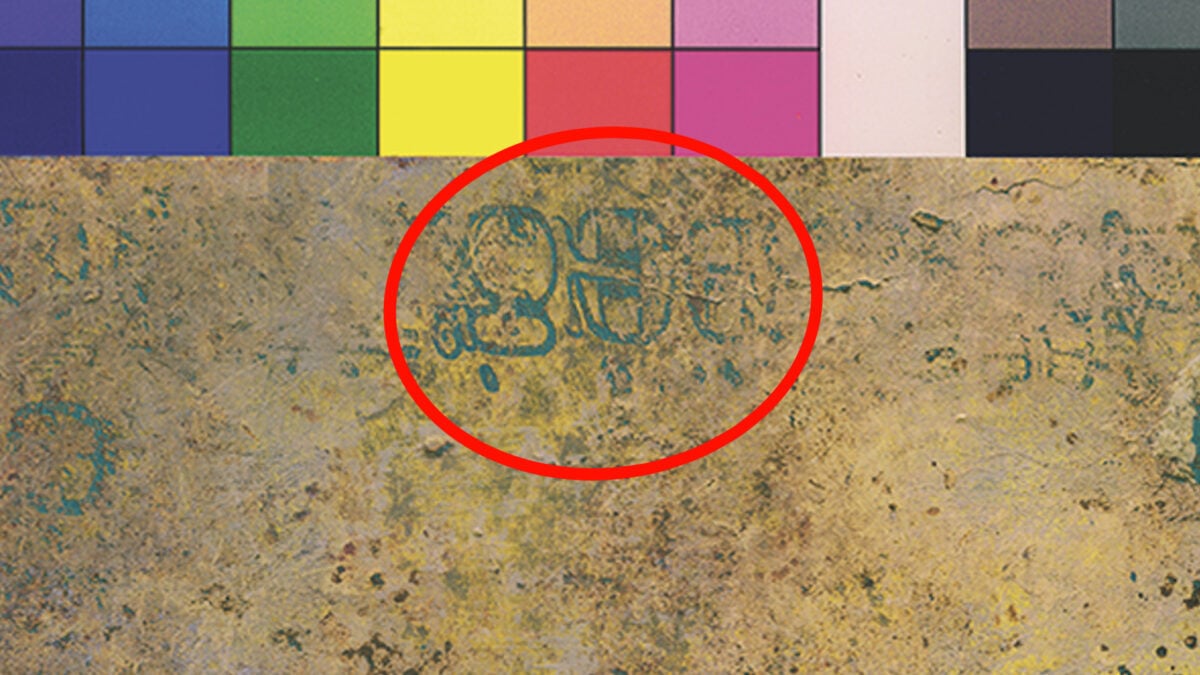
Archaeologists have identified what may be the earliest recorded name of a scientist in the ancient Americas, a discovery that offers a rare glimpse into the intellectual life of the Maya civilization. By analyzing epigraphic evidence from stone monuments and ceramics, researchers have linked a specific individual, known as Ajpach’ Waal, to sophisticated astronomical and mathematical calculations dating back to the Classic Maya period. This finding provides a human face to the complex scientific advancements that defined Mesoamerican history.
The identification of this individual stems from ongoing research into Maya glyphs, which functioned as a logosyllabic writing system capable of recording historical events, lineage, and personal achievements. Unlike many ancient cultures where scientific knowledge remains anonymous, the Maya tradition of “signature” inscriptions on stelae and lintels has allowed epigraphers to track the careers of specific scholars. According to research published in journals such as Ancient Mesoamerica, these individuals often held titles indicating their roles as “day-keepers” or royal astronomers.
The Role of the Maya Intellectual Class
The Maya were masters of long-term astronomical observation, tracking the cycles of Venus, the solar year, and lunar eclipses with remarkable precision. The discovery of Ajpach’ Waal highlights the existence of a specialized class of intellectuals who served in royal courts. These figures were responsible for maintaining the Long Count calendar, a sophisticated vigesimal (base-20) mathematical system that allowed the Maya to record dates spanning millions of years. As detailed by the Smithsonian Institution, this system was essential not only for agriculture but for legitimizing the authority of kings who claimed to be conduits for divine knowledge.

The inscription identifying this early scientist suggests that he was not merely an observer but a practitioner of applied mathematics. By recording specific astronomical alignments on public monuments, he helped align the built environment of the city-state with the movements of the heavens. This integration of architecture and science is a hallmark of Maya urban planning, where structures like the Caracol at Chichén Itzá served as functional observatories, a fact corroborated by archaeological studies conducted by the Peabody Museum of Archaeology and Ethnology at Harvard University.
Decoding Ancient Epigraphy
Deciphering the identity of an ancient scientist requires a multidisciplinary approach combining archaeology, linguistics, and art history. The process involves mapping phonetic signs to known linguistic roots of the Chʼolan and Yucatecan Maya languages. When a name appears alongside a title related to time-keeping or celestial observation, researchers can infer the individual’s profession. This methodology has been refined over decades of collaborative work by international teams of epigraphers, who have successfully mapped a significant portion of the surviving Maya corpus.

However, the field faces ongoing challenges. Many of the most detailed texts were destroyed during the Spanish colonial period, and the humid climate of the tropical rainforests continues to erode the limestone surfaces where these records were carved. Despite these obstacles, the use of Lidar (Light Detection and Ranging) technology has allowed archaeologists to identify thousands of previously hidden structures, providing new contexts for the inscriptions that remain. According to the Archaeological Institute of America, these digital surveys are revolutionizing our understanding of how Maya scientific knowledge was distributed across vast trade networks.
Why Individual Attribution Matters
Recognizing a specific name like Ajpach’ Waal shifts the narrative of Maya history from one of abstract cultural achievement to one of individual agency. It moves the focus toward the people who performed the labor of calculation, the observation of night skies, and the creation of complex codices. This perspective acknowledges that scientific progress in the ancient Americas was driven by human curiosity and professional dedication, mirroring the development of science in other global civilizations.
For historians, the ability to name these figures allows for the reconstruction of intellectual lineages. It raises questions about how knowledge was transmitted—whether through familial apprenticeship, state-sponsored schools, or regional scholarly networks. As researchers continue to clean and analyze inscriptions from sites such as Tikal and Palenque, it is likely that more names will emerge, further populating the history of science with the individuals who mapped the cosmos long before the modern era.
The next phase of this research involves the application of machine learning to assist in the transcription of fragmented or eroded glyphs, a project currently being explored by various academic institutions globally. Updates on the findings from these ongoing excavations and data analysis projects are typically published through official portals like the Mesoweb database, which serves as a primary repository for current Maya studies. Readers interested in the latest developments are encouraged to follow university-led field reports or subscribe to updates from the Archaeological Institute of America for verified, peer-reviewed findings.
We invite readers to share their thoughts on the significance of identifying individual contributors to ancient science in the comments section below.
Related reading