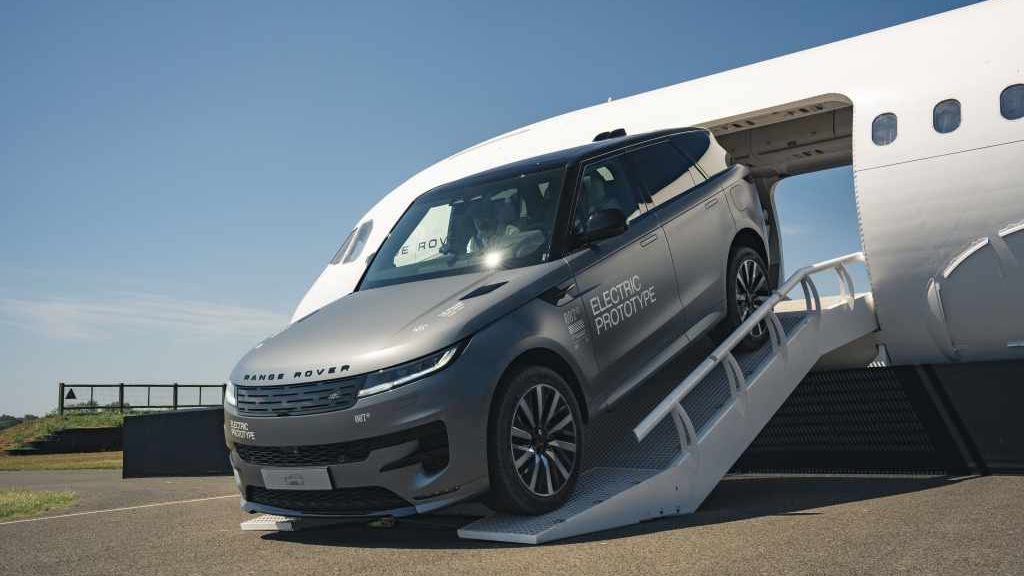
Land Rover has officially moved to expand its electric vehicle portfolio, confirming that a second battery-electric model will join its diverse range of powertrains. This strategic pivot, part of the wider electrification roadmap for Jaguar Land Rover (JLR), aims to transition the brand toward a more sustainable future while maintaining its signature off-road capabilities. According to official company disclosures, the upcoming model will leverage the group’s modular architecture to offer both pure electric and hybrid options, catering to a shifting global market where consumer demand for zero-emission luxury SUVs continues to rise.
The move follows the initial success of the brand’s electrification efforts and reflects a broader industry trend toward “powertrain flexibility.” By offering a mix of internal combustion, plug-in hybrid (PHEV), and battery-electric (BEV) systems, JLR intends to mitigate the risks associated with varying EV adoption rates across international markets. This approach allows the company to balance immediate carbon reduction targets with the practical realities of infrastructure readiness in key regions, including North America, Europe, and China, as noted in the JLR fiscal reports.
Strategic Expansion of the Electric Lineup
The introduction of a second electric model is a critical component of the “Reimagine” strategy, a long-term plan announced by JLR to transform the company into an electric-first luxury manufacturer. As specified in the official Reimagine strategy documentation, the brand has committed to launching six pure electric models across its Land Rover and Jaguar lines by 2026. While the specific nameplate for the second electric Land Rover has not been finalized for every global market, industry analysts point to the Range Rover Electric as the primary flagship for this expansion, with the vehicle currently undergoing extreme-weather testing in locations ranging from Sweden to Dubai.

Technically, the new platform—designed to support high-voltage architectures—allows for significantly faster charging times and improved energy density compared to the brand’s earlier hybrid efforts. Engineers at the company have emphasized that the integration of electric motors will not compromise the “Terrain Response” systems that define the Land Rover experience. Instead, the instant torque provided by electric motors is expected to enhance precision during technical off-road maneuvers, offering a more controlled crawl than traditional mechanical drivetrains.
Adapting to Global Consumer Demand
The decision to maintain a “pestrou nabídku” (diverse range) of motorizations—including mild-hybrids and plug-in hybrids alongside pure electrics—is a calculated response to current market volatility. According to data published in the European Automobile Manufacturers’ Association (ACEA) Q1 2024 report, the market share for various fuel types remains fragmented, with hybrids often seeing faster adoption growth than pure battery-electric vehicles. By providing a broad spectrum of choices, Land Rover aims to avoid alienating long-term customers who may not yet be ready to switch to a fully electric vehicle due to range or charging concerns.

This multi-pronged strategy is also designed to meet stringent emissions regulations in the European Union and the United Kingdom, where manufacturers face heavy fines for exceeding fleet-wide CO2 limits. By balancing high-margin, high-emission legacy models with highly efficient, low-emission EVs, JLR maintains its profitability while staying compliant with international environmental mandates. The company has publicly stated that it expects all its vehicles to be available in a pure electric form by the end of the decade, as reported in their 2023 Annual Report.
Engineering for Performance and Utility
From an engineering perspective, the transition to electric platforms involves more than just swapping engines for batteries. The integration of high-capacity battery packs into a chassis designed for wading, rock crawling, and towing requires extensive structural reinforcement. Sources within the automotive engineering community note that the new electric architecture is being built to maintain the same, if not superior, wading depths and ground clearance as the combustion-engine counterparts. The use of advanced software-defined vehicle (SDV) architectures also means that these new electric models will receive over-the-air (OTA) updates, allowing for continuous improvements to battery management, performance, and cabin technology long after the vehicle has left the showroom.

For prospective owners, the primary benefit of this shift is a quieter, more refined cabin experience combined with the ability to navigate urban low-emission zones. As the industry approaches the next round of regulatory checkpoints regarding internal combustion engine bans in various jurisdictions—notably the 2035 targets set by several major economies—the focus on electric powertrain reliability will become the primary metric for long-term ownership value. The company plans to provide further updates on production timelines and regional availability throughout the remainder of the current fiscal year.
For the latest official specifications and to track the rollout of upcoming electric models, interested parties should monitor the official Land Rover global website. We will continue to cover developments as new technical data and market-specific launch dates are confirmed. Please share your thoughts on the transition to electric off-roaders in the comments section below.
Worth a look
- Universal Tablet Sleeve Case for iPad 11 (2025) & iPad 10 (2022) – Black
- Twitter’s 20th Anniversary: Two Decades of Social Media Evolution
- Adidas Unveils Attainable Alternative to Flagship Trail Running Shoe (newsdirectory3.com)
- NASA's curiosity rover spots mysterious honeycomb pattern on Mars, leaving (archyworldys.com)