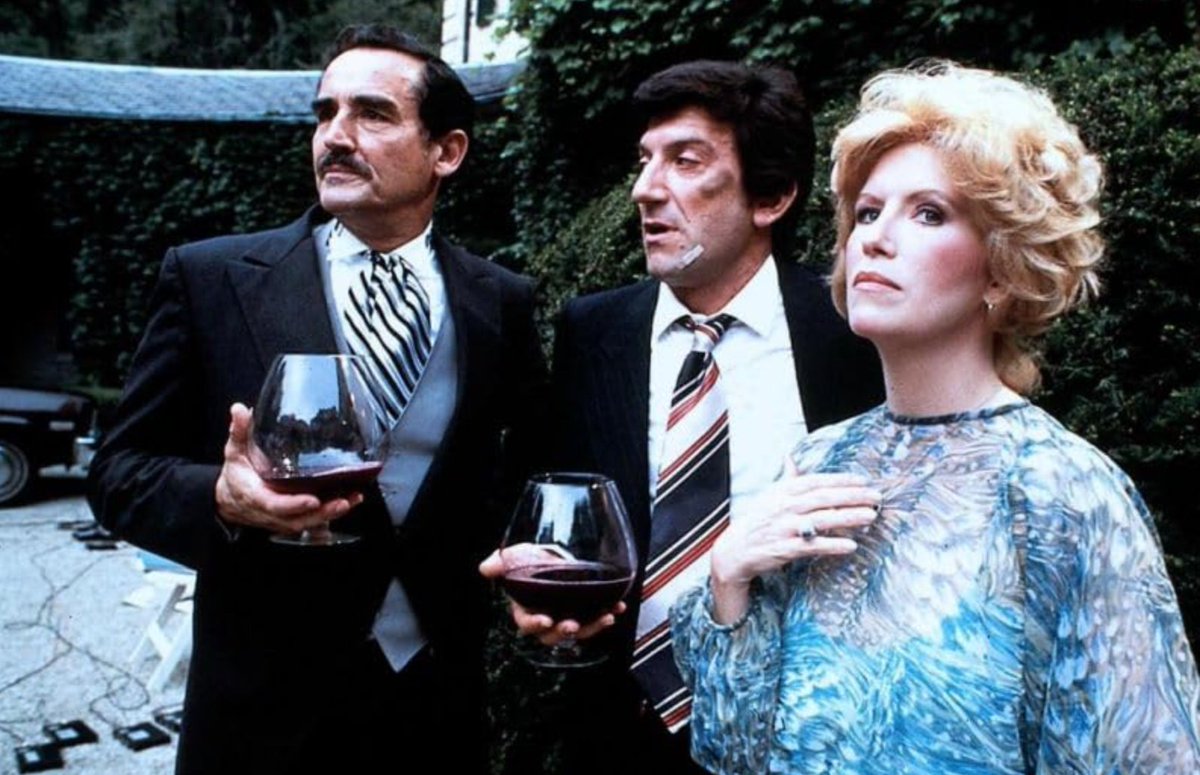
Robert Altman’s 1978 satirical comedy A Wedding remains a definitive example of the director’s signature ensemble style, featuring a sprawling cast that brought together international icons Vittorio Gassman and Gigi Proietti alongside American actress Virginia Vestoff. The film, which depicts the chaotic intersection of two wealthy families during a nuptial ceremony in Illinois, serves as a sharp critique of American social mores through the lens of Altman’s improvisational filmmaking technique, according to The Criterion Collection.
The production marked a notable moment in cinema history for its casting choices, blending Hollywood stalwarts with European theatrical legends. Vittorio Gassman, often cited as one of the greatest Italian actors of the 20th century, portrayed the patriarch Luigi Corelli. His presence, alongside the charismatic Italian stage performer Gigi Proietti and the versatile Virginia Vestoff, underscored Altman’s ambition to create a global tapestry of characters, as documented by Turner Classic Movies.
The Ensemble Dynamics in A Wedding
Robert Altman’s direction in A Wedding relies heavily on overlapping dialogue and a lack of traditional narrative focus, a style that challenged the cast to maintain character integrity amidst the film’s frantic pacing. Vittorio Gassman, known for his intense dramatic work in Italian neorealism and the Commedia all’italiana genre, navigated this atmosphere with a performance that balanced comedic timing with the gravitas of his established stage career. The inclusion of Gigi Proietti, a titan of the Roman stage known for his vocal range and improvisational prowess, added a layer of European sophistication to the Corelli family contingent, as noted in the New York Times archive.
Virginia Vestoff, whose previous work included significant roles in theater—most notably as Alma in the original Broadway production of Via Galactica—brought a grounded energy to the production. In A Wedding, her interactions with the international cast members helped bridge the tonal gap between the American and Italian segments of the storyline. The film featured a massive cast of 48 characters, a logistical feat that required Altman to manage multiple subplots simultaneously, creating a mosaic of social dysfunction, according to Roger Ebert’s retrospective analysis.
Altman’s Directorial Approach and Legacy
The 1978 release of A Wedding occurred at a time when Robert Altman was experimenting with the boundaries of independent cinema within the studio system. By utilizing Lake Bluff, Illinois, as the primary location, the production team transformed a real-world estate into the site of the film’s sprawling narrative arc. The film’s critical reception was mixed upon release, with some reviewers praising its ambitious scope while others found the lack of a central protagonist disorienting, as recorded in the American Film Institute catalog.
For audiences today, the film serves as a historical document of a specific era of international collaboration. The collaboration between Gassman, Proietti, and Vestoff remains a point of interest for students of acting, highlighting how Altman’s “controlled chaos” allowed performers from vastly different training backgrounds to find a unified rhythm. The film’s legacy continues to be studied for its influence on the modern ensemble dramedy, demonstrating the director’s ability to weave dozens of storylines into a cohesive, if cynical, portrait of the American dream.
Production Context and Cast Contributions
The film was released on August 29, 1978, in New York City, following a development process that prioritized ensemble chemistry over script rigidity. The collaborative process meant that actors like Gassman and Proietti were often encouraged to contribute to their characters’ development on set, a hallmark of Altman’s working method. Virginia Vestoff’s performance, in particular, was highlighted by contemporary critics for its ability to maintain emotional stakes within the film’s broader satirical framework, according to reporting from Variety.
As the industry looks back at the 1970s as a transformative decade for narrative film, A Wedding stands as a primary example of how high-budget ensembles could maintain artistic integrity. While Vittorio Gassman and Gigi Proietti were already household names in Italy, their participation in an American production directed by Altman broadened their international visibility, cementing the film’s status as a quintessential, if polarizing, entry in the director’s filmography. Readers interested in the technical aspects of the film’s sound design—notably the multi-track recording used to capture overlapping dialogue—can find further documentation through the Academy of Motion Picture Arts and Sciences’ Robert Altman Collection.
The film remains available for study through various digital archival platforms and physical media collections. For those seeking additional background on the filming locations or the specific improvisational techniques employed by the cast, the British Film Institute database provides comprehensive entry details. We encourage our readers to share their thoughts on the film’s enduring influence on ensemble comedy in the comments section below.
Worth a look