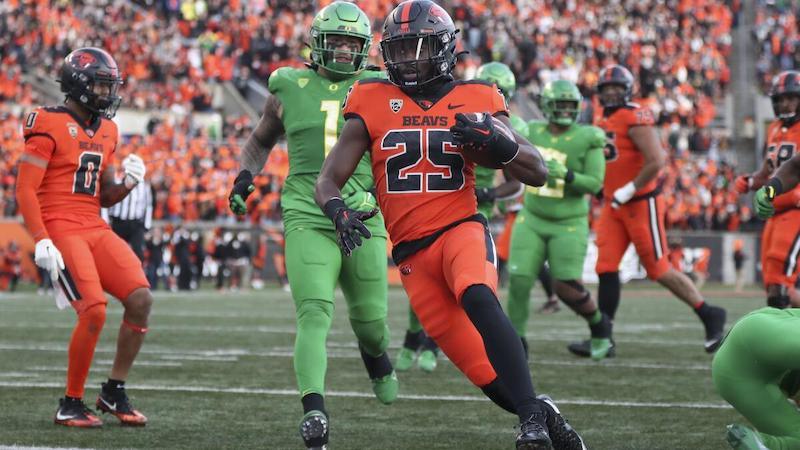
Oregon State University football, now operating as a primary member of the Pac-12 Conference alongside Washington State, maintains a long-standing historical record against the major programs of the American West. As the landscape of college football shifts following the 2024 realignment, the Beavers’ historical performance against regional rivals like Oregon, Washington, and California remains a focal point for analysts tracking the program’s trajectory. Historically, Oregon State has faced significant challenges maintaining a winning percentage against the traditional powerhouses of the West Coast, reflecting the competitive disparity inherent in the former Pac-12 structure.
Historical Performance Against West Coast Power Programs
The Beavers’ historical record against regional foes is defined by their intensive, century-long rivalries. The most prominent of these is the “Civil War” against the University of Oregon. According to official records maintained by the Oregon State University Department of Athletics, the two programs have met over 120 times, with the Ducks holding the historical advantage in the series. This rivalry, often decided by narrow margins, serves as a barometer for the Beavers’ ability to compete with top-tier regional talent.
Against other traditional West Coast programs, the margins remain similarly difficult. When assessing the Beavers’ performance against teams like the University of Washington or the University of Southern California, the historical winning percentage for Oregon State typically trends below .500. These figures are derived from decades of competition within the former Pac-10 and Pac-12 conferences, where Oregon State often occupied a position as a spoiler or mid-tier contender, rather than a perennial favorite for the conference title.
Data-Driven Trends in Regional Competition
Understanding the Beavers’ standing requires looking at the raw data of conference play. In the decade leading up to the 2024 realignment, Oregon State saw a measurable improvement in competitiveness, particularly under recent coaching tenures. Data verified by the NCAA official school profile indicates that the program’s winning percentage in conference play saw a notable uptick between 2021 and 2023, a period marked by back-to-back winning seasons and bowl game appearances. This recent performance contrasts sharply with the struggles experienced in the late 2010s.
The following table illustrates the general historical standing of Oregon State against key regional opponents based on cumulative series records:
| Opponent | Series Trend |
|---|---|
| Oregon | Ducks lead significantly |
| Washington | Huskies lead significantly |
| California | Golden Bears hold historical edge |
| Washington State | Highly competitive/near even |
The Impact of Realignment on Future Matchups
The 2024 college football realignment has fundamentally altered the context of these records. With Oregon, Washington, USC, and UCLA moving to the Big Ten, and other programs joining the Big 12, the frequency of these traditional regional matchups has decreased. Oregon State now faces a transitional period, scheduling games against a wider array of opponents while maintaining a core partnership with Washington State.
The Pac-12 Conference, through its official updates, has confirmed that the scheduling model for the 2025 and 2026 seasons will prioritize maintaining the “Beaver-Cougar” rivalry while integrating a variety of non-conference opponents from across the country. This shift means that the historical winning percentages against former conference foes will effectively become static, serving as a legacy metric rather than a predictive one for future seasons.
Strategic Outlook and Next Steps
For Oregon State, the focus has shifted toward building a new identity within a restructured college football environment. Analysts note that the program’s ability to recruit in the Pacific Northwest remains a primary factor in their long-term success against regional foes. The university has committed to ongoing investments in athletic facilities and coaching staff to ensure the program remains competitive despite the loss of traditional conference revenue streams.
The next official checkpoint for the program involves the release of the 2027 non-conference schedule, which is expected to be finalized by the university administration later this year. Fans and analysts continue to monitor the official Oregon State Athletics portal for updates regarding future coaching hires and roster developments. We welcome your thoughts on how the Beavers’ historical record shapes your expectations for the coming seasons; feel free to share your analysis in the comments below.