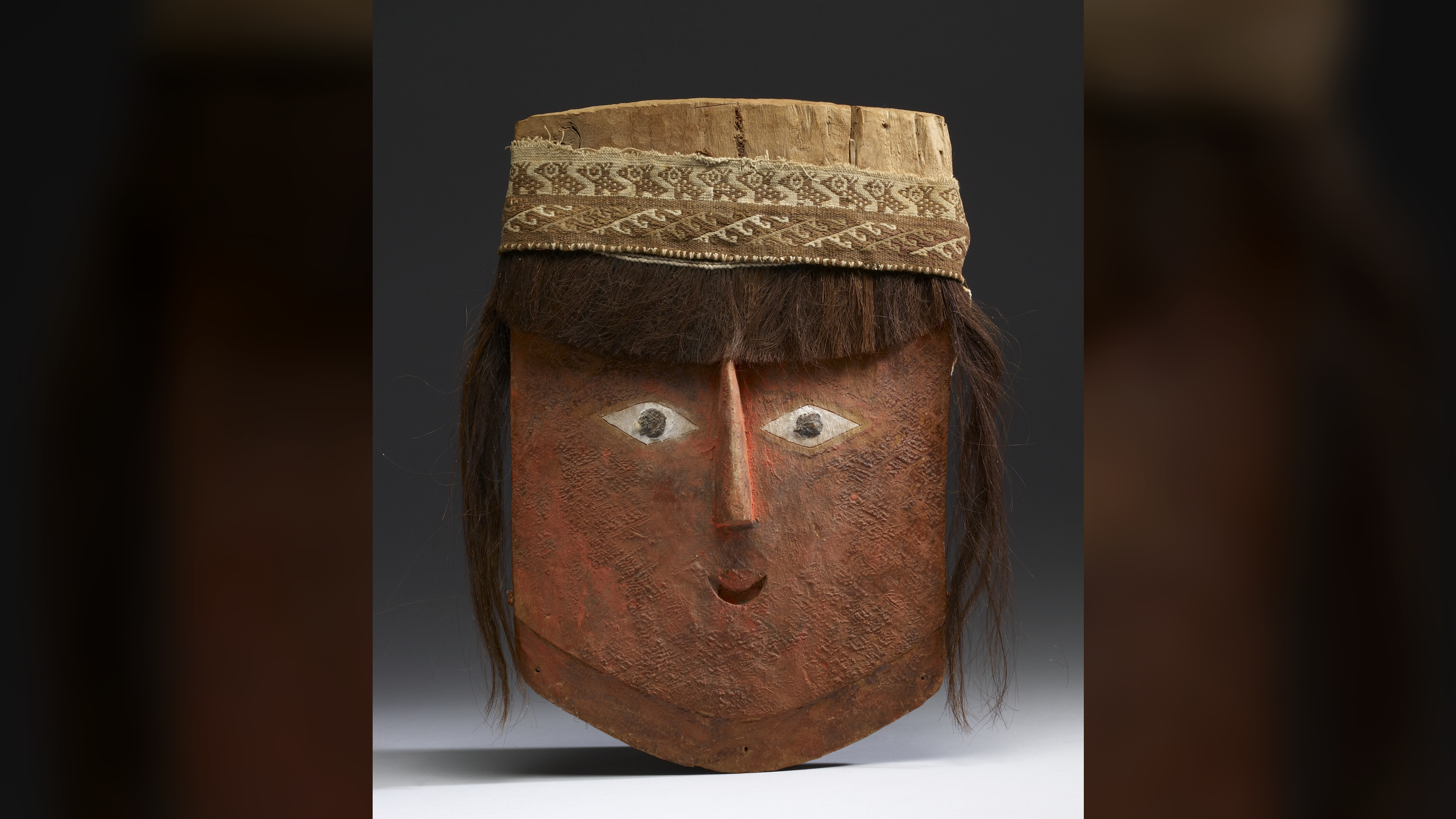
A 1,000-year-old mummy mask crafted by the Chancay culture of ancient Peru provides a rare look into pre-Inca funerary practices, featuring a wig of human hair and a coating of toxic cinnabar pigment. The artifact, which dates to the Late Intermediate Period between 1000 and 1450 CE, served as a “false head” designed to identify and honor the deceased within complex textile-wrapped funerary bundles, according to The Walters Art Museum, which holds the piece in its permanent collection.
The Function of False Heads in Chancay Funerary Traditions
The Chancay people, who inhabited the central coast of Peru, developed distinct burial traditions characterized by the creation of elaborate funerary bundles. These bundles consisted of the deceased wrapped in successive layers of textiles, vegetal materials, and animal skins, often positioned in a fetal posture. Because the physical head of the individual was often obscured by these layers, the Chancay crafted artificial heads to act as a focal point for ancestor veneration.
According to the Walters Art Museum, these masks were not intended to be portraits of the specific individual. Instead, they utilized stylized features to represent a generalized human face. The mask in the museum’s collection measures approximately 12 by 8 inches (30.5 by 20.3 centimeters) and features a triangular nose, a small U-shaped mouth, and distinct diamond-shaped eyes. These features were consistent with the artistic conventions of the Chancay, a society increasingly recognized for its sophisticated ceramics and textile production.
Materials and Symbolic Significance
The construction of the mask reflects both the technical skill and the ritual beliefs of the Chancay. Microscopic analysis conducted by the museum in 2017 confirmed that the attached wig was fashioned from human hair. Beyond the physical structure, the choice of pigment held profound symbolic weight. The mask is painted with cinnabar, a naturally occurring, bright red form of mercury sulfide.
Cinnabar was a highly prized substance in Andean funerary rituals, often associated with concepts of purification and the commemoration of the dead. However, the mineral is chemically toxic. The use of such materials suggests that the creation of these funerary objects was governed by specific ritual requirements that outweighed the inherent dangers of handling mercury-based compounds. Although the mask is often viewed as a standalone object, evidence suggests it was likely tucked within the layers of the bundle rather than displayed on the exterior; the cinnabar surface bears a patterned impression, indicating it was pressed against fine textiles during the burial process.
Cultural Context of the Chancay People
While often overshadowed in historical narratives by the later Inca Empire, the Chancay culture maintained a complex social structure and a high degree of artistic specialization. Archaeological investigations into Chancay sites have revealed evidence of intricate tattooing practices among the mummified remains and a mastery of ceramic artistry. These findings continue to refine the academic understanding of the Late Intermediate Period, highlighting a society that placed significant emphasis on the preservation and ritualized presentation of their ancestors.
The mask remains part of the ongoing research into Andean burial practices. As researchers continue to analyze the textiles and grave goods associated with these burials, the understanding of how the Chancay navigated the transition between life and death continues to evolve. Please share your thoughts or questions regarding this discovery in the comments section below.
Related reading