Scientific Confirmation of the Quebec Meteorite Crater
Scientists have confirmed that a massive circular feature in Quebec, first spotted on Google Maps by an amateur astronomer, is a 390-million-year-old meteor impact crater. Researchers identified key geological markers, including shatter cones and impact melt rock, during an arduous expedition to the site in October 2025.
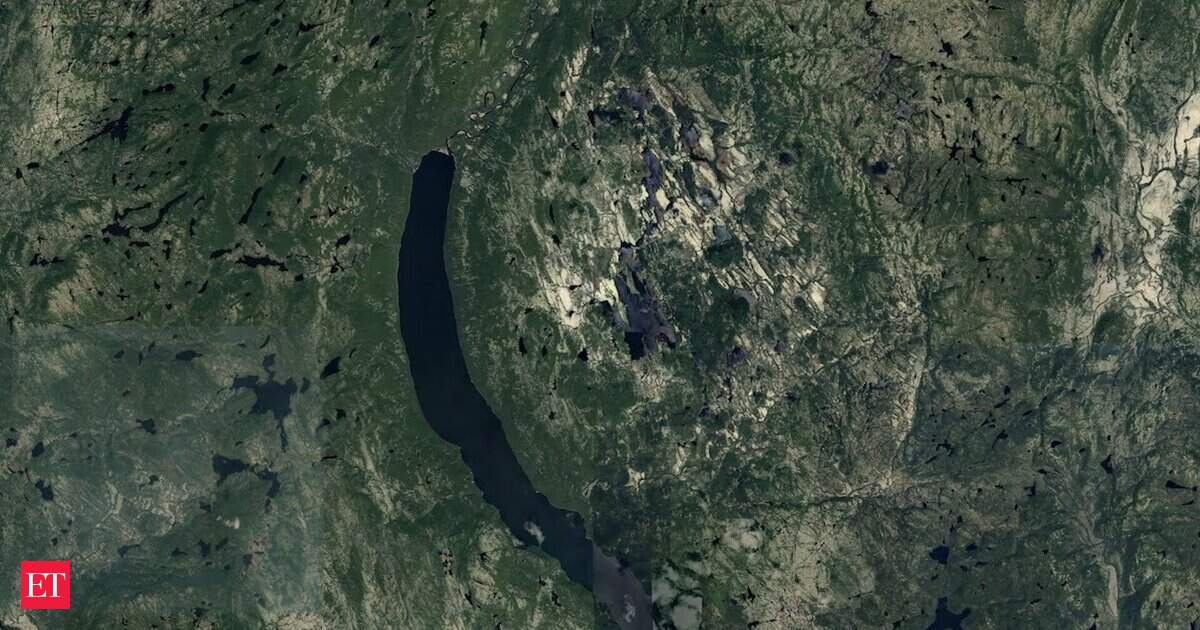
The discovery began in late 2023 when Joël Lapointe, an amateur astronomer and Quebec resident, was mapping out forest roads for a summer road trip. While zooming around northern regions on Google Maps, he spotted a neat, circular depression about 100 kilometers north of the town of Magpie. For someone who loves space and meteorites, it was enough to make him pause. For an amateur astronomer who loves to connect with space and loves meteorites, it was just amazing,
Lapointe later recalled to CTV News.
Initially, Lapointe was skeptical of his own find. I told myself, ‘You haven’t discovered anything, Joël, it’s not possible, they must already know about this,’
he said. After checking known crater databases and finding no listing for the location, he reached out to experts. It took several attempts before he found researchers willing to investigate. Eventually, a French research centre took interest, and news of the potential crater reached Gordon Osinski, a professor of earth sciences at Western University in London, Ontario, who runs the public reporting site Impact Earth.
Osinski is no stranger to enthusiastic emails about “craters” that turn out to be quarries, lakes, or natural depressions. When he first heard about the find via French colleagues, he was skeptical. However, the pit’s circular topography looked intriguing, and preliminary analysis of rock samples—which contained a mineral called zircon often formed during meteor impacts—suggested something unusual.
Gordon Osinski’s Expedition to the Magpie Site
In October 2025, Osinski and a team of geologists visited the site. Osinski described the trip as one of the most arduous expeditions he has ever undertaken, noting the terrain was incredibly rough and rugged, plus there were many bugs. The team sought evidence of shock metamorphism, which can only occur due to the immense pressures created by asteroid or cometary impacts or nuclear explosions.
During the expedition, the team found shatter cones, which are grooves or lines in the rock’s surface caused by shockwaves passing through the ground. They also discovered big cliffs of impact melt rock, created by the intense temperatures and pressures produced by a meteor impact. You can melt literally tens of cubic kilometres of the Earth's crust when you get a big enough asteroid hitting,
Osinski told CBC. Based on samples taken from the rocks, the team dated the crater to 390 million years old.
Geological Features Centered Around Lake Marsal
The structure is centered around Lake Marsal and measures approximately 25 kilometers (15.5 miles) in diameter.
Planetary Science Gathering in Germany
The research is now set to take a major step, as scientists prepare to present their findings at one of the world’s biggest planetary science gatherings in Germany next month. Experts emphasize that while the field evidence is strong, the process of scientific validation is rigorous. As Osinski noted, Most of these features are microscopic, so you can only confirm in the lab with samples.
The discovery of the crater adds to Canada’s long list of impact structures. As the scientific community prepares for the upcoming conference, the discovery serves as a reminder of the role of public observation in planetary geology. Further laboratory analysis is required to finalize the official recognition of the site, but the initial findings suggest a significant addition to the geological record of the region.
Sources: Indiatimes, Live Science.
Worth a look