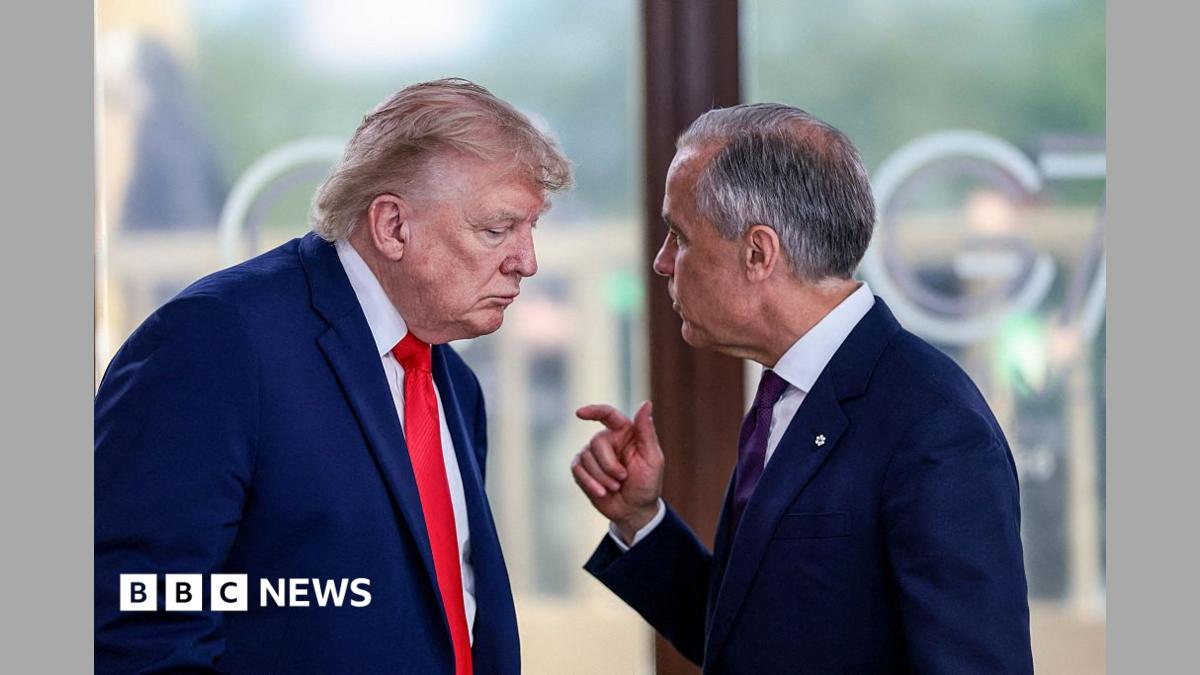
President-elect Donald Trump announced plans to impose a 50% tariff on all goods imported from Canada, citing concerns regarding border security and the flow of illicit substances. The proposed duties, which are slated to take effect within 30 days of his inauguration, represent a significant shift in North American trade policy and have prompted immediate concern from Canadian officials regarding the economic impact on both nations.
The announcement, delivered via social media on November 25, 2024, targets Canada alongside Mexico, with Trump specifying that the tariffs would remain in place until such time as “drugs, in particular fentanyl, and all illegal aliens stop this invasion of our Country.” According to the Office of the President, these measures are intended to be executed under executive authority to address national security and public health crises at the southern and northern borders.
This development marks a substantial escalation in the trade relationship between the two neighbors. Canada is consistently one of the United States’ largest trading partners, with total bilateral trade in goods and services reaching nearly $1.3 trillion in 2023, according to the U.S. Census Bureau. The prospect of a 50% levy on items ranging from energy products to automotive parts introduces significant uncertainty for cross-border supply chains.
Economic Implications for North American Trade
The imposition of a 50% tariff would fundamentally alter the landscape established by the United States-Mexico-Canada Agreement (USMCA), which was negotiated during Trump’s first term and entered into force on July 1, 2020, as noted by the Office of the United States Trade Representative. The USMCA was designed to provide a stable framework for duty-free trade across the continent, particularly for the automotive and agricultural sectors.
Economists have pointed to the potential for inflationary pressure should these tariffs be implemented. Because the U.S. relies heavily on Canadian energy imports—including crude oil and electricity—a 50% tariff could lead to increased costs for American consumers and businesses. Data from the U.S. Energy Information Administration confirms that Canada is the largest foreign supplier of energy to the United States, providing a substantial portion of the country’s petroleum imports.
Canadian Official Response and Diplomatic Channels
In response to the announcement, Canadian leadership has emphasized the deeply integrated nature of the two economies. Prime Minister Justin Trudeau and Deputy Prime Minister Chrystia Freeland have stated that they are in contact with the incoming U.S. administration to discuss border security and trade cooperation. According to statements released by the Prime Minister’s Office, the Canadian government maintains that the border is secure and that bilateral cooperation on enforcement is already robust.
Canadian officials have highlighted that trade with the U.S. supports millions of jobs in both countries. The Global Affairs Canada department has stressed that any disruption to the flow of goods could have cascading effects on manufacturing sectors, particularly in the Great Lakes region, where supply chains are highly interdependent.
Legal and Procedural Framework
The mechanism for implementing such tariffs generally relies on the International Emergency Economic Powers Act (IEEPA), a statute that grants the president broad authority to regulate commerce following a declaration of a national emergency. As detailed by the Congressional Research Service, while this power has been used for various trade actions, its application to broad, country-wide tariffs is subject to intense legal and political scrutiny.
The 30-day window mentioned by the incoming administration provides a brief period for diplomatic negotiations. Stakeholders, including trade associations and industry groups, are currently assessing the potential impact on their operations. The next major checkpoint will be the presidential inauguration on January 20, 2025, at which point the legal instruments for these measures could be formally signed and enacted.
We will continue to monitor official government filings and statements from trade offices as the transition period progresses. Readers are encouraged to share their perspectives or relevant industry updates in the comments section below.
Update (July 21, 2026)
According to bbc.co.uk, President Trump has now formally signed three executive proclamations imposing the 50% tariff, citing "unequal treatment" of U.S. cars, dairy, and alcohol rather than border security. These duties, enacted under Section 338 of the 1930 Tariff Act, target goods ranging from wine and hockey sticks to commercial cement, though energy, potash, critical minerals, and fish are spared. The administration justifies the move by accusing Canada of discriminatory automotive taxes and restrictive dairy supply management.
The move follows a February U.S. Supreme Court ruling that struck down previous tariffs enacted under the International Emergency Economic Powers Act. Industry leaders, including the Canadian Chamber of Commerce and the Distilled Spirits Council of the United States, have urged both nations to seek a resolution before the 30-day implementation window closes to avoid further retaliation.
Related reading