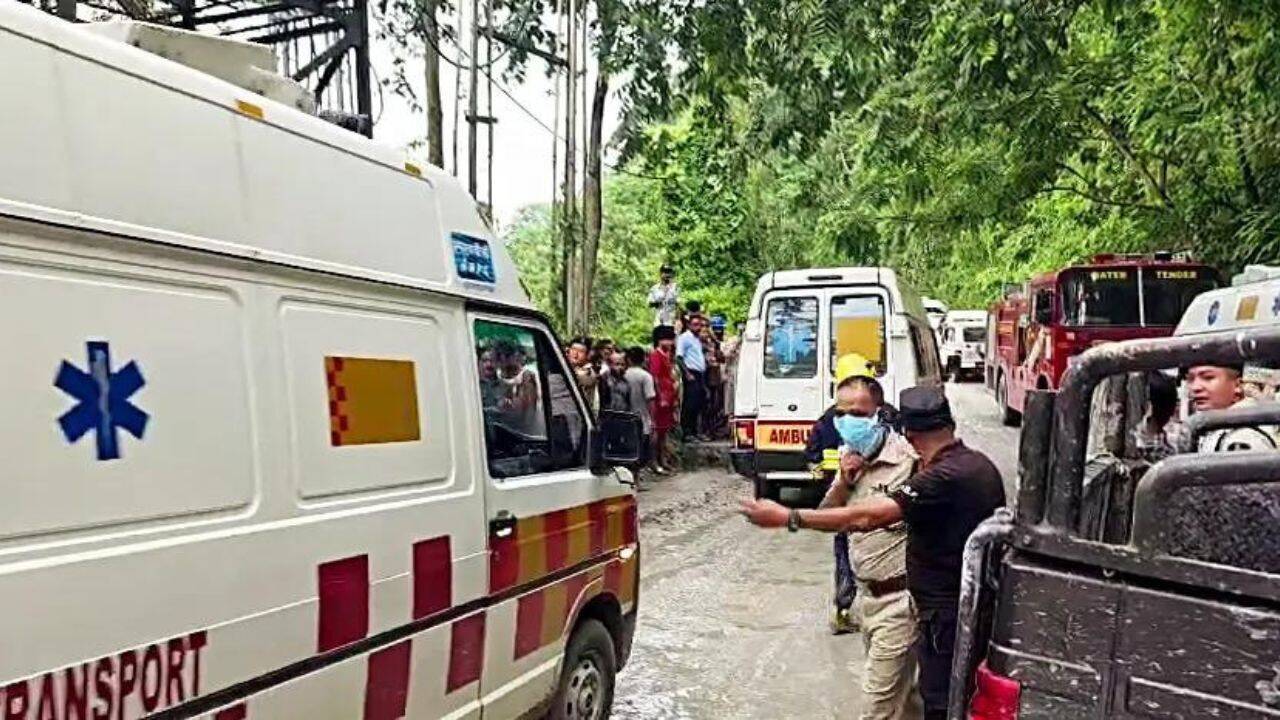
A major rescue operation is currently underway in the North Sikkim district of India following a severe landslide that struck a tunnel construction site, resulting in at least seven confirmed deaths. Local authorities and emergency response teams are working to locate several workers feared trapped beneath the debris, as unstable terrain continues to complicate efforts to reach the site.
The incident occurred in an area known for challenging geological conditions, where infrastructure projects are frequently disrupted by environmental hazards. According to updates provided by the National Disaster Response Force (NDRF), specialized teams were deployed immediately following the collapse to conduct search and rescue operations in the affected tunnel section. The operation remains active as rescuers navigate the risks of secondary slides and the structural instability of the tunnel, which has hampered the use of heavy machinery.
Emergency Response and Current Status
The landslide, which took place in the remote Himalayan region, has prompted a multi-agency response involving state disaster management authorities, police, and specialized central rescue units. Officials have confirmed that seven individuals were recovered from the site, though the search for those still missing continues. The National Disaster Management Authority (NDMA) has been coordinating with local district administrations to provide medical support and emergency logistics for the affected families.
The geography of North Sikkim poses significant hurdles for rescue teams. The region is characterized by steep slopes and loose soil, which are susceptible to saturation during periods of high precipitation or seismic activity. Rescue personnel have reported that the debris field is extensive, requiring precise manual excavation in sections where mechanical equipment cannot safely operate. As of the latest briefing from local government officials, the priority remains the stabilization of the tunnel entrance to ensure the safety of the responders while searching for survivors.
Infrastructure Challenges in the Himalayan Corridor
The construction of tunnels and roads in Sikkim is part of an ongoing effort to improve connectivity in India’s border regions. However, these projects often encounter significant environmental risks. Geologists frequently point to the fragile nature of the Himalayan mountain range, where human-led construction can exacerbate the natural risk of landslides, particularly in areas with high tectonic activity.
Infrastructure development in this sector is monitored by the Ministry of Road Transport and Highways, which oversees safety standards for national projects. Experts note that while engineering solutions such as rock bolting, shotcreting, and reinforced tunnel liners are standard, the intensity of geological shifts in North Sikkim often exceeds the design parameters of traditional infrastructure. The current incident has reignited discussions regarding the necessity for more rigorous environmental impact assessments in high-altitude, geologically volatile zones.
What Happens Next
The search and rescue operation will continue until all personnel are accounted for, according to local administrative spokespersons. Once the immediate crisis phase concludes, authorities are expected to initiate a formal inquiry into the circumstances surrounding the landslide. This typically involves a geological audit of the construction site and a review of the safety protocols in place at the time of the collapse.
For families and local residents seeking information, the North Sikkim District Administration has set up temporary help desks. Updates regarding the recovery efforts and any further safety advisories for the area will be posted through official state government channels. Readers interested in following the situation as it develops can monitor the Government of Sikkim official portal for verified bulletins and contact information for emergency services.
We will continue to provide updates as new information is verified by official sources. Please share your thoughts or questions in the comments section below regarding the ongoing challenges of infrastructure development in high-risk mountain regions.
Keep reading