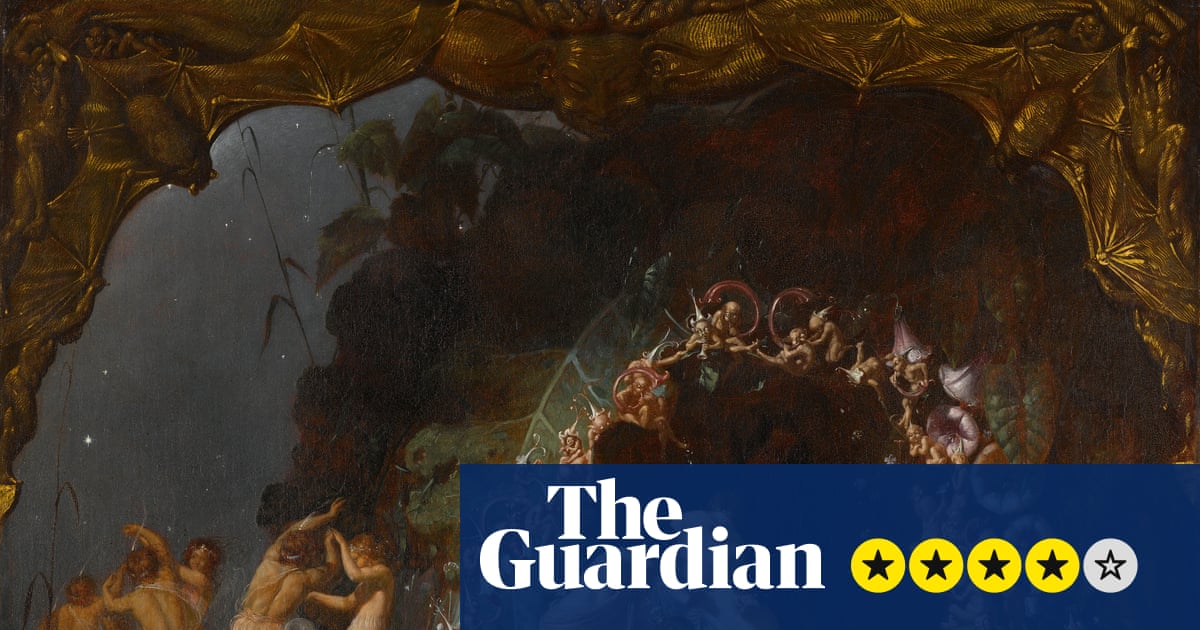
Richard Dadd, a Victorian artist whose career included intricate paintings, remains a subject of study due to the intersection of his creative output and his mental illness. Known for his fairy-themed works, Dadd’s artistic trajectory changed when he murdered his father, whom he thought was the devil. Following his arrest and subsequent confinement in Bethlem Hospital—often referred to as Bedlam—and later Broadmoor, Dadd continued to produce works, prompting questions about the relationship between his psychosis and his aesthetic vision.
The complexity of Dadd’s work is illustrated by his 1853 portrait, Portrait of a Young Man. While the subject’s disheveled appearance and intense, shadowed demeanor might suggest a fellow patient within the walls of Bedlam, the subject is probably Dr. Charles Hood, the hospital’s superintendent. The painting suggests a bridge between the artist and his clinician. By capturing the superintendent with a fragility, Dadd suggests that there is the finest of lines between “sanity” and “madness”.
The Artistic Evolution Within Confinement
Before his institutionalization, Dadd was already a remarkable artist, with fairies as his hit theme. However, after he murdered his father and tried to kill a stranger while fleeing to Paris, he was caught and would spend the rest of his life in Bedlam and Broadmoor. Within the confines of Bedlam, he saw nature and art afresh.
Sanity, Madness, and the Victorian Clinician
The relationship between Dadd and Dr. Charles Hood provides insight into the mid-19th-century understanding of mental health. In Portrait of a Young Man, the subject is a representative of the institution. By casting Dr. Hood in a state of quiet, nervous reflection, Dadd suggests that the line between those who study the mind and those who suffer within it is thin.
Historical Context and Modern Interpretation
Interpretations of Dadd’s work include whether he is a kind of “Victorian acid casualty” whose visions of fairies are the “peculiar fruit of his psychosis”. While his psychosis shaped the content of his work, the arresting, bizarre, and sometimes unforgettable images remain. Dadd spent the remainder of his life in institutions, passing away at Broadmoor.
Readers are encouraged to share their perspectives on whether the artist’s work can be separated from his clinical history in the comments below.
Keep reading