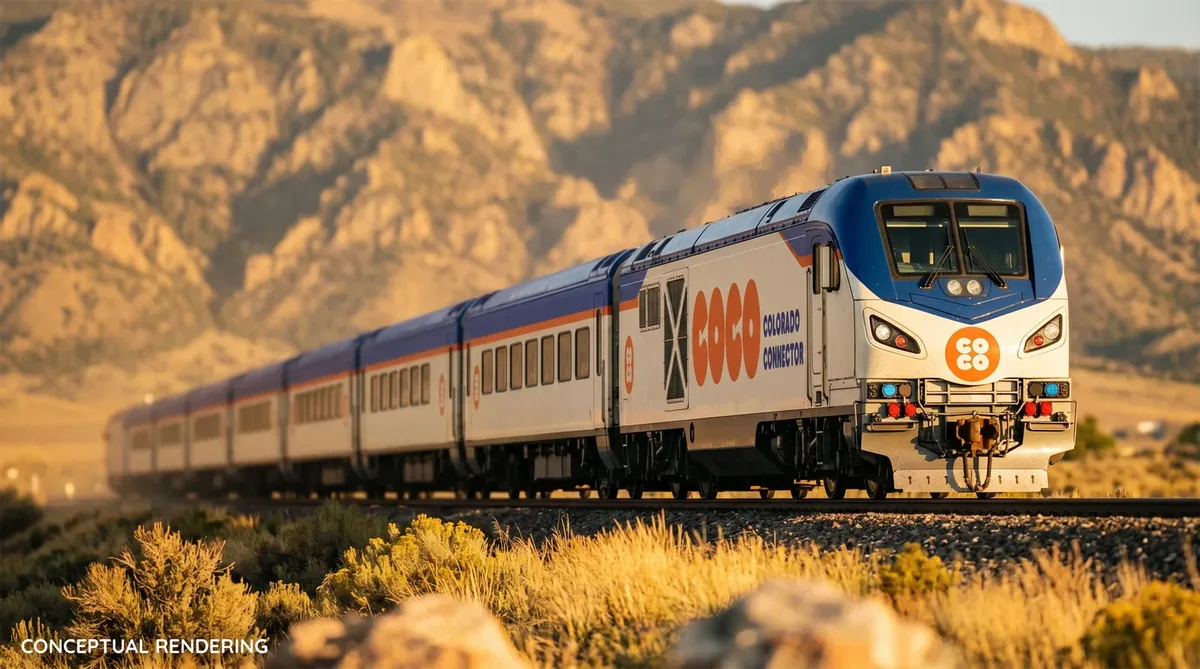
Colorado’s planned Front Range Passenger Rail, officially branded as the Colorado Connector
or CoCo,
aims to launch initial service between Denver and Fort Collins by 2029. While the northern segment is funded, potential stops—including a proposed special event station at the future Denver Broncos stadium—remain subject to funding and final freight railroad approvals.
Branding the Colorado Connector
The branding effort, unveiled in mid-July 2026 at a Denver event, includes a mascot: a red fox wearing a Colorado-flag bandana. According to project officials, the fox symbolizes the goal to outfox I-25 traffic.
“This was chosen by the people of Colorado, and the top two contenders were actually playful names. I think that this name works because it describes what it does. It connects Colorado.”
Gov. Jared Polis
Service Timeline and Infrastructure Plans
The Front Range Passenger Rail District has outlined a phased rollout for the service. The starter service
is scheduled to begin in 2029, running from Denver Union Station to Fort Collins with stops in Westminster, Broomfield, Louisville, Boulder, Longmont, and Loveland. This phase utilizes the RTD B Line corridor and existing BNSF freight tracks, which require infrastructure upgrades for shared use.
However, this expansion is contingent on voter approval of a dedicated funding source, likely a sales and use tax, which could appear on the November 2026 ballot.
Potential Broncos Stadium Special Event Stop
Transportation leaders are coordinating with the Denver Broncos to potentially incorporate a passenger rail stop at Burnham Yard, the site selected for the team’s new stadium. Patrick Smyth, a Broncos spokesperson, confirmed that the master plan for the site includes the station, noting that the team welcomes state involvement to support the development’s multimodal goals.
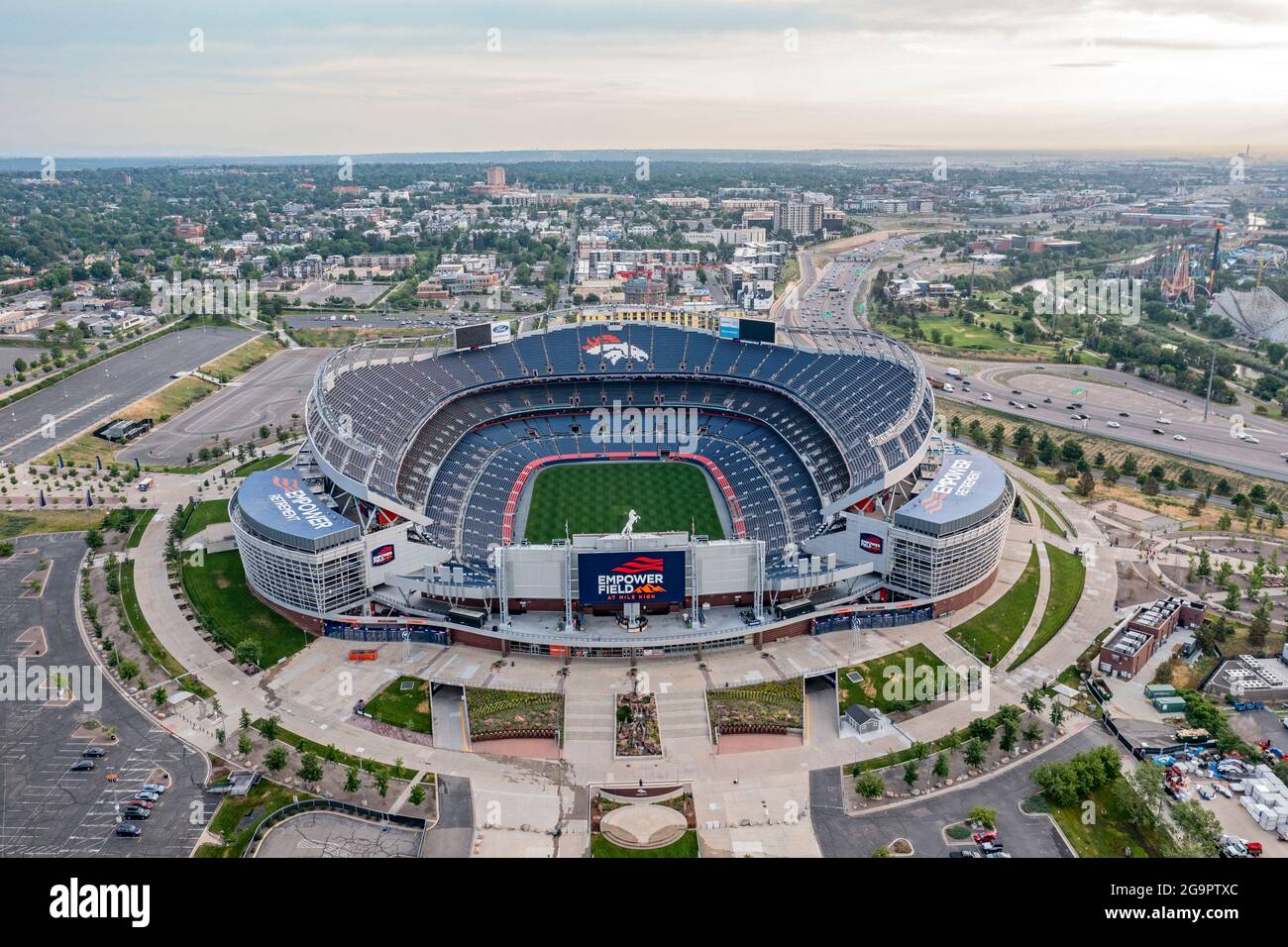
Sal Pace, general manager of the Front Range Passenger Rail District, emphasized that this stop is intended to provide fans from northern and southern Colorado with an alternative to driving. We still need final approval for alignment from the host freight railroads, but this is a station that makes a lot of sense if we want to relieve congestion on our highways, roads and bridges,
Pace stated.
Economic and Operational Criticisms
The project faces skepticism regarding its fiscal viability and impact on traffic congestion. Critics point to historical data from the Regional Transportation District (RTD) FasTracks program, noting that initial cost estimates for rail projects have frequently been exceeded.
Critics argue that taxpayer subsidies could reach $40 to $60 per rider, raising concerns about the equity of funding the system through regressive sales taxes, particularly as low-income workers historically have low transit usage rates.
Regional Rail Advocacy Debates
The focus on the Front Range corridor has sparked debate among other rail advocacy groups regarding the state’s broader transportation priorities. While the Vaildaily that groups like the Western Rail Coalition continue to advocate for the revival of the Tennessee Pass line, others, such as ColoRail, argue for prioritizing existing active tracks to provide service between Denver and Grand Junction.
Related reading