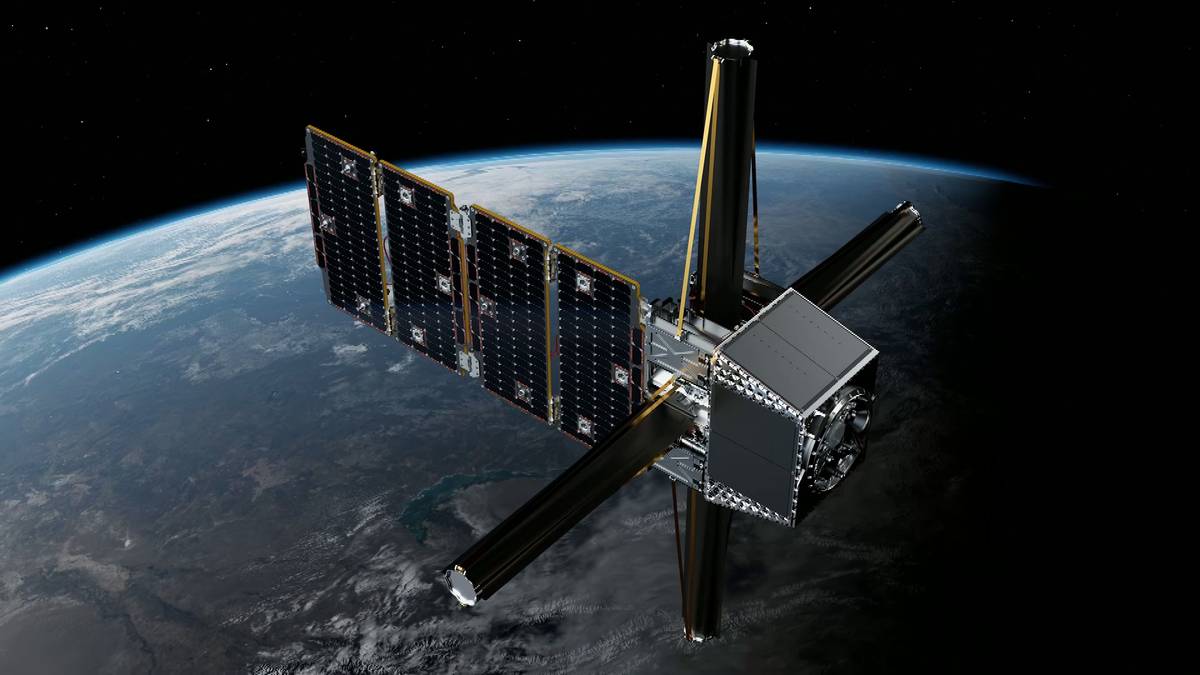
The introduction of space-based solar reflection technology, designed to illuminate darkened regions or enhance solar power collection, has reached a new regulatory milestone in the United States, sparking immediate concern among the global astronomical community. As commercial interests in orbital infrastructure grow, researchers warn that these high-altitude mirrors could create significant light pollution, potentially compromising long-term observations of the night sky.
The debate centers on the deployment of reflective satellites or “space mirrors” intended to redirect sunlight toward specific areas on Earth. While proponents argue these technologies could optimize energy distribution or provide illumination for infrastructure, astronomers emphasize that any reflected light—even at high altitudes—interferes with the pristine darkness required for sensitive deep-space imaging. According to reports from the International Astronomical Union (IAU), the increasing number of artificial objects in low Earth orbit already poses a measurable challenge to ground-based observatories, and the addition of large, reflective surfaces could exacerbate this trend.
Regulatory Oversight and Orbital Impact
The regulatory path for space-based infrastructure in the United States is primarily managed by the Federal Communications Commission (FCC) and the Federal Aviation Administration (FAA). While these bodies oversee launch licensing and orbital debris mitigation, critics argue that the environmental impact on the night sky is not sufficiently addressed in existing licensing frameworks. The National Science Foundation (NSF) has previously highlighted that the rapid expansion of satellite constellations, such as those operated by SpaceX and other commercial entities, necessitates a more robust approach to space traffic management and light pollution mitigation, as documented in their 2022 official statement on satellite constellations.
The primary concern for the scientific community is the “albedo”—or the reflectivity—of materials used in space. If a mirror is designed specifically to capture and redirect sunlight, its brightness as viewed from the surface could significantly exceed that of standard satellites. This increased luminosity creates “streaks” in long-exposure astronomical photographs, rendering data from wide-field surveys, such as those conducted by the Vera C. Rubin Observatory, difficult to process. The IAU has consistently advocated for international guidelines to limit the total reflective area of objects in orbit, a position supported by recent findings published in the journal Nature Astronomy regarding the impact of satellite constellations on professional astronomy.
The Astronomical Perspective on Light Pollution
Astronomers argue that the night sky is a shared global resource, much like the high seas or the atmosphere. The introduction of solar mirrors is viewed by many as a form of “orbital light pollution” that cannot be easily mitigated by software or filtering. Unlike terrestrial light pollution, which can be managed through local shielding and ordinances, orbital reflections originate from above the horizon, making them visible to observatories across the planet regardless of local ground-based protections.
Researchers at the European Southern Observatory (ESO) have modeled the potential impact of various orbital configurations and concluded that even a small number of high-reflectivity mirrors could disrupt the observation of faint celestial phenomena, such as distant galaxies or near-Earth asteroids. The scientific community is currently pushing for a formal assessment process that requires orbital projects to prove their light-pollution footprint is within acceptable limits before receiving final authorization from national regulators.
Future Checkpoints and Industry Response
As of late 2024, the dialogue between space regulators and the scientific community remains active. The next significant checkpoint for this issue involves the upcoming meeting of the UN Committee on the Peaceful Uses of Outer Space (COPUOS), where member states are expected to discuss the long-term sustainability of outer space activities. This forum serves as the primary international venue for proposing new standards that could eventually influence domestic licensing policies in the United States and elsewhere.
For now, the industry maintains that space-based solar technology provides a pathway to renewable energy and global connectivity. However, the requirement for transparency in orbital design and reflective specifications is becoming a central point of negotiation. Interested parties, including researchers and the general public, can monitor future FCC dockets and public notices regarding commercial space launch applications to track how these environmental concerns are being integrated into the licensing process.
We welcome your thoughts on the balance between space-based innovation and the preservation of our view of the cosmos. Please share this article to help foster a broader discussion on the future of our night skies.
Related reading