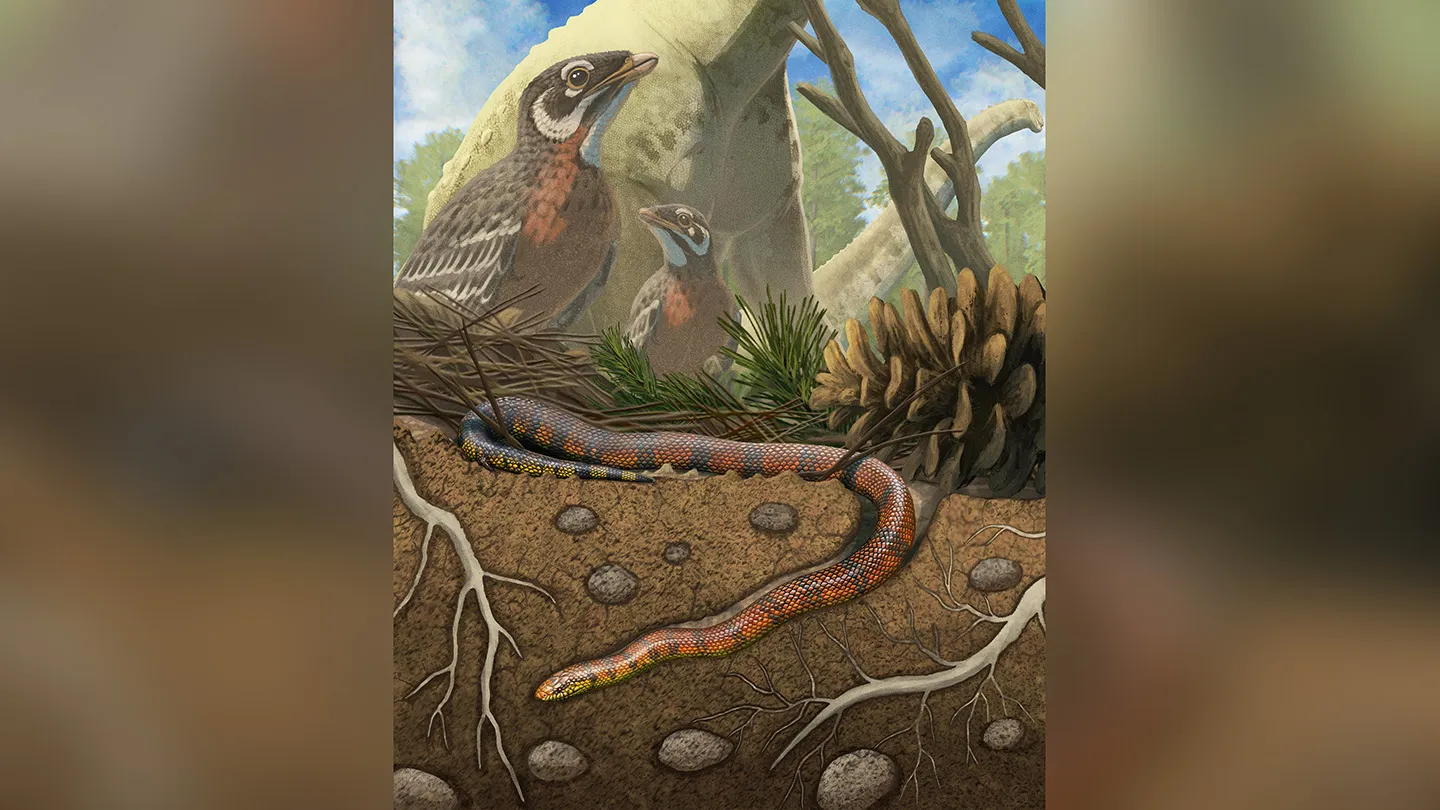
A remarkably preserved 3-D snake fossil, known as Najash rionegrina, is providing paleontologists with unprecedented insights into the evolutionary transition of snakes from lizard-like ancestors to specialized burrowers. Discovered in the Candeleros Formation of Argentina’s Patagonia region, the specimen features a rare, intact skull that challenges long-standing assumptions about the ancestral snake body plan, according to research published in the journal Science Advances.
For decades, the scientific consensus suggested that early snakes were either exclusively marine animals or terrestrial predators that transitioned to limblessness. However, the cranial anatomy of this 95-million-year-old fossil reveals a complex mosaic of traits, including a functional middle ear and a robust snout, that indicate these creatures were highly adapted for an underground, fossorial lifestyle. The findings, detailed by a team led by Dr. Fernando Garberoglio of the Fundación Azara at Universidad Maimónides, demonstrate that the evolutionary trajectory of snakes was significantly more diverse and gradual than previously documented, as reported by the Natural History Museum.
Anatomy Reveals a Specialized Burrower
The skull of Najash rionegrina offers a clear departure from the skeletal structures seen in modern snakes. While contemporary snakes are known for their highly kinetic, flexible skulls designed for swallowing large prey, this ancient species possessed a more rigid, reinforced cranium. This structural stability is a hallmark of burrowing animals, which require a compact, durable head to navigate dense soil and subterranean environments.
According to the analysis published in Science Advances, the fossil retains a jugal bone—a feature common to lizards but absent in almost all living snakes. The presence of this bone, combined with a specialized jaw configuration, suggests that the early evolution of the snake lineage involved a prolonged period of subterranean specialization. This contradicts the theory that snakes lost their limbs and evolved their unique head shape solely to facilitate aquatic hunting or surface-level locomotion.
Redefining Snake Evolution
The discovery of this 3-D specimen is significant because most early snake fossils are found flattened by geological pressure. This specimen, however, retained its original shape, allowing researchers to use high-resolution micro-CT scanning to map the internal structures of the skull. The data indicates that the transition to the modern snake form was characterized by a series of incremental changes rather than a singular, rapid evolutionary event.
These findings align with broader paleontological research conducted by institutions such as the University of Alberta, which has long studied the skeletal shifts in squamates—the order comprising lizards and snakes. The evidence suggests that early snakes were not merely “transitional” forms but were highly specialized organisms that thrived in specific ecological niches for millions of years. By analyzing the fossil’s inner ear, researchers confirmed that Najash was well-adapted for the low-frequency vibrations typical of a burrowing existence, providing a functional context for its anatomical features.
Broader Implications for Vertebrate History
The study of Najash rionegrina serves as a vital checkpoint in understanding how vertebrates adapt to radical changes in habitat. The transition from a four-legged, lizard-like ancestor to a limbless, elongated body plan is one of the most significant morphological shifts in the history of reptiles. By confirming that early snakes occupied burrowing niches, scientists can better interpret the fossil record of other limbless vertebrates found in similar Cretaceous-era sedimentary deposits.

The research team continues to analyze the post-cranial elements of this specimen to determine how the loss of limbs coincided with these cranial adaptations. Further comparative studies are expected to refine the evolutionary tree of squamates, potentially shifting the timeline of when specific snake lineages diverged from their closest lizard relatives. As paleontologists continue to examine these rare 3-D fossils, the history of how the snake body plan emerged from its ancestral roots becomes increasingly precise.
Readers interested in the latest updates on this ongoing research can monitor official publications from the Fundación Azara and the Science Advances journal archive. Join the conversation below to share your thoughts on these findings or ask questions about the evolutionary history of snakes.
Worth a look