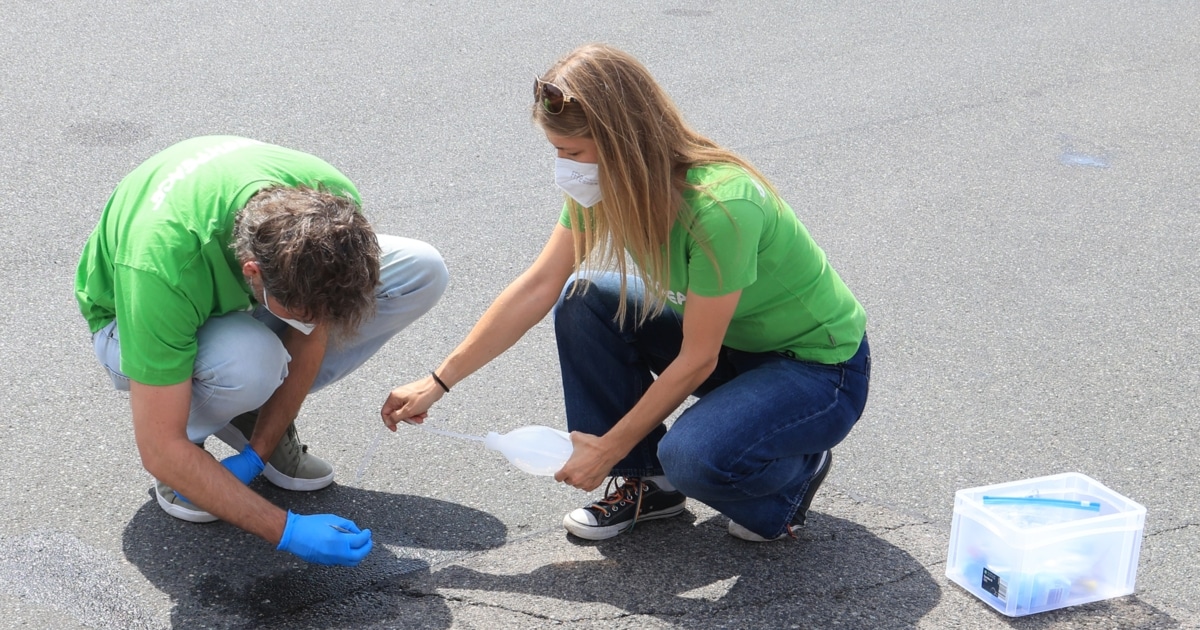
Vienna environmental authorities have initiated targeted road sealing measures following confirmed laboratory test results regarding asbestos-containing materials on municipal roadways. The municipal response follows rigorous sample analyses that detected bound asbestos fibers within specific road construction layers, prompting immediate containment protocols by city departments to prevent fiber release into the urban atmosphere.
According to municipal administration updates and independent assessments by public health experts, the confirmed presence of bound asbestos in aggregate materials has triggered extensive safety evaluations across designated transit corridors. City work crews have deployed specialized binding agents and impermeable surface sealants to lock the mineral matrix in place, ensuring vehicular traffic and routine maintenance work cannot disturb or pulverize the legacy paving components.
The discovery centers on historical road construction practices where industrial byproducts and mineral aggregates containing asbestos were routinely utilized for foundation stabilization. While structural degradation over decades raised initial alarms among residents and labor representatives, current environmental health evaluations emphasize that the physical state of the material dictates the actual exposure risk to the general public.
Laboratory Findings and Expert Assessments
Testing protocols executed by certified materials laboratories confirmed the presence of chrysotile and amphibole asbestos fibers within core samples extracted from the affected asphalt layers. Officials from the municipal infrastructure directorate emphasized that the hazardous material is tightly bound within a solid bitumen and mineral matrix rather than existing as loose, friable insulation.
Weighing in on the safety implications, Dr. Hans-Peter Hutter, head of the Department of Environmental Hygiene and Environmental Medicine at the Medical University of Vienna, offered a measured perspective during public briefings. According to statements provided by Dr. Hutter regarding similar infrastructural matrices, potential risks remain minimal as long as the material stays intact and bound. “If asbestos-containing material remains securely bound within the construction structure and is not mechanically pulverized, the likelihood of airborne fiber inhalation is exceedingly low,” medical hygiene experts noted in related urban safety evaluations.
Environmental monitoring stations deployed near the sealed zones continue to record ambient air quality parameters. Data compiled by the Vienna Environmental Protection Department (MA 22) indicates that particulate counts for asbestos fibers remain well below critical threshold limits established by national occupational and environmental safety regulations.
Containment Strategies and Road Sealing Operations
To eliminate any possibility of environmental dispersion, municipal road maintenance divisions launched comprehensive surface-sealing operations across all verified locations. The remediation protocol involves applying high-density polymer membranes and liquid bitumen layers designed to encapsulate the underlying pavement completely.
Engineering specialists outlined the technical parameters of the sealing process during a technical briefing for city council members. Work crews operate under strict containment guidelines mandated by workplace safety codes, utilizing specialized wet-cutting tools and vacuum filtration systems whenever core sampling or minor surface repairs are unavoidable. These measures align with guidelines set forth by the Austrian Workers’ Compensation Board (AUVA) regarding the safe handling of legacy hazardous substances in civil engineering projects.
Traffic management plans accompany the sealing operations to minimize mechanical stress on freshly treated road segments. Heavy freight vehicles are temporarily diverted from secondary corridors where encapsulation works are ongoing, allowing the chemical sealants adequate curing time to bond effectively with the legacy aggregate.
Public Health Impact and Regulatory Framework
The municipal government maintains that routine commuters and neighborhood residents face no acute health hazard from the sealed roadways. Public health authorities stress that asbestos health risks primarily stem from the chronic inhalation of high concentrations of microscopic, airborne fibers—a scenario prevented by the current encapsulation strategy.
City officials operate under stringent European Union directives and Austrian waste management laws governing hazardous building materials. The Federal Ministry for Climate Action, Environment, Energy, Mobility, Innovation and Technology oversees national compliance standards for legacy pollutant management, ensuring that municipal remediation efforts adhere to established scientific benchmarks.
Residents seeking detailed information regarding specific street closures, testing reports, and environmental safety guidelines can access official documentation through the City of Vienna digital portal at wien.gv.at. The portal provides ongoing updates on municipal infrastructure projects, air quality monitoring metrics, and scheduled maintenance timelines across all metropolitan districts.
Next Steps and Monitoring Schedule
The municipal infrastructure committee has scheduled a follow-up review session to evaluate the long-term efficacy of the road sealants and review ongoing air monitoring data. Environmental inspectors will conduct routine core sampling and surface integrity checks on a quarterly basis to identify any signs of premature wear or mechanical compromise in the sealed paving layers.
As municipal authorities press forward with comprehensive environmental safeguards across the capital, share your thoughts or questions on urban infrastructure safety in the comments below.