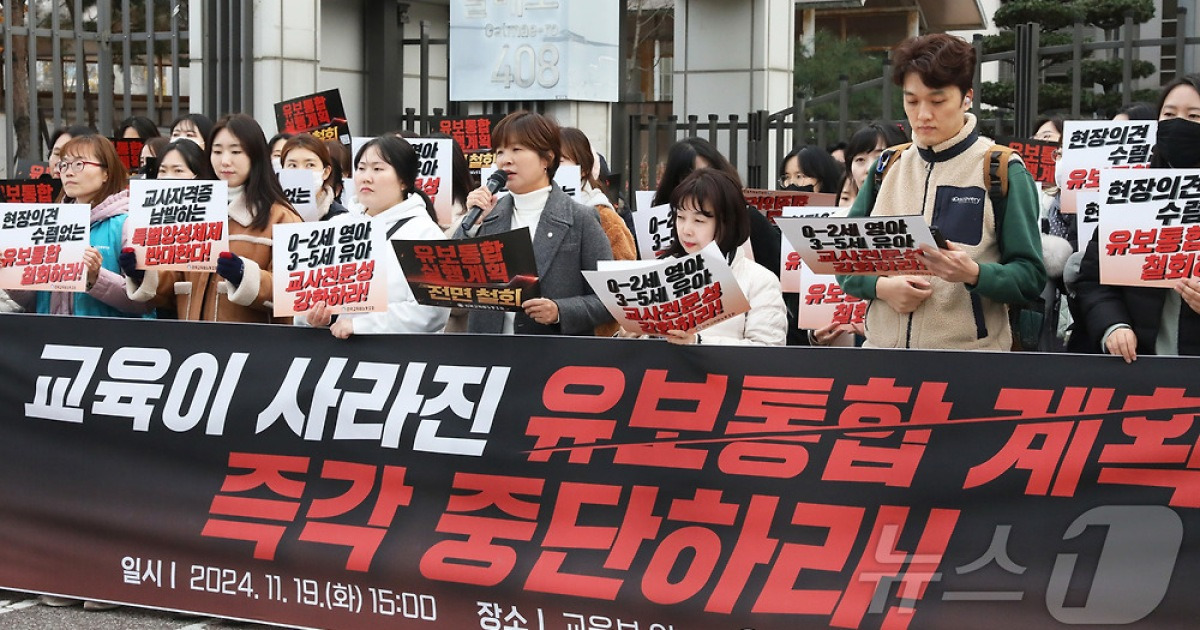
South Korea’s Presidential Committee on National Cohesion has launched intensive deliberations regarding the establishment of a unified “infant school” system, a sweeping structural shift designed to merge early childhood education and care currently split between kindergartens and day-care centers. The initiative, spearheaded by the committee’s special committee on early childhood education and care, aims to streamline national curricula, standardize teacher qualifications, align financial support mechanisms, and consolidate relevant laws under a single administrative umbrella.
The discussions mark a critical juncture in the country’s long-running efforts to resolve the deep institutional divide between the Ministry of Education, which oversees kindergartens, and the Ministry of Health and Welfare, which manages day-care centers. As policymakers draft comprehensive blueprints for the integration—widely known locally as yubotonghap—stakeholders are closely watching to see how the finalized framework will be incorporated into South Korea’s broader National Education Development Plan.
Merging the dual systems has long been a priority for policymakers seeking to alleviate regional educational disparities and ease the financial burden on young families. However, previous attempts stalled due to complex disagreements over teacher certification standards, wage parity between kindergarten teachers and childcare providers, and the allocation of local education grants. The current deliberations before the Presidential Committee on National Cohesion seek to bridge these gaps by creating a unified legal and financial foundation that treats early childhood education as a fundamental public good backed directly by the state.
Addressing Teacher Qualifications and Curriculum Standards
At the core of the proposed infant school model is the harmonization of educational programs and educator credentials. Kindergartens currently follow a standardized curriculum geared toward learning and development, while day-care centers emphasize comprehensive caregiving alongside basic instruction. Proponents of the unification argue that standardizing these tracks will ensure every child receives an equitable baseline of instruction regardless of the facility type they attend.
However, reforming teacher qualifications remains one of the most sensitive hurdles in the negotiation process. Kindergarten teachers typically hold specific university-level degrees and certifications governed by educational laws, whereas childcare workers often follow training pathways administered through welfare regulations. The special committee is reviewing proposals to establish unified training standards and bridge courses that would allow existing educators to transition smoothly into the new infant school framework without disrupting current staffing levels across the country’s thousands of facilities.
Financial backing is equally central to the committee’s current blueprint. Integrating the funding streams requires reconciling local education subsidies, which traditionally flowed primarily to public and private kindergartens, with welfare budgets that supported day-care operations. Policymakers are examining how to distribute state resources evenly to guarantee that facility upgrades, operating costs, and teacher compensation meet high, uniform standards nationwide.
Next Steps and Implementation Timeline
The Presidential Committee on National Cohesion continues to review stakeholder feedback from educators, parents, and local government officials as it refines the structural details of the infant school transition. The committee’s ongoing deliberations are expected to yield a formal policy recommendation that will feed directly into the upcoming revisions of the National Education Development Plan.
For parents and educators seeking updates on the integration process, official announcements, committee schedules, and policy briefs are published periodically through the official portal of the Presidential Committee on National Cohesion. Observers note that subsequent legislative proposals amending the relevant education and welfare laws are anticipated to be introduced in the National Assembly following the finalization of the committee’s master plan.
Related reading
- US-EU Trade War: White House Tensions Threaten Global Trade Stability
- Chicken Wing vs. Breast: Which is Better for BBQ This Summer?
- Understanding Education Houses of the Légion d’Honneur (archynewsy.com)
- Troy Jackson’s Hidden Past: A Look at His Early Responses to a Senate Candidate Questionnaire (news-usa.today)