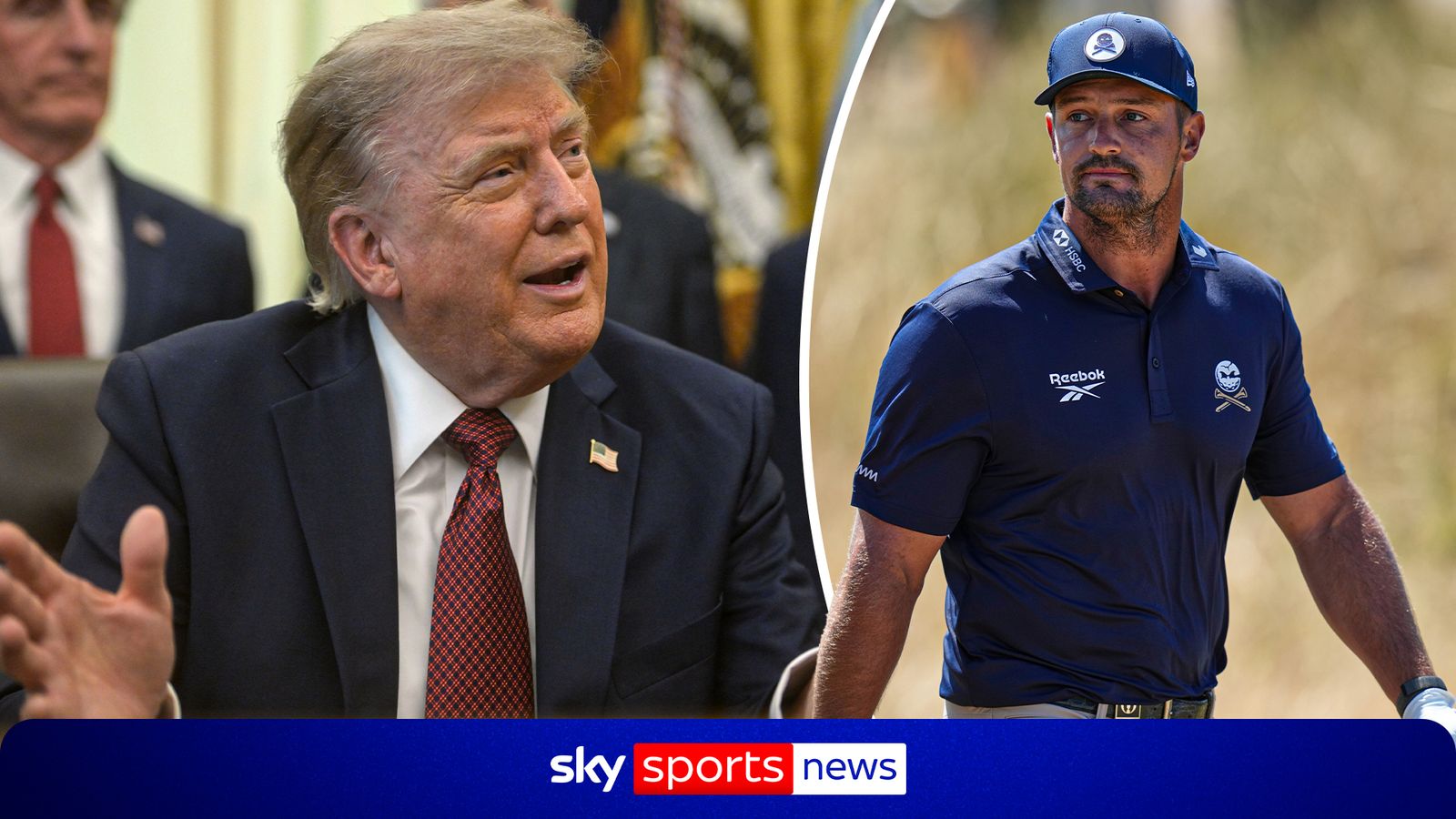
Donald Trump has addressed public speculation regarding his potential influence over golf’s ruling bodies, stating that he views his role more as a judge than a fixer when discussing high-profile sports controversies. The remarks follow widespread online debate concerning Bryson DeChambeau and a disputed two-stroke penalty at a major golf championship, with commentators questioning whether political figures or high-profile course owners could intervene in tournament officiating.
Speaking about the intersection of sports, governance, and public expectation, the former U.S. president pushed back against the notion that he operates behind the scenes to alter rulings made by tournament referees. Instead, Trump emphasized a strict separation between official sporting administration and external influence, maintaining that regulatory decisions on the course must remain with certified rules officials.
The commentary sheds light on the complex relationship between elite sports, prominent public figures who own championship venues, and the governing bodies that oversee professional golf tournaments. Observers across the sporting world frequently scrutinize how tournament rules are applied, particularly when high-stakes penalties affect fan favorites during major championships.
The Bryson DeChambeau Penalty Debate
The conversation surrounding outside intervention stems from intense scrutiny over rulings at major golf tournaments, where modern broadcasting and social media amplify every disputed call. Bryson DeChambeau, known for his powerful driving and analytical approach to the game, has frequently found himself at the center of high-profile rules discussions.
Golf’s governing bodies—primarily the USGA and The R&A—maintain rigorous officiating standards designed to ensure fair competition across all tiers of the sport. Referees on the course operate independently, applying the Rules of Golf to all competitors regardless of stature, popularity, or venue ownership. Trump’s recent comments underline this operational boundary, noting that outside actors do not possess the authority—nor should they seek—to overturn competitive penalties handed down by trained officials.
Professional golf has long balanced commercial partnerships with strict regulatory independence. Venue owners, corporate sponsors, and tournament hosts routinely collaborate on logistics, course setup, and fan experience, but competitive integrity remains strictly under the purview of tournament referees.
Understanding the Role of Golf Rules Officials
To understand why outside intervention is neither practical nor permitted, sports analysts point to the decentralized structure of professional golf governance. Rules officials undergo specialized training administered by organizations like the R&A and the USGA to interpret complex situations on the course, such as embedded balls, loose impediments, and relief areas.
Decisions made by these officials during a championship round are final, subject only to specific committee reviews outlined in the official rulebook before a scorecard becomes official. This framework is designed to protect the integrity of the tournament field, ensuring that every competitor plays under identical conditions and enforcement standards.
By defining his stance through the metaphor of a judge rather than a fixer, Trump aligned with the fundamental principle that sports governance relies on established legalistic procedures rather than arbitrary intervention. This distinction aims to reassure athletes, fans, and governing bodies that competitive outcomes are determined solely by athletic performance and adherence to the rules.
Stakeholders and Professional Golf Governance
The episode highlights the unique pressures faced by course owners who frequently host professional championships. Major golf venues, including several properties associated with Trump’s organization, regularly welcome international tours, requiring a delicate balance between hospitality management and sporting neutrality.
For players like DeChambeau, navigating the modern media landscape means that on-course rulings often trigger broader cultural and political conversations far beyond the fairways. While fans and pundits routinely debate the fairness of specific penalties, governing bodies continue to emphasize education and transparency to maintain trust in official decisions.
As professional golf prepares for upcoming fixtures on the international calendar, attention remains focused on maintaining clear lines between event promotion and athletic adjudication. Officials emphasize that preserving public confidence in tournament outcomes depends entirely on the consistent, unbiased application of the rules by certified referees.
Worth a look
- The provided text contains only author metadata (Nick Bartlett, SuperWest Sports) and a date; it does not contain the article content. Please provide the article text to generate an accurate SEO title.
- Andy Recursive’s Clutch Home Run Leads Saitama Seibu Lions to Historic Comeback Victory
- Trump’s Aircraft Delivery Push Led to Higher Costs and Safety Trade-offs (newsdirectory3.com)
- Rescission Packages, Explained: The Route Trump Bypassed (daybreakwire.com)