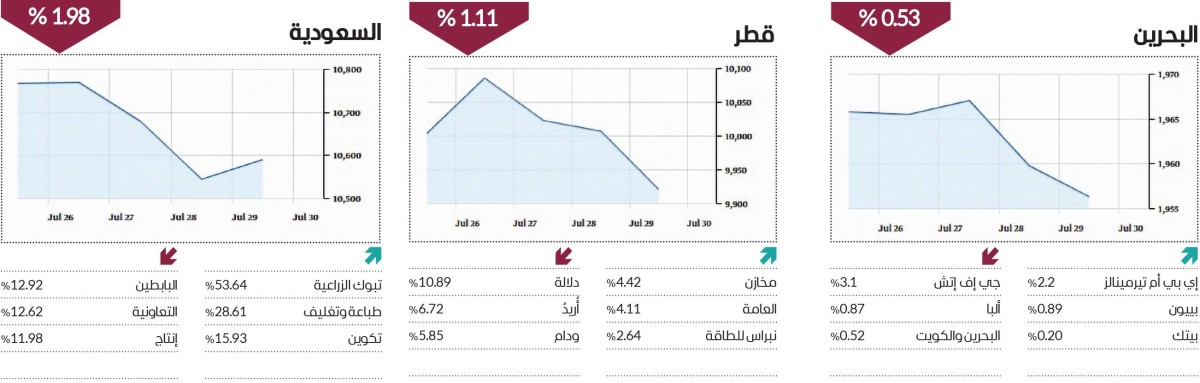
Regional financial indexes closed out the trading week with mixed results as investors weighed shifting macroeconomic indicators, sector-specific corporate earnings, and global commodity price fluctuations. Major bourses across the Middle East and North Africa experienced divergent momentum, reflecting localized economic conditions alongside broader international sentiment. According to regional market reports, varying liquidity levels and distinct institutional buying patterns shaped the trajectory of key trading sessions throughout the week.
Market analysts monitoring the regional exchanges noted that capital rotation played a significant role in dictating performance outcomes. While selective blue-chip equities in the banking and real estate sectors attracted steady capital inflows, profit-taking in energy-adjacent segments created downward pressure on specific indexes. This dichotomy underscored a broader trend of cautious optimism among institutional investors navigating evolving monetary policies and regional growth forecasts.
Understanding the weekly fluctuations requires examining how individual exchanges responded to domestic catalysts. Trading volumes fluctuated across primary financial centers, highlighting differing risk appetites among retail and institutional participants. Financial authorities and exchange operators continue to release periodic statistical bulletins detailing market capitalization shifts and sectoral turnovers, providing a clearer picture of regional economic resilience.
Sectoral Shifts and Liquidity Dynamics
The divergence in weekly performance was largely driven by localized sectoral dynamics rather than a unified regional trend. Financial institutions and banking shares demonstrated relative stability on several major bourses, supported by solid capital adequacy ratios and consistent credit demand. Conversely, industrial and consumer goods counters experienced localized volatility as supply chain adjustments and shifting consumer expenditure patterns influenced corporate valuations.
Liquidity management remained a primary focus for market makers throughout the week. Central bank policy stances and interbank lending rates heavily influenced short-term debt instruments and equity valuations alike. According to market data summaries published by regional financial authorities, average daily turnover varied noticeably between primary and secondary bourses, emphasizing the selective nature of current portfolio allocations.
Foreign institutional investment flows also contributed to the mixed outcomes. While certain markets reported net inflows from international funds targeting high-dividend yield equities, others saw capital outflows driven by global portfolio rebalancing. Market observers note that these cross-border movements highlight the increasing integration of regional bourses with international financial networks.
Comparative Performance Across Key Regional Bourses
A closer examination of individual trading floors reveals distinct performance profiles for the week. Major exchanges in the Gulf Cooperation Council (GCC) region navigated distinct economic signals, balancing domestic infrastructure project financing against fluctuating petroleum revenue projections. Financial analysts tracking these movements pointed out that non-oil sector expansion continues to act as a crucial buffer against external commodity price volatility.
Meanwhile, North African capital markets displayed their own unique momentum patterns. Local regulatory updates, currency adjustments, and domestic retail participation levels heavily influenced weekly turnover figures. Market participants closely monitored these developments to gauge short-term sentiment shifts and identify potential value opportunities amid prevailing economic adjustments.
Transparency initiatives spearheaded by regional regulatory bodies have enhanced the availability of real-time trading data, allowing investors to track these comparative trends with greater precision. Official exchange portals regularly update trading statistics, offering verified datasets for analysts evaluating regional economic integration and market depth.
Outlook and Upcoming Market Catalysts
As market participants look ahead to the upcoming trading cycles, attention turns toward scheduled corporate earnings announcements, upcoming central bank meetings, and regional economic data releases. These forthcoming events are expected to provide clearer direction for equity valuations and liquidity trends across Arab financial markets.
Investors seeking official updates, regulatory filings, and verified trading schedules are advised to consult the Investor Relations portals of respective regional exchanges or official announcements published by financial market authorities. Staying informed through verified primary channels remains essential for navigating complex and rapidly shifting market environments.
What are your observations on this week’s market movements across the region? Share your insights and join the conversation in the comments below.
Keep reading