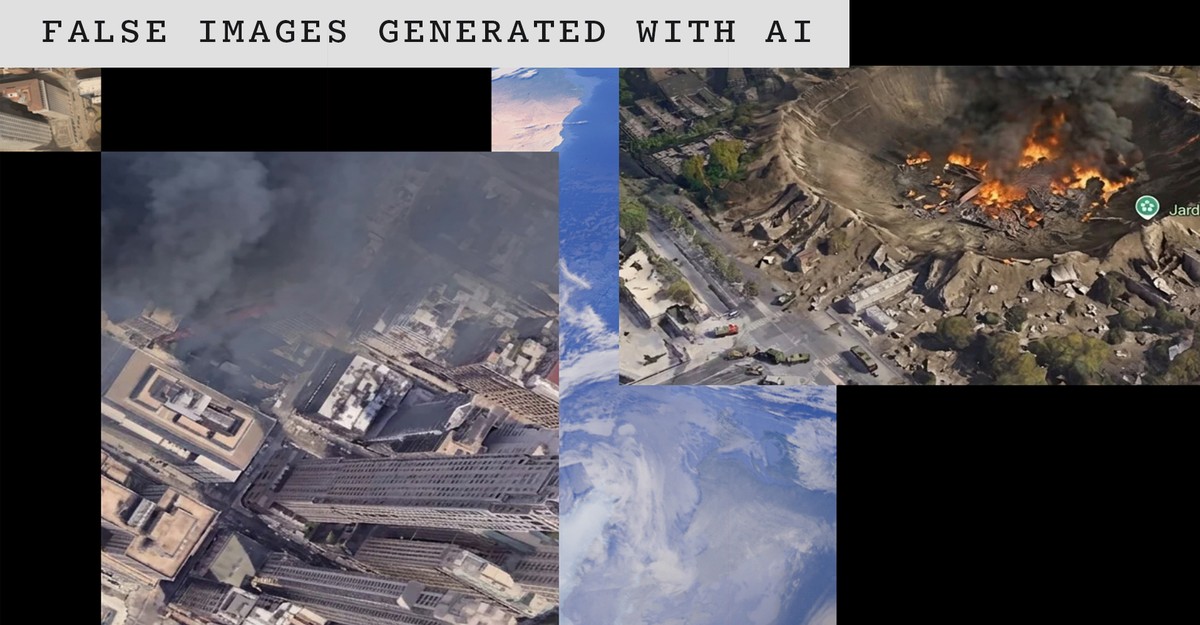
Google has rolled back a newly launched feature that integrated its AI image generator into Google Earth following widespread criticism over its potential to rapidly generate realistic disinformation and manipulated aerial views of sensitive global locations. According to company statements, the feature allowed users to select any point on the map and type text prompts to alter landscapes, introduce fabricated structures, or depict violent events on real-world terrain.
The update, which connected the platform to Google’s Nano Banana image-generation engine, permitted users to create imagery depicting fictional scenarios, including urban fires, structural damage, and protests at prominent political sites. While Google initially defended the release by pointing to its SynthID digital watermarking technology and advising users to verify suspicious visuals using search tools like Google Lens, the firm altered its approach following inquiries from journalists and researchers.
“We are rolling back this feature in Google Earth while we work on implementing stronger guardrails,” a company representative stated. The swift reversal highlights ongoing concerns within the technology sector regarding the deployment of generative artificial intelligence tools without adequate safety filters to prevent the creation of deceptive content.
The Impact on Intelligence and Investigative Work
Before the introduction of the generative tool, Google Earth served as a primary reference for open-source researchers, journalists, and international monitors verifying events in inaccessible regions. Analysts routinely rely on historical and real-time satellite imagery to track environmental shifts, assess damage from natural disasters, and document armed conflicts.
Independent security analysts and investigative reporters noted on professional platforms that integrating consumer-grade image generation directly into a mapping interface simplified the creation of convincing fake footage. Rather than requiring advanced editing software or complex prompt engineering, users could manufacture plausible imagery of localized incidents within seconds, potentially complicating verification efforts during fast-moving crises.
The update also exposed inconsistencies in how safety guardrails were applied across Google’s software ecosystem. While specific editing tools within standalone AI applications frequently blocked attempts to depict high-profile historical disasters or terrorist attacks, the mapping interface initially permitted similar concepts to be rendered over geographic coordinates.
Broader Industry Struggles With AI Safety Standards
The rapid deployment and subsequent retraction of the mapping feature fit into a broader pattern of safety missteps across the artificial intelligence industry. Major technology firms have repeatedly faced public scrutiny after releasing consumer products with limited pre-launch testing or insufficient content restrictions.
Earlier product rollouts by major developers have similarly drawn criticism for generating unvetted or inappropriate media. Observers have pointed to instances where shopping tools, conversational chatbots, and social platform generators produced problematic outputs, ranging from unverified health claims to unauthorized depictions of real individuals.
Industry executives have frequently acknowledged that AI systems possess the capacity to disrupt information ecosystems globally. However, recurring incidents involving rushed feature releases suggest that commercial pressures often outpace the implementation of robust preventative controls.
Next Steps and Future Oversight
As regulatory bodies and international watchdogs continue to monitor the spread of synthetic media, technology companies face mounting pressure to balance rapid product innovation with verifiable safeguards against digital manipulation.
Keep reading
- Angers SCO Arrives at Stade André Conty
- Anthony Fauci’s Capitol Hill Hearing Highlights Washington Dysfunction on Washington Week
- Asteroid Apophis, named for the Egyptian god of chaos, will pass closer to Earth on 13 April (archyworldys.com)
- Asteroid Apophis to Pass Near Earth in 2029, Visible to 90% of Population (time.news)