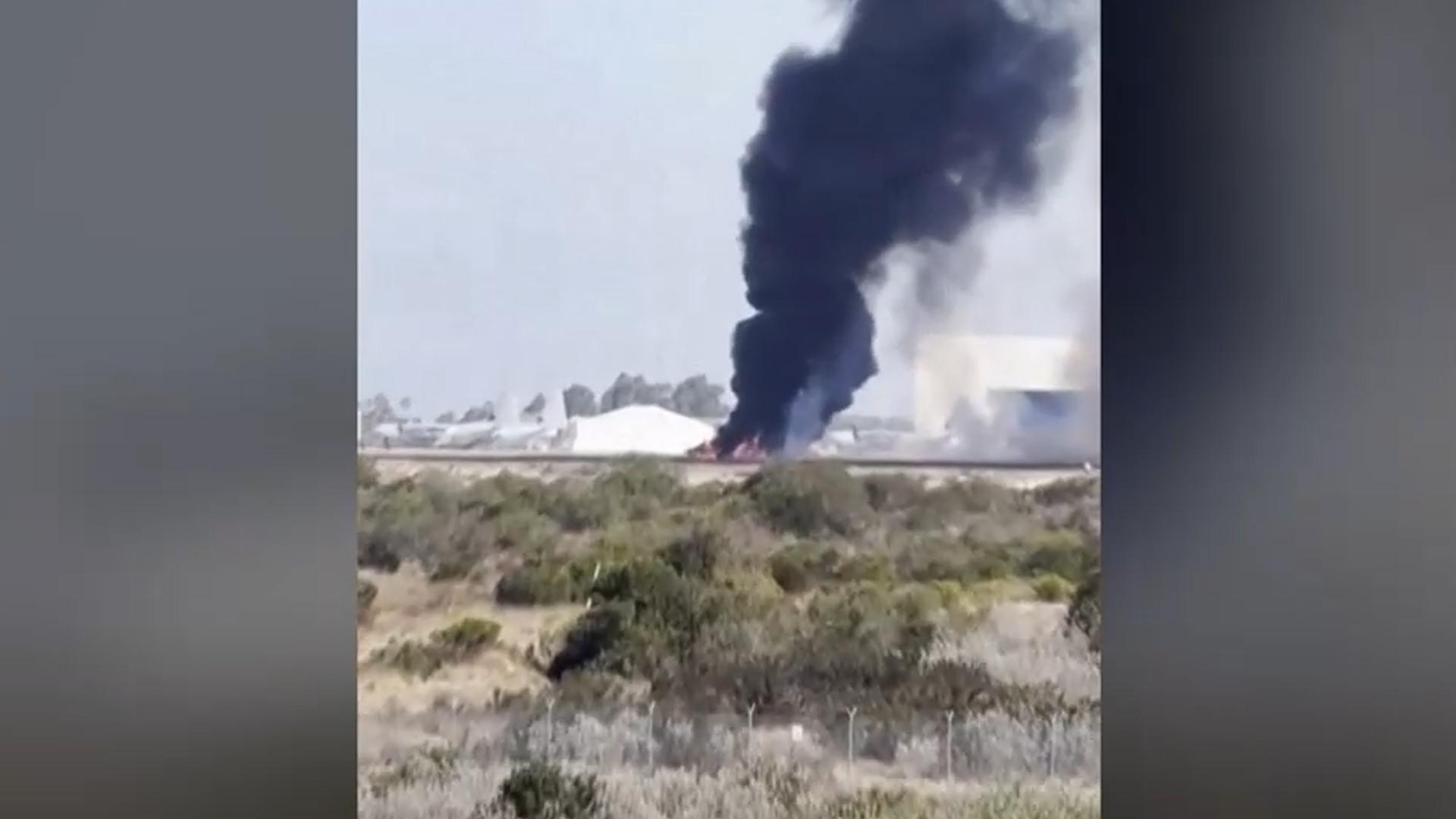
A United States Marine Corps F-35B fighter jet crashed in the vicinity of Marine Corps Air Station (MCAS) Miramar near San Diego, California, on July 31. The incident occurred near the San Diego Miramar air base.
The pilot successfully ejected from the fighter before the aircraft impacted the ground. Following the ejection, the pilot was transported to a local medical facility for evaluation. Military officials confirmed that the pilot was in stable condition, and no other individuals were injured during the incident, which took place in an unpopulated area east of the air station.
Incident Overview and Emergency Response
Marine Corps authorities initiated an immediate search and recovery operation following the loss of radar contact with the aircraft. The crash site was located in a remote area, which helped mitigate the risk to civilian populations. According to the official statement from the 3rd Marine Aircraft Wing, the aircraft was assigned to Marine Fighter Attack Training Squadron (VMFAT) 501, based at MCAS Beaufort in South Carolina, but was operating out of Miramar at the time of the mishap.
Emergency responders from both the military and local San Diego County agencies were dispatched to the scene to secure the area. The F-35B is a short takeoff and vertical landing (STOVL) variant of the Lockheed Martin-produced aircraft, designed specifically for use by the Marine Corps. Its complex systems and advanced capabilities make it a cornerstone of modern naval aviation, and the loss of a single airframe prompts significant scrutiny regarding mechanical reliability and maintenance protocols.
Investigation into the Cause
Following the crash, the Marine Corps established a formal safety investigation board to determine the contributing factors.
While the investigation remains ongoing, military aviation experts note that the F-35 program has faced periodic challenges related to engine components and software integration. However, officials have cautioned against premature speculation regarding the specific cause of the San Diego event. The focus remains on recovering the flight data recorder, often referred to as the “black box,” to reconstruct the final moments of the flight.
Operational Impact and Safety Protocols
The F-35B variant is unique among the three F-35 models due to its lift fan system, which allows for vertical descent and short takeoffs from amphibious assault ships. The complexity of this system requires rigorous maintenance schedules. Following the July crash, the Marine Corps continued its broader training operations, though specific safety stand-downs are sometimes implemented fleet-wide if a common technical defect is identified across the airframe inventory.
The incident at Miramar served as a reminder of the inherent risks associated with high-performance military aviation. The Marine Corps maintains that safety is the highest priority, and the findings of the investigation are expected to be reviewed by the Naval Safety Command to inform future training and engineering adjustments. For members of the public seeking official updates, the 3rd Marine Aircraft Wing official website serves as the primary portal for verified information regarding ongoing investigations and safety advisories.
As the investigation concludes and the final report is processed through the military justice and safety review systems, transparency remains a priority for the Department of the Navy. Stakeholders and industry analysts continue to monitor these developments to understand the long-term implications for the F-35 Lightning II program. Please share your thoughts or questions in the comments section below.
Keep reading