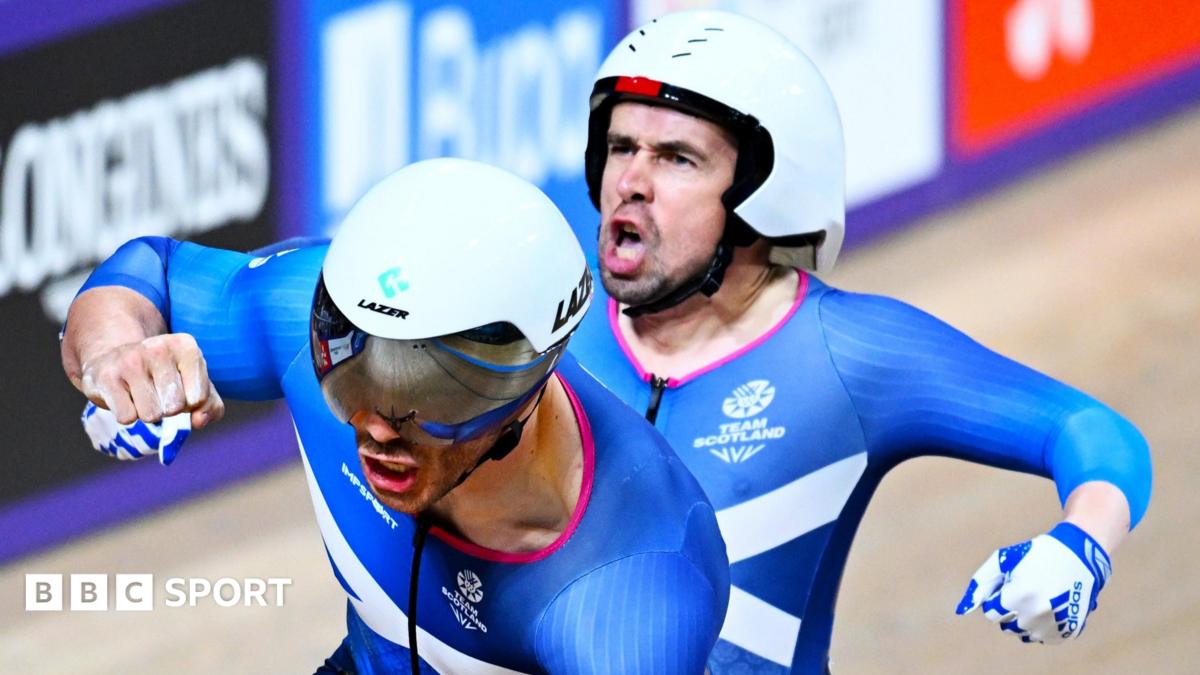
British para-cyclist Neil Fachie secured his second gold medal of the 2014 Commonwealth Games in Glasgow, overcoming a high-speed crash that left him with visible injuries. Competing in the tandem sprint, Fachie and his pilot, Craig MacLean, successfully defended their track cycling dominance despite a mid-competition spill that briefly threatened their momentum on the Sir Chris Hoy Velodrome track.
The incident occurred during the lead-up to the final heats, where the pair suffered a heavy fall. According to reports from the venue, the crash resulted in significant abrasions and physical discomfort for the duo. Despite the physical toll, Fachie and MacLean returned to the track to defeat their Australian rivals, a performance that Fachie later attributed to the competitive pressure applied by the opposing team, joking that their competitors had essentially “poked the bear.”
This victory added to Fachie’s earlier gold in the 1,000m time trial, cementing his status as a standout athlete at the Glasgow Games. The tandem sprint final saw the British pair demonstrate technical precision, recovering from their earlier mechanical and physical setback to maintain control of the race. The atmosphere at the Velodrome was described by officials as intense, with the home crowd providing significant support as the pair navigated the final rounds.
Physical Resilience and Technical Recovery
The crash, which occurred during the qualifying stages, forced the medical team to assess both riders before they were cleared to continue. In high-stakes para-cycling, tandem events require total synchronization between the sighted pilot and the stoker—the visually impaired athlete at the rear. Any disruption to this rhythm, caused by a fall or sudden braking, often results in the loss of momentum necessary to maintain top speed in the velodrome.
According to the BBC Sport coverage of the event, Fachie noted that the adrenaline and the competitive nature of the challenge helped mask the pain during the final sprint. His partnership with MacLean, a former Olympic medalist, proved vital in managing the technical demands of the track after the incident. The pair’s ability to recalibrate their efforts immediately following the spill was a determining factor in their eventual gold medal finish.
Competitive Dynamics on the Track
The rivalry between the British and Australian cycling contingents served as the primary narrative for the track events in Glasgow. The “poking the bear” comment referenced the tactical maneuvers used by the Australian team, which Fachie suggested served as a catalyst for his team’s heightened focus. By applying pressure early, the Australian riders aimed to unsettle the favorites, but the tactic backfired as it forced Fachie and MacLean to adopt a more aggressive racing strategy.
The 2014 Commonwealth Games, held in Glasgow from July 23 to August 3, saw the Sir Chris Hoy Velodrome host some of the most attended events of the schedule, as documented by the Commonwealth Games Federation. For Fachie, the success in Glasgow represented a continuation of his professional progression, following his previous medal-winning performances at the 2012 London Paralympic Games.
Context and Career Milestone
Neil Fachie’s career has been characterized by his ability to perform across multiple track disciplines, including both the time trial and the sprint. His success in Glasgow was part of a larger trend of British dominance in track cycling, supported by rigorous training programs and advanced analytical preparation. The recovery from the crash underscored the physical demands placed on tandem cyclists, who must manage not only the speed of the bike but also the physical impact of high-speed maneuvers in close quarters.
Athletes at this level are subject to regular medical check-ins during multi-day competitions. Following the conclusion of the sprint events, the medical staff confirmed that despite the scrapes and bruising sustained in the fall, there were no long-term injuries that would impact the riders’ future training cycles. The victory remains one of the most noted moments of the 2014 track cycling program, highlighting the combination of resilience and tactical acumen required to win at the Commonwealth level.
As the sporting community looks toward future international cycles, the performance of athletes like Fachie continues to be analyzed for its impact on para-cycling standards. Readers interested in the official record of the 2014 results or updates on current British cycling rosters can visit the British Cycling official portal for verified athlete statistics and historical competition data. Please share your thoughts on the most memorable moments from the Glasgow Games in the comments section below.
Worth a look