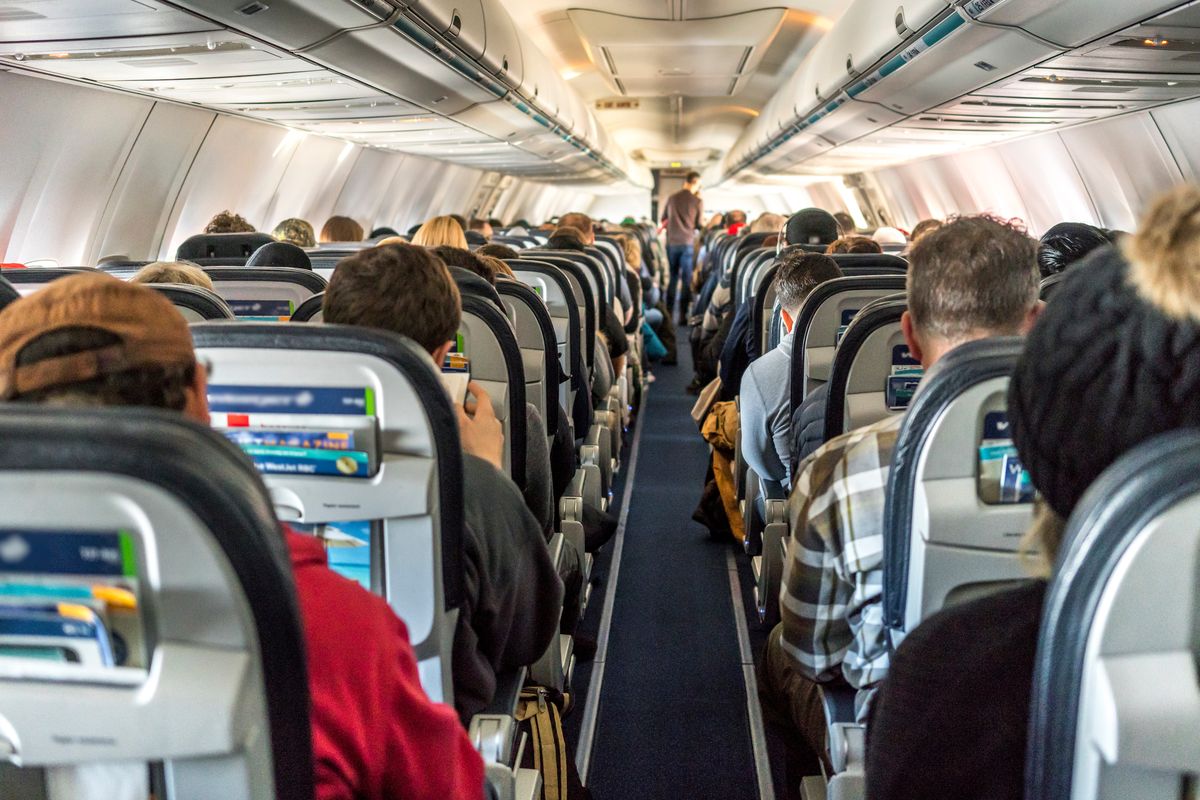
Air travel brings millions of passengers into confined cabins every day, raising persistent questions about how respiratory illnesses spread at high altitudes. According to public health data and infectious disease specialists, catching a cold or other viral infections on a plane depends heavily on cabin airflow patterns, filtration systems, and where a passenger sits relative to air distribution rows. While modern commercial aircraft use advanced High-Efficiency Particulate Air (HEPA) filters that capture most airborne particles, sitting closer to specific zones inside the main cabin can further minimize personal exposure to circulating pathogens.
Understanding how cabin ventilation functions helps clarify why seat selection matters during cold and flu season. Commercial jetliners divide cabin air ventilation into distinct rows, typically pumping fresh and filtered air downward every two to three minutes. This zonal airflow design prevents air from moving freely from the front of the aircraft to the rear. Consequently, viral transmission risks remain largely concentrated within close proximity to an infectious passenger rather than spreading uniformly throughout the entire cabin structure.
How Cabin Air Systems and Seating Rows Affect Pathogen Exposure
Aviation health studies and aerosol dynamics research show that the greatest risk of exposure occurs within two rows of an infected individual. Because air enters through overhead gasets and exits through floor-level grilles within the same row block, airborne droplets rarely travel long longitudinal distances down the aisle. Virologists emphasize that sitting in a window seat often provides an added layer of protection compared to aisle seats. Aisle passengers experience continuous foot traffic, close contact with flight attendants moving beverage carts, and direct exposure to passengers walking to and from lavatories.
Furthermore, window seats keep travelers out of the primary traffic stream, reducing physical proximity to passing travelers who might be coughing or sneezing. Medical experts note that while HEPA filters remove up to 99.97% of airborne microbes, the brief moments when air mixes before filtration or when passengers board while ventilation systems operate at lower capacities can still pose mild transmission risks. Choosing a window seat minimizes those close-range encounters during boarding and in-flight movement.
Practical Hygiene Measures for Air Travelers
Beyond seat selection, global health organizations recommend several non-pharmaceutical interventions to reduce infection risks during long-haul and short-haul flights. Proper hand hygiene remains a primary defense, as high-touch surfaces such as tray tables, armrests, and overhead bin latches harbor pathogens for hours. Frequent handwashing with soap or using an alcohol-based hand sanitizer before touching the face significantly lowers the likelihood of viral inoculation.
- Select a window seat to minimize close contact with aisle foot traffic and moving passengers.
- Keep individual overhead air nozzles directed toward your lap to create an active downward air barrier against surrounding droplets.
- Wash hands frequently or use sanitizer after touching shared cabin surfaces.
- Stay adequately hydrated throughout the flight to keep mucous membranes functioning effectively as natural barriers.
Aviation safety authorities and public health agencies continue to monitor cabin air quality standards as global travel volumes fluctuate. Passengers seeking updated health advisories can consult national public health agency portals for current travel guidance ahead of scheduled flights.
Keep reading