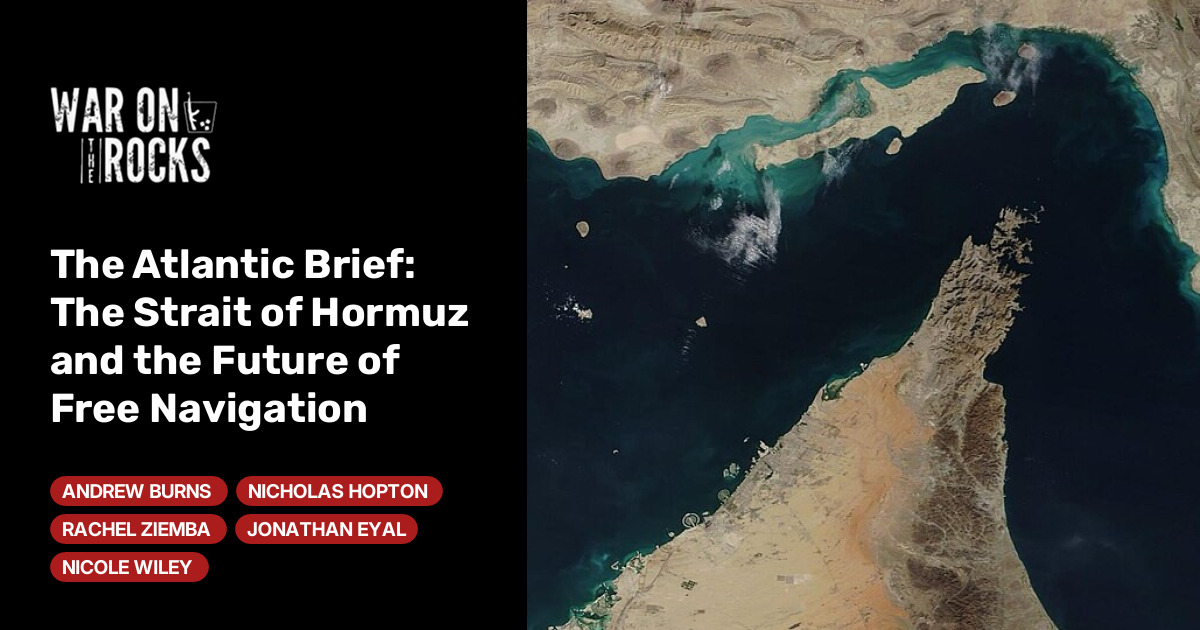
The geopolitical stability of critical maritime choke points faces mounting pressures as ongoing conflicts in the Middle East disrupt regional trade and draw international security focus. These discussions highlight the vulnerability of global energy supplies and commercial shipping lanes to state-level hostilities and regional proxy actions.
Global commerce relies heavily on the smooth transit of vessels through these narrow maritime corridors. Disruptions affect not only regional economies but also international supply chains, driving up energy costs and forcing commercial carriers to reconsider traditional routing.
Strategic dialogues hosted by defense research institutions, such as the Royal United Services Institute (RUSI) and War on the Rocks, have begun addressing these systemic risks through dedicated programming like The Atlantic Brief. These forums bring together maritime security experts to evaluate how sustained disruptions in the Persian Gulf and the Red Sea alter the calculus for commercial shipping and naval protection missions.
Geopolitical Pressures on the Strait of Hormuz
The Strait of Hormuz remains one of the world’s most sensitive energy corridors, carrying a significant portion of globally traded petroleum. Regional hostilities involving state actors have periodically heightened the risk profile for commercial vessels operating in the Persian Gulf and its surrounding approaches. Navigational freedom through this corridor is guaranteed under international maritime law, yet practical enforcement of these protections during active conflict remains a complex operational challenge for navies.
Coastal states and international coalitions continue to navigate competing sovereign claims and security imperatives within the Gulf.
Expanding Risks in the Bab al-Mandab Strait
Beyond the Persian Gulf, security concerns have intensified around the Bab al-Mandab strait, linking the Red Sea to the Gulf of Aden. Regional actors, including Houthi forces in Yemen, have targeted or threatened commercial shipping lanes, introducing severe disruptions to maritime traffic moving toward the Suez Canal. These developments amplify the strain on international shipping companies, which must weigh the economic necessity of passing through the Red Sea against crew safety and vessel protection.
The convergence of crises in both the Strait of Hormuz and the Bab al-Mandab creates a multi-front challenge for international maritime security.
Implications for Free Navigation and Global Trade
The erosion of predictable passage through key Middle Eastern waterways carries profound implications for the global economy. Supply chain delays and increased transport expenses directly influence energy markets and consumer prices worldwide. International law governing freedom of navigation faces unprecedented pressure from state and non-state actors utilizing geographic choke points as strategic leverage.
As ongoing dialogues through platforms like The Atlantic Brief continue, policymakers and defense specialists will refine strategies to protect international trade. Readers are encouraged to share their perspectives or join the discussion in the comments section below.