Surveillance Data Triggers Regional Health Alert
Health authorities in Daegu have issued an early-season advisory following a sharp upward trajectory in pediatric hand, foot, and mouth disease cases across the region. According to surveillance data released by municipal health officials, reported infections climbed approximately 2.8 times over the span of a single month, prompting renewed warnings for childcare facilities and elementary schools ahead of the peak summer transmission window.
Hand, foot, and mouth disease is classified as a Class 4 legal communicable disease driven primarily by enteroviruses, including coxsackievirus and enterovirus 71. The illness spreads easily among young children through direct contact with an infected person’s nasal secretions, saliva, fluid from blisters, or stool, as well as through contaminated surfaces such as shared toys, tables, and doorknobs. Typical clinical presentations feature mild fever accompanied by painful blisters or sores inside the mouth, on the palms of the hands, and on the soles of the feet.
Municipal health officials emphasized that while most pediatric cases resolve on their own within seven to ten days without specialized medical intervention, severe complications can occasionally arise, particularly in infants under six years of age. These rare complications involve the central nervous system, manifesting as aseptic meningitis, encephalitis, or neurogenic pulmonary edema. Clinicians advise parents to monitor children closely for persistent high fever, vomiting, lethargy, or sudden muscle jerking.
Targeted Hygiene Protocols for Facilities
To curb further community spread, the Daegu health division distributed targeted hygiene guidelines to local kindergartens, daycare centers, and parenting cooperatives. Public health nurses stressed that standard alcohol-based hand sanitizers show limited effectiveness against non-enveloped enteroviruses, making rigorous handwashing with soap and running water for at least 30 seconds the primary defense against transmission.
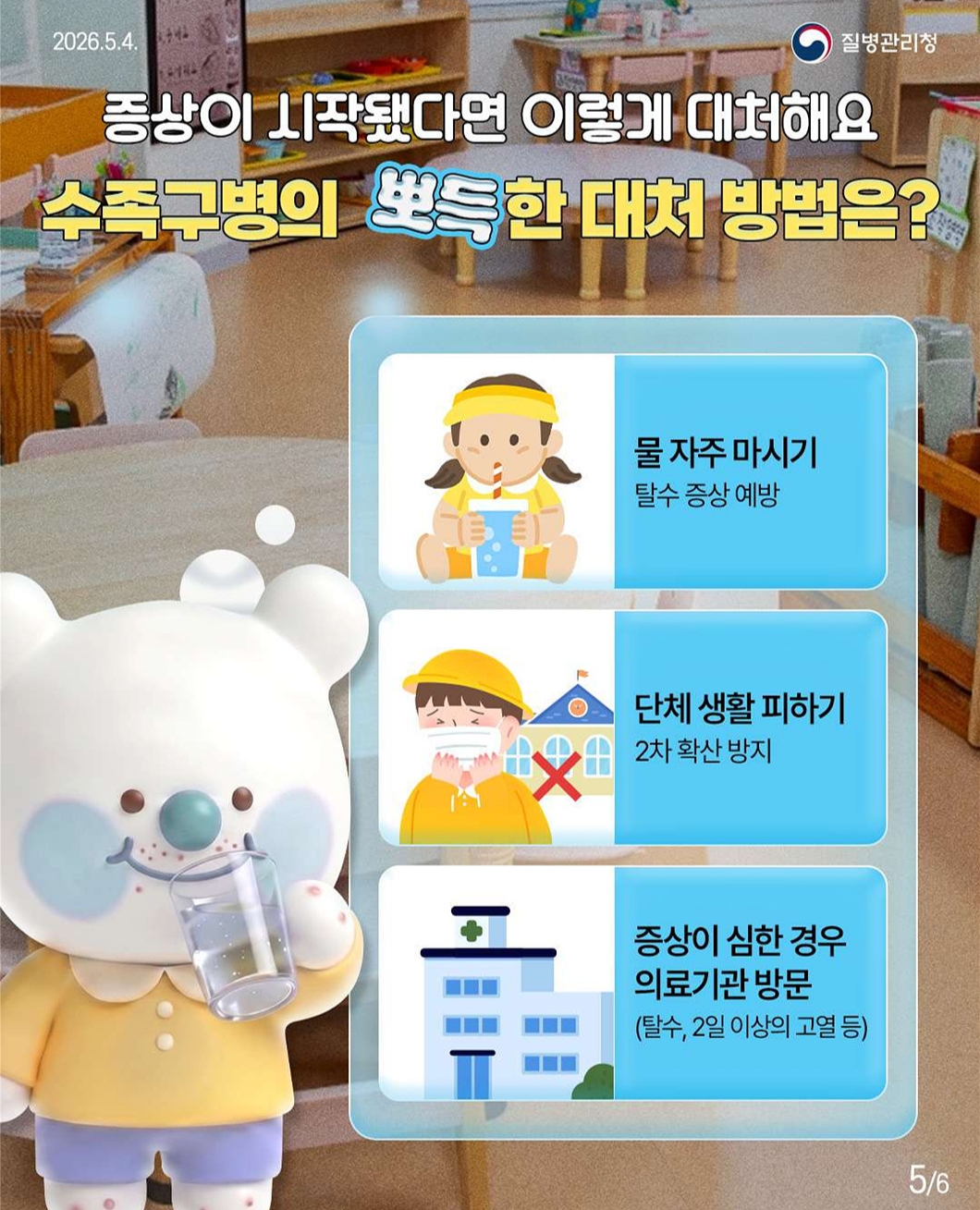
Facility operators have been instructed to sanitize frequently touched surfaces, shared play equipment, and bedding daily using chlorine-based disinfectant solutions. Children diagnosed with hand, foot, and mouth disease must be kept home from school and group childcare settings until all skin lesions have completely dried and scabbed over, significantly lowering the risk of exposing vulnerable peers.
Genomic Tracking and Mid-Summer Projections
Public health laboratories across the region are continuing genomic and virological surveillance to track circulating enterovirus strains throughout the warmer months. Officials noted that historical infection patterns typically peak during the mid-summer months of July and August, meaning current early preventive measures are critical to blunting the seasonal wave.
Accessing Official Regional Resources
Families seeking updated regional advisory notices, symptom monitoring charts, and local clinic operational hours can consult the official Daegu Metropolitan City public health portal or regional public health center announcements. Health authorities will issue subsequent surveillance updates as regional clinic visit metrics are tabulated.
What are your thoughts on these preventive measures? Share your insights and join the conversation in the comments below.
Keep reading