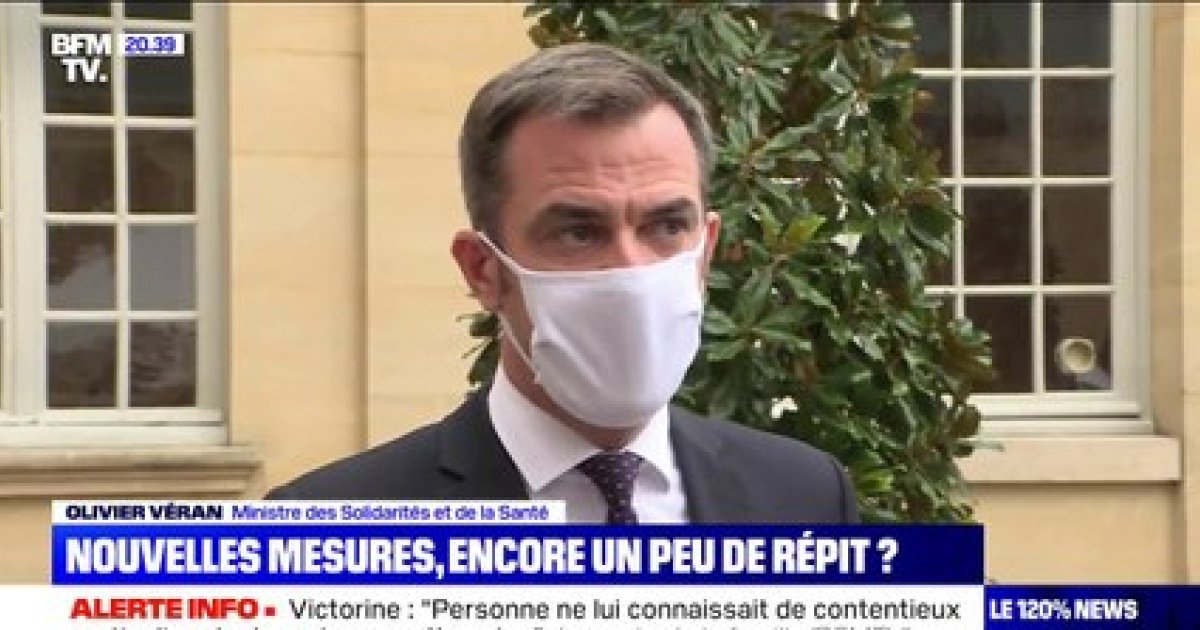
French public health officials face mounting pressure as SARS-CoV-2 transmission rates persist across the country, prompting high-level crisis meetings at Matignon to evaluate whether stricter national containment measures or targeted restrictions are necessary. According to official health surveillance data, authorities recently recorded 12,845 new infections and 64 additional deaths within a single 24-hour reporting window. As hospitals monitor capacity and regional incidence metrics fluctuate, government leaders are weighing the public health imperative against economic continuity.
The persistent circulation of the virus across the Hexagone has triggered intensive deliberations among ministers, medical advisors, and administrative heads at the Prime Minister’s official residence. While health authorities emphasize the importance of monitoring intensive care unit admissions and regional positivity rates, economic stakeholders urge caution against sweeping mandates that could disrupt commerce and daily life. The ongoing consultations reflect a delicate balancing act as policy makers review updated epidemiological forecasts provided by national public health agencies.
Understanding the current trajectory requires examining both the daily infection figures and the broader institutional response. With thousands of new diagnoses confirmed daily, public health infrastructure remains on alert. Officials are analyzing transmission clusters, vaccination booster uptake, and the prevalence of circulating variants to determine if existing preventative recommendations are sufficient or if mandatory interventions must be reinstated.
Evaluating Infection Metrics and Hospital Impact
The daily caseload of 12,845 infections highlights the ongoing resilience of viral transmission within communities. According to epidemiological reports, case numbers fluctuate in response to seasonal changes, indoor gatherings, and waning population immunity. Alongside new infections, the toll of 64 deaths recorded in a single day underscores the continued vulnerability of elderly populations and individuals with underlying medical conditions.
Hospital capacity serves as a primary benchmark for government decision-making. Regional health agencies track weekly admissions, emergency department visits, and critical care bed utilization. While current hospitalization rates have not reached the critical thresholds seen during previous pandemic waves, health officials maintain constant vigilance to prevent any sudden surge that might overwhelm regional medical facilities. Médecins and hospital administrators regularly brief government panels to ensure policy decisions align with on-the-ground clinical realities.
Public health experts stress that raw case counts must be interpreted alongside severity indicators. High vaccination coverage across the population has successfully decoupled infection rates from severe disease in many demographics, yet breakthrough infections and vulnerable cohorts require targeted protection measures. This nuanced epidemiological picture complicates the debate at Matignon, where leaders must decide whether broad restrictions or focused local interventions are more appropriate.
Policy Deliberations at Matignon and Stakeholder Response
Meetings convened at the Hôtel de Matignon bring together key ministers, including the Minister of Health and Prevention, alongside top advisors from scientific councils. These sessions focus on reviewing real-time data models and assessing the potential impact of various regulatory scenarios. Options under discussion range from strengthening mask-wearing recommendations in enclosed spaces to implementing more stringent capacity limits on public gatherings if transmission metrics deteriorate further.
Economic sectors, including tourism, hospitality, and retail, closely monitor these high-level talks. Business representatives advocate for predictable guidelines that avoid abrupt closures or travel restrictions, pointing to the economic recovery achieved following previous lockdowns. Conversely, labor representatives and medical unions emphasize worker safety and the necessity of robust infection-control protocols in workplaces and public transit.
Communication from the government emphasizes that any new measures will be proportional to the epidemiological risk. Authorities continue to urge citizens to maintain basic hygiene practices, stay up to date with recommended vaccine doses, and isolate when experiencing symptoms. Official guidance and updated statistics remain accessible through the portal of Santé Publique France for individuals seeking verified regional data and health advisories.
Next Steps and Official Monitoring
The government’s response remains fluid as weekly epidemiological bulletins provide updated benchmarks for decision-makers. Officials at Matignon are scheduled to receive subsequent evaluation reports from public health authorities to review the effectiveness of current recommendations and determine if policy adjustments are warranted. Residents and stakeholders are encouraged to consult official government channels for verified announcements regarding public health measures as the situation continues to evolve.