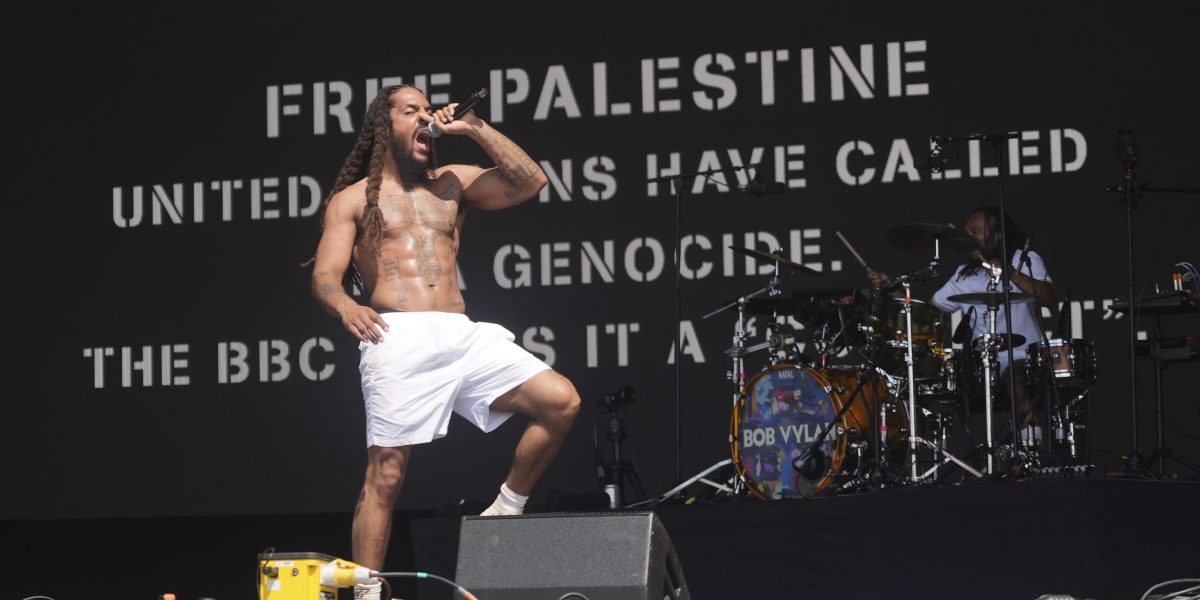
German federal authorities have reversed an entry ban and deportation order issued against Pascal Robinson-Foster, the front man of British punk-rap band Bob Vylan, following legal pressure from his defense counsel. The enforcement actions, which saw the musician detained at a Berlin airport in June, stemmed from political chants performed during a 2023 festival appearance.
The Federal Police initially justified the ban under immigration provisions, citing Robinson-Foster’s performance at the Glastonbury Festival, where he led a chant directed at the Israel Defense Forces. While German officials withdrew the restriction by late July, they have declined to disclose the specific rationale or administrative decision-making process behind either the initial ban or its subsequent reversal, citing privacy protections and public security concerns.
Alexander Gorski, the attorney representing Robinson-Foster, challenged the measure by filing formal requests with the Federal Police Headquarters in Potsdam. Gorski argued that administrative restrictions based on non-criminal political speech raise significant constitutional questions regarding access to official files and due process under German law. The case highlights broader questions concerning the application of immigration enforcement to foreign artists expressing political views on international conflicts.
Background on the Glastonbury Festival Incident and Travel Restrictions
The controversy surrounding Bob Vylan originated from a live performance at the Glastonbury Festival, where Robinson-Foster’s stage remarks drew sharp condemnation from various political figures and advocacy groups. Following the event, the musician and bandmate Wade Laurence George faced travel restrictions, including the reported revocation of entry visas for the United States. German authorities subsequently became the first country to implement a direct entry ban and deportation against a member of the group.
Internal police documents obtained regarding the case alleged that the frontman’s public statements contributed to ideological polarization. Federal Police spokesperson Nikolai Jaletzke stated that the agency does not comment publicly on risk assessments or inter-agency operational coordination regarding such measures. Robinson-Foster rejected the characterization of his actions, noting that British police previously investigated the matter and closed it without charges, concluding there was no realistic prospect of conviction.
Legal Challenge and Questions Over Immigration Enforcement
Following Robinson-Foster’s removal from Germany, his legal team pursued formal administrative remedies to inspect the underlying police files and clear the artist’s name from national entry registers. Although the Federal Police rescinded the entry ban within weeks, the two-page notification provided no explanation for the reversal.
Gorski emphasized that artists and travelers require transparent standards to understand how domestic migration rules apply to lawful expression. Legal observers, including Thomas Oberhäuser, chair of the executive committee for migration law within the German Bar Association, have noted parallel instances where foreign nationals participating in or supporting pro-Palestinian demonstrations faced immigration scrutiny or expulsion proceedings.
Similar administrative actions have affected figures such as British-Palestinian surgeon Ghassan Abu Sitta and former Greek Finance Minister Yanis Varoufakis, both of whom faced German entry restrictions related to political events. Robinson-Foster confirmed that despite the resolution of his case in Germany, the initial deportation has created ongoing complications during border crossings elsewhere in the European Union, resulting in secondary questioning for band members.
Next Steps and Official Status
While the German entry ban has been officially lifted, Robinson-Foster’s legal team maintains pending inquiries to secure full disclosure of internal files concerning the initial decision. The Federal Police have not indicated whether additional policy guidelines will be issued regarding political speech and border entry evaluations. Official updates regarding administrative transparency cases handled by the Potsdam headquarters remain accessible through standard German legal channels.
Keep reading